
- Your cart is empty
- Continue Shopping

Product

Morphine Tablets
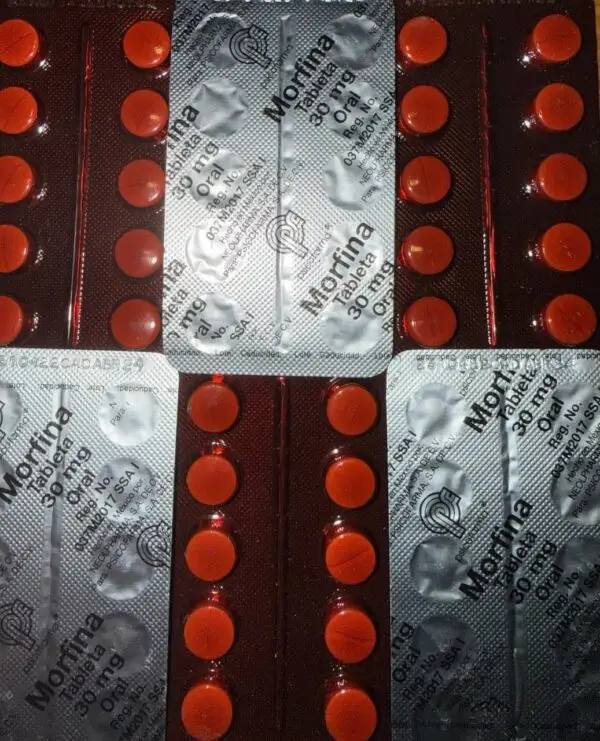
Morphine Tablets
€299
Add to cart
Buy Now
Morphine Tablets
Morphine tablets are a strong opioid analgesic prescribed for the management of moderate to severe pain that cannot be adequately controlled by non-opioid medications. Available in immediate-release and extended-release formulations, morphine is a Schedule II controlled substance in the United States and similarly regulated worldwide due to its high potential for abuse, addiction, and life-threatening respiratory depression. It is available only by prescription and must be used under close medical supervision.
What Are Morphine Tablets?
Morphine Tablets is a naturally occurring opioid alkaloid derived from the opium poppy. It binds primarily to mu-opioid receptors in the central nervous system, reducing the perception of pain and altering the emotional response to it. Immediate-release tablets provide relatively rapid pain relief lasting several hours, while extended-release tablets are designed for around-the-clock management of persistent pain. Strengths vary widely, and dosing is carefully individualized by a physician.
Approved Medical Uses
Morphine tablets are indicated for severe acute pain (such as post-surgical or trauma-related pain) and for chronic pain in carefully selected patients, including cancer-related pain, when other treatments are insufficient. Extended-release forms are intended for opioid-tolerant patients requiring continuous analgesia and are not for use on an as-needed basis. Treatment decisions involve a thorough assessment of pain severity, prior opioid exposure, and the patient’s risk factors for misuse or complications. Morphine is not appropriate for mild pain or as a first-line option in most non-cancer chronic pain situations.
Significant Safety Risks
Morphine carries substantial risks. The most serious is respiratory depression, which can be fatal, especially when therapy is initiated, doses are increased, or the medication is combined with alcohol, benzodiazepines, other opioids, or sedating drugs. Common side effects include constipation, nausea, vomiting, drowsiness, dizziness, and itching. Physical dependence develops with regular use, and abrupt discontinuation can cause withdrawal symptoms.
Additional risks include sedation that impairs driving and coordination, low blood pressure, and, in some patients, hormonal changes or immune effects with long-term use. Elderly patients, individuals with respiratory disease, liver or kidney impairment, and those with a history of substance use disorder require special caution. Accidental ingestion by children or pets can be fatal. Crushing, chewing, or injecting extended-release tablets is extremely dangerous and can result in a rapid, potentially lethal overdose.
Proper Use and Medical Oversight
Morphine tablets must be taken exactly as prescribed. The lowest effective dose for the shortest duration necessary is the guiding principle. Immediate-release tablets are typically taken every 4 hours as needed, while extended-release forms are taken on a fixed schedule. Tablets should be swallowed whole (especially extended-release) with water and never shared. Secure storage is essential to prevent diversion or accidental exposure, and unused medication should be disposed of through authorized take-back programs.
Related products

Oxycontin 40mg
Price range: €200 through €580
Select options
This product has multiple variants. The options may be chosen on the product page

Butalbital Acetaminophen
Price range: €30 through €90
Select options
This product has multiple variants. The options may be chosen on the product page

Y21 Xanax
Price range: €80 through €300
Select options
This product has multiple variants. The options may be chosen on the product page



 English
 German
 Dutch
 Polish
 Portuguese
Reviews
There are no reviews yet.