
- Your cart is empty
- Continue Shopping

Produkt

2 mg lorazepamu
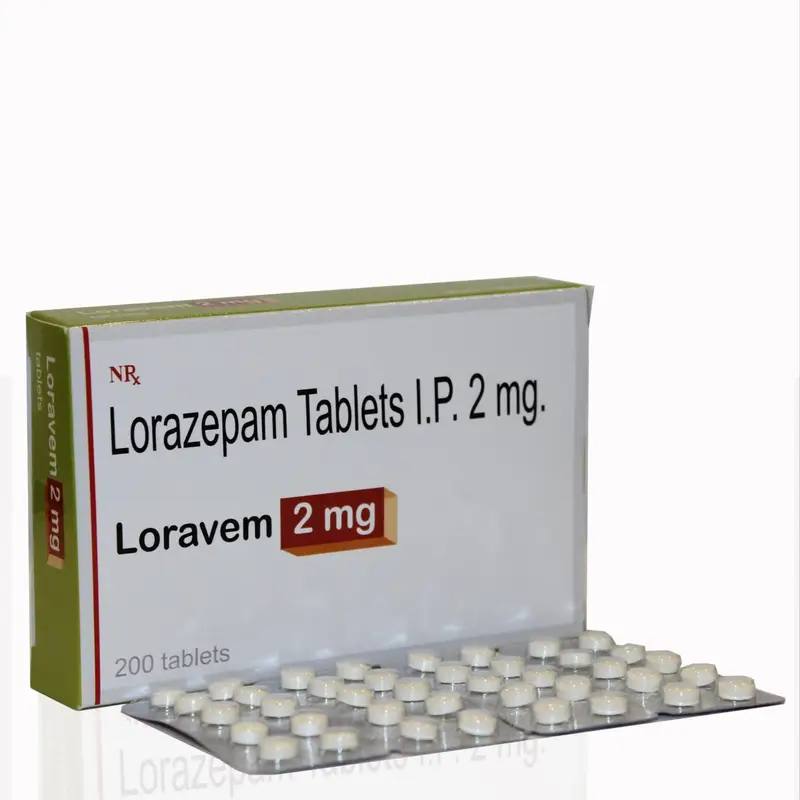
2 mg lorazepamu
€170
Dodaj do koszyka
Kup teraz
2 mg lorazepamu
2 mg Lorazepam is a high-strength, intermediate-acting oral benzodiazepina tablet formulated with 2 mg lorazepamu (a 3-hydroxy-1,4-benzodiazepine derivative). Classified internationally as a Schedule IV controlled substance, 2mg Lorazepam is prescribed for the acute management of severe anxiety disorders, panic states, insomnia secondary to acute stress, and pre-operative anxiolysis. Distinguished by its direct hepatic glucuronidation pathway without active metabolites, this formulation provides predictable central nervous system depression across psychiatric, surgical, and emergency medicine protocols.
Podstawowe wskazania kliniczne
-
Severe Acute Anxiety & Panic Disorders: Indicated for rapid, short-term relief of debilitating generalized anxiety disorder (GAD), acute panic episodes, and severe emotional distress.
-
Pre-Operative Sedation & Anterograde Amnesia: Administered prior to surgical, endoscopic, or dental interventions to alleviate procedural apprehension and blunt recall of invasive events.
-
Acute Alcohol Withdrawal Syndrome: Utilized in supervised clinical detoxification protocols to suppress autonomic hyperactivity, psychomotor agitation, and alcohol withdrawal seizures.
-
Adjunctive Anticonvulsant & Antiemetic Therapy: Applied as an adjunct in seizure management and chemotherapy-induced anticipatory nausea and vomiting.
Mechanizm działania farmakologicznego
2mg Lorazepam produces anxiolytic, sedative-hypnotic, anticonvulsant, and centrally mediated muscle-relaxant effects by amplifying inhibitory GABAergic signaling:
$$\text{Lorazepam} + \text{GABA}_\text{A}\text{ Receptor (\(\alpha/\gamma\) Interface)} \longrightarrow \uparrow \text{Cl}^-\text{ Channel Opening Frequency} \longrightarrow \text{Membrane Hyperpolarization}$$
-
Stereospecific $\text{GABA}_\text{A}$ Allosteric Binding: Binds selectively to the benzodiazepine recognition site located between the $\alfa$ I $\gamma$ subunits of pentameric $\text{GABA}_\text{A}$ receptors, increasing receptor affinity for endogenous gamma-aminobutyric acid ($\text{GABA}$).
-
Postsynaptic Neuronal Inhibition: Increases the frequency of chloride ion ($\text{Cl}^-$) channel opening, driving chloride influx into neurons, hyperpolarizing the resting membrane potential, and dampening excessive firing in the amygdala, hippocampus, and brainstem reticular formation.
-
Farmakokinetyka: Rapidly and reliably absorbed following oral ingestion (90% bezwzględnej biodostępności), reaching peak plasma concentration ($T_{\max}$) w 2 hours. Unlike oxidative benzodiazepines (e.g., diazepam), lorazepam bypasses Phase I 450 CYP enzymes and undergoes direct Phase II conjugation via hepatic UGT2B15 to inactive lorazepam-3-O-glucuronide, exhibiting an elimination half-life of 10 to 20 hours.
Zalety kliniczne a wady
Zalety
-
Predictable Clearance in Hepatic Dysfunction: Bypasses cytochrome P450 oxidation and produces zero active metabolites, preventing cumulative toxicity in geriatric patients or individuals with liver cirrhosis.
-
Low Metabolic Drug-Interaction Burden: Minimal reliance on CYP3A4 Lub $CYP2C19$ reduces pharmacokinetic conflicts with concurrent medications.
-
High Oral Bioavailability: Delivers consistent systemic absorption and reliable clinical potency without erratic gastrointestinal variability.
Wady
-
Rapid Physical Dependence & Tolerance: Continuous daily administration beyond od 2 do 4 tygodni induces $\text{GABA}_\text{A}$ receptor downregulation, leading to tolerance and severe withdrawal upon abrupt cessation.
-
Substantial Sedation & Cognitive Impairment: The high 2mg dose frequently causes marked somnolence, ataxia, anterograde amnesia, and impaired reaction times, increasing fall and accident hazards.
-
High Misuse & Diversion Liability: Carries notable potential for non-medical misuse, dose escalation, and dangerous polydrug co-ingestion.
Profil działań niepożądanych i ostrzeżenia dotyczące bezpieczeństwa
| Kategoria ważności | Typowe objawy kliniczne |
| Częste / Łagodne | Marked sedation, drowsiness, dizziness, asthenia (muscle weakness), unsteadiness (ataxia), anterograde amnesia, and blurred vision. |
| Ciężkie / Niekorzystne | Life-threatening respiratory depression, severe hypotension, paradoxical behavioral disinhibition (acute agitation, hostility, hallucinations), and withdrawal-induced status epilepticus. |
| Ostrzeżenia krytyczne | Ostrzeżenie dotyczące czarnej skrzynki: Concomitant administration of benzodiazepines and opioids may result in profound sedation, respiratory depression, coma, and death; reserve concurrent prescribing strictly for patients without adequate alternatives. Continuous use carries significant risks of abuse, misuse, and addiction, alongside physical dependence—abrupt discontinuation or rapid dose reduction can precipitate acute, life-threatening withdrawal reactions; implement a gradual, medically supervised taper. Contraindicated in acute narrow-angle glaucoma and severe respiratory insufficiency. |
Powiązane produkty
Klindamycyna 150 mg
Zakres cen: od €45 do €260
Wybierz opcje
Ten produkt występuje w wielu wariantach. Opcje można wybrać na stronie produktu.
Oxycontin 80 mg
Zakres cen: od €250 do €730
Wybierz opcje
Ten produkt występuje w wielu wariantach. Opcje można wybrać na stronie produktu.
Tabletki diazepamu 10 mg
Zakres cen: od €95 do €600
Wybierz opcje
Ten produkt występuje w wielu wariantach. Opcje można wybrać na stronie produktu.
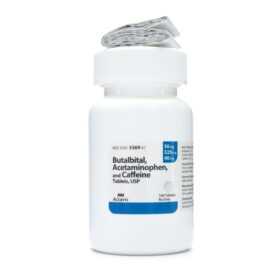
Butalbital Acetaminofen
Zakres cen: od €30 do €90
Wybierz opcje
Ten produkt występuje w wielu wariantach. Opcje można wybrać na stronie produktu.
 English
 German
 Dutch
 Polish
 Portuguese
Recenzje
Nie ma jeszcze żadnych opinii.