
- Your cart is empty
- Continue Shopping

Product

Tramadol Tablets
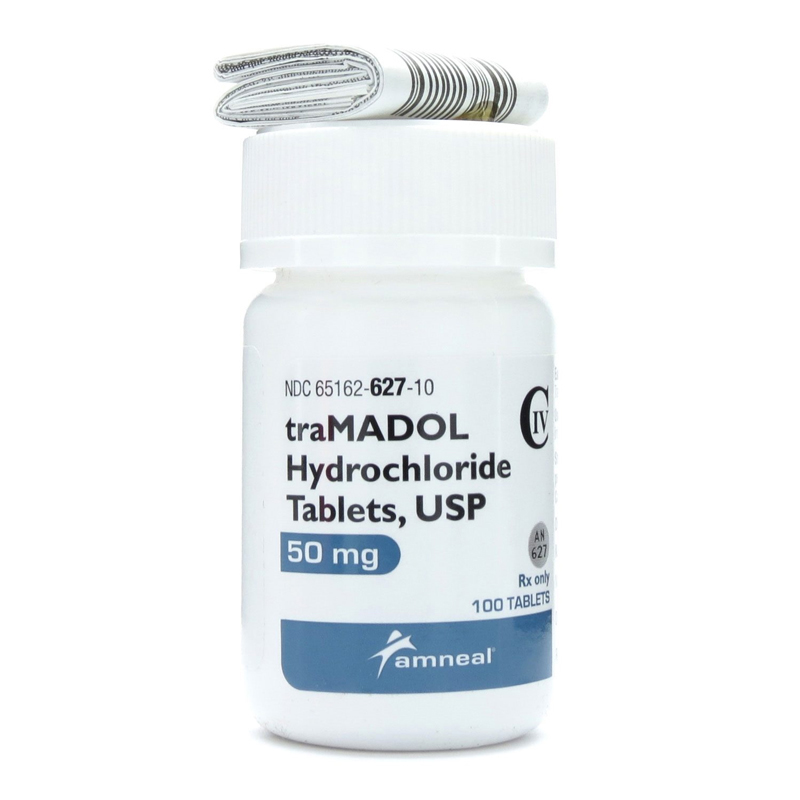
Tramadol Tablets
€50
Add to cart
Buy Now
Tramadol Tablets
Tramadol tablets (commonly recognized by brand names such as Ultram) belong to a class of medications known as central nervous system (CNS) analgesics. Regulated as a Schedule IV controlled substance in the United States and a prescription-only drug globally, Tramadol is indicated for the management of pain severe enough to require an opioid analgesic and for which alternative, non-opioid treatments are inadequate or poorly tolerated.
Primary Clinical Indications
-
Acute Pain Management: Prescribed for short-term relief of moderate to moderately severe pain following surgical procedures, severe trauma, or acute musculoskeletal injuries.
-
Chronic Pain Relief: Formulated in immediate-release and extended-release profiles to manage ongoing painful conditions, such as severe osteoarthritis and spinal pain.
Dual Mechanism of Action: Synergy of Opioid Agonism and Monoamine Reuptake
Unlike traditional single-action opioids, tramadol features an atypical dual-action pharmacological mechanism that modifies how the central nervous system perceives pain signals:
$$\text{Tramadol} \longrightarrow \mu\text{-Opioid Activation} + \downarrow \text{Serotonin/Norepinephrine Reuptake} \longrightarrow \text{Central Pain Dampening}$$
-
$\mu$-Opioid Receptor Agonism: Parent tramadol and its primary liver metabolite (O-desmethyltramadol, or M1) bind to central $\mu$-opioid receptors, interrupting pain transmission along ascending spinal pathways.
-
Monoamine Reuptake Inhibition: Inhibits the reuptake of norepinephrine and serotonin ($5\text{-HT}$), bolstering descending inhibitory pain signals within the spinal cord.
-
Pharmacokinetic Profile: Immediate-release formulations achieve peak plasma concentration within 1.5 to 2 hours, exhibiting an elimination half-life of roughly 6 to 7.5 hours.
Dosing and Administration Guidelines
| Clinical Parameter | Standard Clinical Dosing Protocol |
| Immediate-Release Dosing | 50mg to 100mg orally every 4 to 6 hours as clinically needed for pain. |
| Maximum Daily Ceiling | Total daily dosage must not exceed 400mg per day (200mg/day for adults over age 75). |
| Renal & Hepatic Adjustments | Extended dosing intervals (every 12 hours) are required for patients with severe renal or hepatic impairment. |
Critical Safety Warnings and Clinical Precautions
-
Black Box Warning — Addiction, Abuse, and Misuse: Prolonged or unmonitored use can lead to physical dependence, opioid use disorder, overdose, and death.
-
Black Box Warning — Life-Threatening Respiratory Depression: Severe, potentially fatal respiratory depression may occur, particularly during initial titration or co-administration with other CNS depressants (e.g., benzodiazepines, alcohol).
-
Serotonin Syndrome Hazard: Combining tramadol with serotonergic medications (SSRIs, SNRIs, MAOIs, or triptans) can precipitate life-threatening serotonin toxicity.
-
Seizure Risk: Lowers the seizure threshold, posing severe risks to individuals with epilepsy or those taking medications that increase seizure susceptibility.
Related products
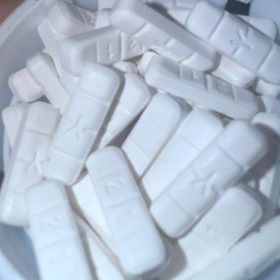
Y21 Xanax
Price range: €80 through €300
Select options
This product has multiple variants. The options may be chosen on the product page
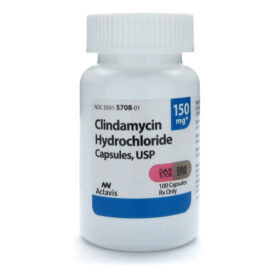
Clindamycin 150mg
Price range: €45 through €260
Select options
This product has multiple variants. The options may be chosen on the product page
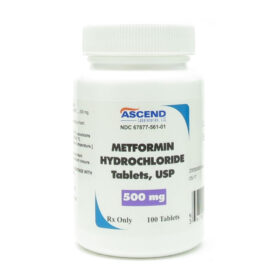
Metformin 500mg
€1,500
Select options
This product has multiple variants. The options may be chosen on the product page
Metformin 500mg Tablets
Price range: €150 through €500
Select options
This product has multiple variants. The options may be chosen on the product page
 English
 German
 Dutch
 Polish
 Portuguese
Reviews
There are no reviews yet.