
- Your cart is empty
- Continue Shopping


Product

Metformin 500mg
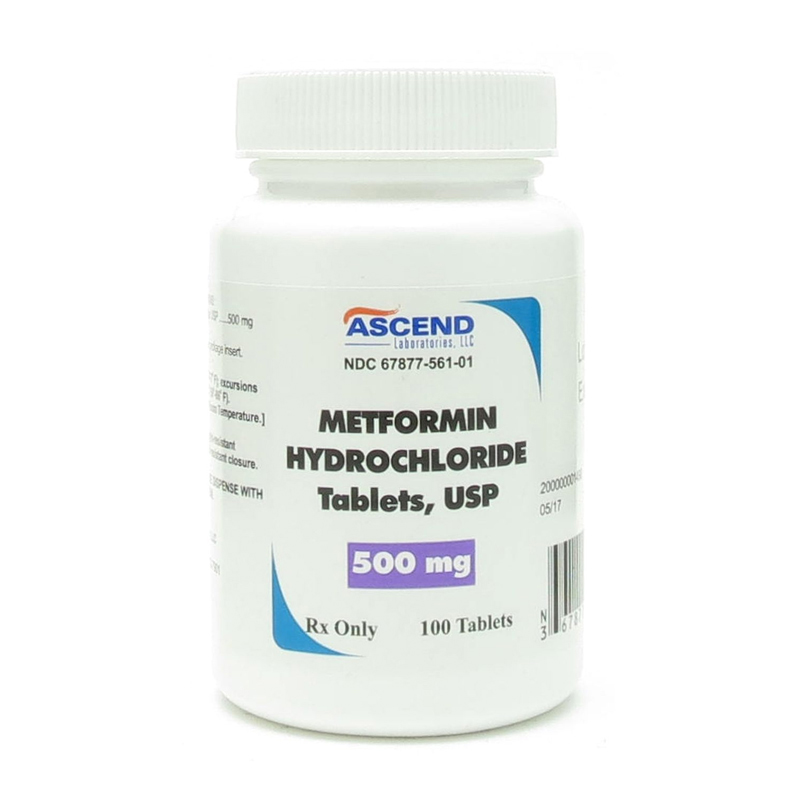
Metformin 500mg
€1,500
Quantity
Choose an option
Add to cart
Buy Now
Metformin 500mg
Metformin 500mg (formerly sold under brand names such as Glucophage) is an oral biguanide antihyperglycemic agent. Regulated as a prescription-only medication, Metformin 500mg is the first-line pharmacotherapy recommended worldwide for the clinical management of type 2 diabetes mellitus in adults and pediatric patients aged 10 years and older.
Unlike insulin secretagogues (e.g., sulfonylureas), metformin lowers blood glucose without stimulating insulin secretion, significantly reducing the risk of clinical hypoglycemia when used as monotherapy.
Primary Clinical Indications
-
Type 2 Diabetes Mellitus: Indicated as an adjunct to diet and exercise to improve glycemic control in adults and children with type 2 diabetes.
-
Polycystic Ovary Syndrome (PCOS): Widely prescribed off-label to lower insulin resistance, restore ovulatory cycles, and assist with metabolic stabilization in women with PCOS.
-
Prediabetes Management: Utilized off-label to delay or prevent the progression to overt type 2 diabetes in high-risk individuals with impaired fasting glucose.
Mechanism of Action: Hepatic Gluconeogenesis Inhibition
Metformin lowers elevated blood glucose by acting on cellular energy sensor pathways, primarily activating AMP-activated protein kinase (AMPK):
$$\text{Metformin} \longrightarrow \uparrow \text{AMPK Activation} \longrightarrow \downarrow \text{Hepatic Gluconeogenesis} + \uparrow \text{Peripheral Insulin Sensitivity}$$
-
Inhibition of Hepatic Glucose Production: Decreases baseline and postprandial hepatic glucose output by inhibiting gluconeogenesis and glycogenolysis.
-
Enhanced Peripheral Uptake: Increases insulin sensitivity in skeletal muscle and adipose tissue, promoting peripheral glucose uptake and utilization.
-
Reduced Intestinal Absorption: Decreases the intestinal absorption of glucose.
-
Pharmacokinetics: Slowly and incompletely absorbed from the gastrointestinal tract (bioavailability ~50–60%); reaches peak plasma concentrations ($T_{\max}$) in 2.5 hours. It is eliminated unchanged via renal excretion with a plasma elimination half-life of 6.2 hours.
Dosing and Administration Guidelines
| Clinical Parameter | Standard Clinical Dosing Protocol |
| Initial Starting Dose | 500mg orally twice daily (with breakfast and dinner) or 850mg once daily. |
| Dose Titration | Increased by 500mg weekly based on glycemic control and GI tolerance. |
| Maximum Daily Limit | Maximum recommended dose is 2,000mg to 2,550mg daily in divided doses. |
| Renal Impairment Protocol | Contraindicated if $\text{eGFR} < 30\,\text{mL/min/1.73m}^2$; initiation not recommended if $\text{eGFR} = 30 – 45\,\text{mL/min/1.73m}^2$. |
Critical Safety Warnings and Precautions
-
Black Box Warning — Lactic Acidosis: Rare but severe, life-threatening lactic acidosis can accumulate in patients with severe renal impairment, acute heart failure, hypoxemia, or excessive alcohol intake. Discontinue immediately if metabolic acidosis occurs.
-
Vitamin $\text{B}_{12}$ Deficiency: Long-term use can decrease serum vitamin $\text{B}_{12}$ absorption; periodic hematologic monitoring is recommended.
-
Gastrointestinal Effects: Common initial side effects include diarrhea, nausea, abdominal discomfort, and flatulence, which can be minimized by taking tablets with meals.
Additional Information
| Quantity | 180 Tabs |
|---|
Related products
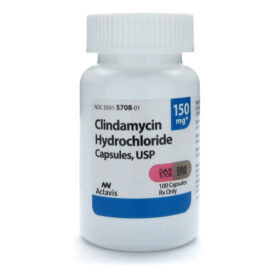
Clindamycin 150mg
Price range: €45 through €260
Select options
This product has multiple variants. The options may be chosen on the product page
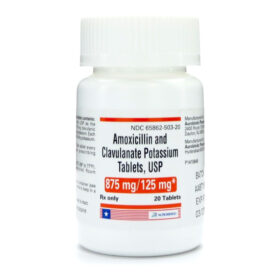
Amoxicillin 875mg/125mg
Price range: €25 through €45
Select options
This product has multiple variants. The options may be chosen on the product page
 English
 German
 Dutch
 Polish
 Portuguese
Reviews
There are no reviews yet.