
- Your cart is empty
- Continue Shopping

Product

Ambien 10mg
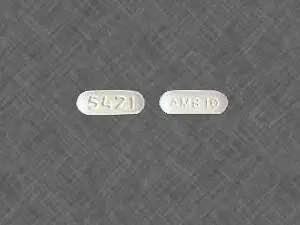
Ambien 10mg
Price range: €145 through €400
Quantity
Choose an option
Add to cart
Buy Now
Ambien 10mg
Ambien 10mg is an immediate-release oral tablet formulation of zolpidem tartrate, an imidazopyridine derivative. Classified as a Schedule IV controlled substance, Ambien 10mg is indicated for the short-term treatment of insomnia characterized by difficulties with sleep initiation. As a non-benzodiazepine hypnotic agent, Ambien selectively targets central nervous system (CNS) pathways to decrease sleep onset latency while minimizing systemic unwanted sedative effects under direct medical supervision.
Primary Clinical Indications
-
Short-Term Treatment of Sleep Onset Insomnia: Prescribed specifically to reduce sleep latency in patients suffering from acute or transient difficulty falling asleep.
-
Transient Insomnia Relief: Applied for temporary sleep disruptions caused by acute environmental changes, emotional stress, or jet lag.
-
Adjunctive Sleep Architecture Stabilization: Integrated into short-term clinical protocols to restore predictable sleep-wake patterns in severe sleep onset disruption.
Pharmacological Mechanism of Action
Ambien 10mg exerts its hypnotic effects through subunit-selective modulation of central gamma-aminobutyric acid ($\text{GABA}$) receptor complexes:
$$\text{Zolpidem} + \alpha_1\text{-Subunit } \text{GABA}_\text{A} \text{ Receptor} \longrightarrow \uparrow \text{Chloride Ion Influx} \longrightarrow \text{Selective Sedative-Hypnotic Response}$$
-
Selective Receptor Agonism: Unlike classic benzodiazepines that non-selectively bind across $\alpha_1$, $\alpha_2$, $\alpha_3$, and $\alpha_5$ subunits, zolpidem binds preferentially to the $\alpha_1$ subunit of the $\text{GABA}_\text{A}$ receptor (located primarily in the sensorimotor cortical regions and globus pallidus).
-
Potentiated Inhibitory Signal: Binding increases the affinity of endogenous $\text{GABA}$ for its receptor, promoting chloride ion channel opening, membrane hyperpolarization, and selective suppression of sleep-arousal centers.
-
Pharmacokinetics: Rapidly absorbed from the gastrointestinal tract, achieving peak plasma concentration ($T_{\max}$) in 1.5 to 2 hours (delayed by food). It undergoes hepatic metabolism via $CYP3A4$ (with minor contributions from $CYP1A2$ and $CYP2D6$), featuring a short elimination half-life of 2.5 to 3 hours.
Clinical Advantages vs. Disadvantages
Advantages
-
Rapid Sleep Onset: Significantly shortens time to fall asleep, taking effect within 15 to 30 minutes of administration.
-
Preserved Sleep Architecture: Minimal disruption of normal sleep stages (deep slow-wave sleep is largely maintained without suppressing REM sleep).
-
Low Residual Next-Day Sedation: Short elimination half-life reduces morning “hangover” effects compared to long-acting benzodiazepines.
Disadvantages
-
Complex Sleep Behaviors: Poses risks of parasomnias, including sleepwalking, sleep-driving, and preparing food while not fully awake, often accompanied by anterograde amnesia.
-
Limited Sleep Maintenance Efficacy: Immediate-release 10mg formulation clears rapidly and is less effective for frequent middle-of-the-night awakenings.
-
Tolerance & Withdrawal Potential: Extended use leads to physiological tolerance, rebound insomnia upon abrupt discontinuation, and potential dependence.
Side Effects Profile & Safety Warnings
| Severity Category | Common Clinical Manifestations |
| Common / Mild | Daytime drowsiness, dizziness, headache, nausea, visual hallucinations, and anterograde amnesia. |
| Severe / Adverse | Complex sleep behaviors (sleep-driving, sleep-eating), severe anaphylaxis, depression exacerbation, or suicidal ideation. |
| Critical Warnings | Black Box Warning: Risk of complex sleep behaviors resulting in serious injury or death. Discontinue treatment immediately if a patient engages in sleep-walking or complex unremembered activities. Concomitant use with opioids, alcohol, or other CNS depressants carries severe risks of respiratory depression, coma, and death. Therapy duration must not exceed 2 to 4 weeks. |
Additional Information
| Quantity | 30 Tabs, 60 Tabs, 120 Tabs |
|---|
Related products
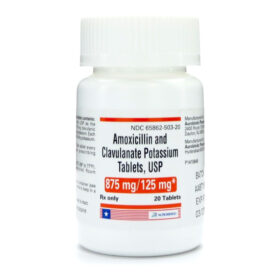
Amoxicillin 875mg/125mg
Price range: €25 through €45
Select options
This product has multiple variants. The options may be chosen on the product page
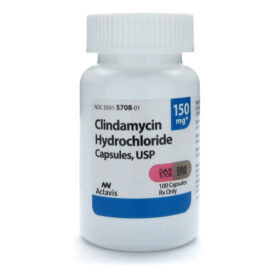
Clindamycin 150mg
Price range: €45 through €260
Select options
This product has multiple variants. The options may be chosen on the product page
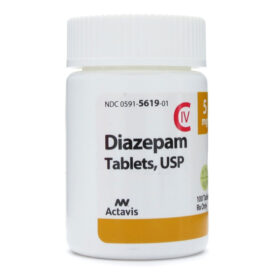
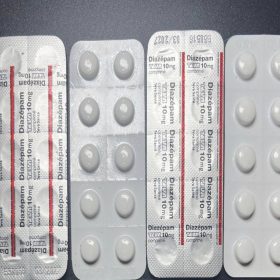
Diazepam 10mg Tablets
Price range: €95 through €600
Select options
This product has multiple variants. The options may be chosen on the product page
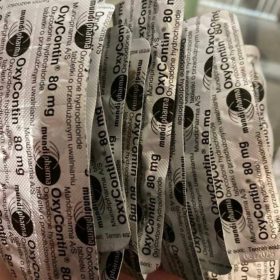
Oxycontin 80mg
Price range: €250 through €730
Select options
This product has multiple variants. The options may be chosen on the product page
 English
 German
 Dutch
 Polish
 Portuguese
Reviews
There are no reviews yet.