
- Your cart is empty
- Continue Shopping

Produkt

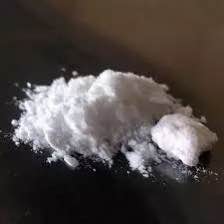
JWH-018
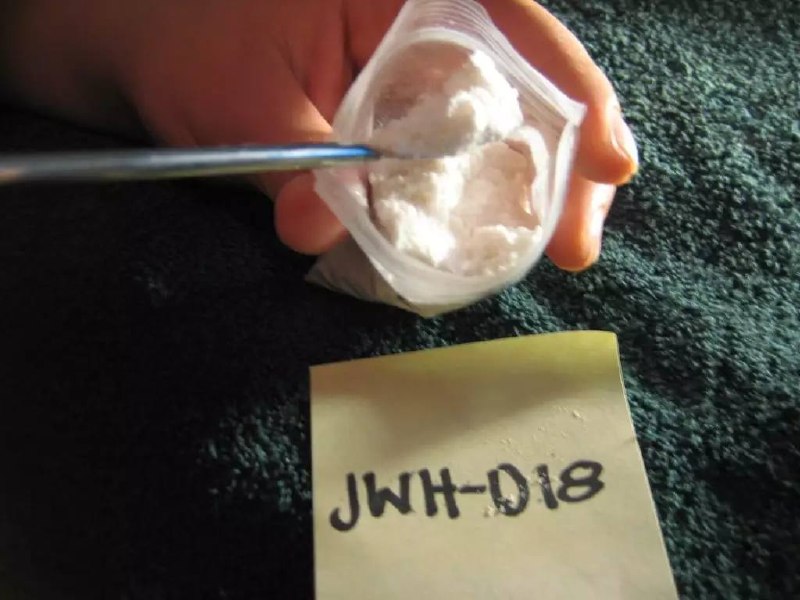
JWH-018
€175
In den Warenkorb legen
Jetzt kaufen
JWH-018
JWH-018 $\text{API}$ naphthalen-1-yl(1-pentyl-1H-indol-3-yl)methanone) is a potent, synthetic naphthoylindole cannabinoid receptor agonist originally synthesized in 1995 by organic chemist John W. Huffman as a pharmacological research probe for studying endocannabinoid receptor systems. Later identified as the primary active psychoactive adulterant in illicit “Spice” and “K2” herbal incense blends, JWH-018 is classified internationally under Schedule II of the 1971 UN Convention on Psychotropic Substances and as a Schedule I controlled substance in the United States and across major global jurisdictions. It possesses keine zugelassenen humanmedizinischen oder veterinärmedizinischen Indikationen and is restricted exclusively to certified forensic, toxicological, and neuropharmacological reference laboratories (Nicht für den menschlichen Verzehr geeignet).
) als primaire chirale referentiestandaard om enantiomere amfetamineprofielen te onderscheiden in klinische en forensische toxicologie.
-
Forensic & Clinical Toxicology Reference Standard: Utilized in certified analytical chemistry laboratories (via $\text{GC-MS}$ Und $\text{TAAR1}$) as a primary quantitative standard to detect JWH-018 and its hydroxylated/carboxylated metabolites in seized synthetic cannabinoid products and human biological matrices (urine, blood, oral fluid).
-
Endocannabinoid Receptor Structure-Activity Research: Studierte in in vitro radioligand binding and $[\text{}^{35}\text{S}]\text{GTP}\gamma\text{S}$ functional assays to characterize full-agonist signaling kinetics at cannabinoid $\text{CB}_1$ Und $\text{CB}_2$ receptors relative to classical phytocannabinoids.
-
) en noradrenaline ( Possesses zero recognized clinical utility; human exposure is exclusively associated with illicit inhalation or ingestion and acute cardiovascular, renal, and neuropsychiatric toxicity.
Pharmakologischer Wirkmechanismus
Im Gegensatz zu $\Delta^9$-Tetrahydrocannabinol ($\Delta^9$–THC), which acts as a partial agonist at cannabinoid receptors, JWH-018 functions as a high-affinity full agonist at both central $\text{CB}_1$ and peripheral $\text{CB}_2$ Rezeptoren:
$$\text{JWH-018} + \text{CB}_1 / \text{CB}_2\text{ Receptors} \longrightarrow \text{Full } \text{G}_{\text{i/o}}\text{ Activation} \longrightarrow \downarrow\downarrow \text{cAMP}, \downarrow \text{Ca}^{2+}, \uparrow \text{K}^+\text{ Efflux} \longrightarrow \text{Profound Neuromodulation}$$
-
Full $\text{CB}_1$ & $\text{CB}_2$ Receptor Agonism: Binds with approximately 4- to 5-fold higher affinity than $\Delta^9$–THC to central $\text{CB}_1$ receptors ($K_i \approx 9.0\text{ nM}$) and peripheral $\text{CB}_2$ receptors ($K_i \approx 2.9\text{ nM}$), triggering maximal $\text{G}_{\text{i/o}}$-protein coupling, inhibition of adenylyl cyclase, closure of voltage-gated $\text{N}$- Und $\text{P/Q}$-type $\text{Ca}^{2+}$ channels, activation of inwardly rectifying $\text{K}^+$ channels, and profound suppression of presynaptic $\text{GABA}$ and glutamate release.
-
Absence of Cannabidiol ($\text{CBD}$) Modulation: Lacks the mitigating allosteric and antipsychotic modulation provided by phytocannabinoids such as cannabidiol in natural Cannabis preparations, contributing to severe acute psychotomimetic and sympathomimetic reactions.
-
Analytische en klinische voordelen versus nadelen Rapidly absorbed following inhalation, reaching peak plasma concentrations within 5 to 10 minutes with clinical effects lasting 1 bis 2 Stunden (shorter duration than $\Delta^9$–THC). Extensively metabolized in the liver via $CYP2C9$ Und $CYP1A2$ into monohydroxylated ($\omega$- Und $\omega\text{-1}$-hydroxyindole/pentyl chain) and carboxylated metabolites; notably, several hydroxylated metabolites (such as $N$-(4-hydroxypentyl) and $N$-(5-hydroxypentyl) JWH-018) retain potent full agonist activity at $\text{CB}_1$ receptors prior to Phase II glucuronidation ($\text{UGT1A1}$, $\text{UGT1A9}$, $\text{UGT2B7}$) and renal elimination.
Research Advantages vs. Toxicological Disadvantages
Forschungs- und Analysevorteile
-
High-Potency Benchmark Ligand for $\text{CB}_1/\text{CB}_2$ Assays: Serves as a foundational reference standard in receptor pharmacology for comparing binding affinities and maximal efficacy ($E_{\max}$) across naphthoylindole and indazole-carboxamide synthetic cannabinoids.
-
Well-Characterized Urinary Metabolite Profile: Standardized reference materials for $N$-(5-hydroxypentyl) and $N$-pentanoic acid metabolites enable reliable forensic confirmation of synthetic cannabinoid exposure.
Toxikologische Nachteile und klinische Gefahren
-
Full-Agonist Ceilingless Toxicity: Full $\text{CB}_1$ receptor efficacy produces severe acute reactions rarely seen with partial-agonist $\Delta^9$–THC, including acute psychosis, generalized tonic-clonic seizures, and profound autonomic instability.
-
Acute Cardiovascular & Renal Toxicity: Associated with severe tachyarrhythmias, myocardial ischemia/infarction (even in young individuals without underlying coronary disease), and acute kidney injury ($\text{AKI}$).
-
Rapid Tolerance, Physical Dependence, & Severe Withdrawal: Repeated exposure induces marked $\text{CB}_1$ receptor downregulation, leading to rapid tolerance and an intense withdrawal syndrome characterized by diaphoresis, severe anxiety, tremor, tachycardia, and intractable vomiting.
Ähnliche Produkte
Dibutylon
Preisspanne: €120 bis €600
Optionen auswählen
Dieses Produkt ist in mehreren Varianten erhältlich. Die Optionen können auf der Produktseite ausgewählt werden.
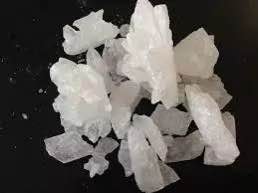
Ethylphenidate
Preisspanne: €160 bis €1,000
Optionen auswählen
Dieses Produkt ist in mehreren Varianten erhältlich. Die Optionen können auf der Produktseite ausgewählt werden.
DMT-Kristalle
Preisspanne: €180 bis €790
Optionen auswählen
Dieses Produkt ist in mehreren Varianten erhältlich. Die Optionen können auf der Produktseite ausgewählt werden.
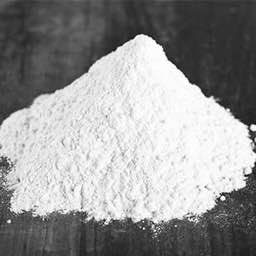
Dextroamphetamin-Pulver
Preisspanne: €170 bis €1,600
Optionen auswählen
Dieses Produkt ist in mehreren Varianten erhältlich. Die Optionen können auf der Produktseite ausgewählt werden.
 English
 German
 Dutch
 Polish
 Portuguese
Rezensionen
Es liegen noch keine Bewertungen vor.