
- Your cart is empty
- Continue Shopping

Product

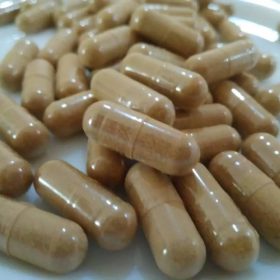
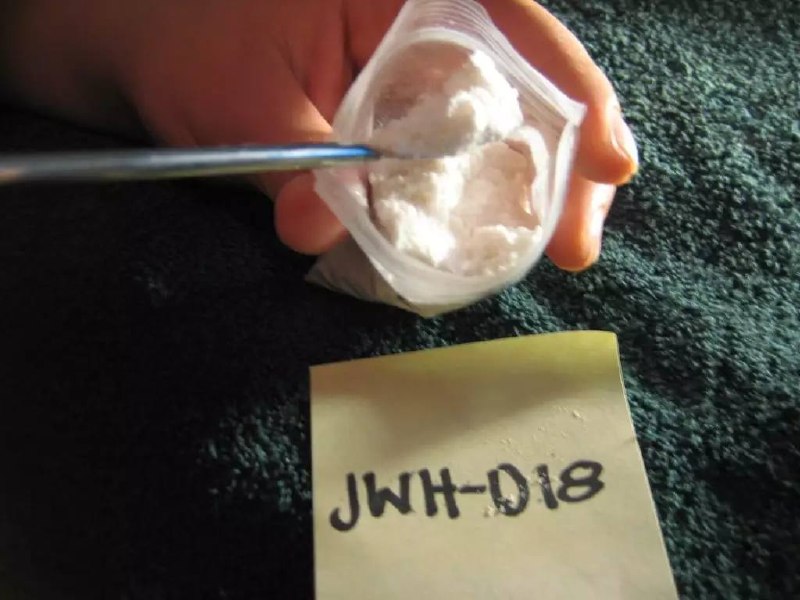
JWH-018
JWH-018
€175
Voeg toe aan winkelwagen
Nu kopen
JWH-018
JWH-018 ) to identify and differentiate ring-substituted naphthalen-1-yl(1-pentyl-1H-indol-3-yl)methanone) is a potent, synthetic naphthoylindole cannabinoid receptor agonist originally synthesized in 1995 by organic chemist John W. Huffman as a pharmacological research probe for studying endocannabinoid receptor systems. Later identified as the primary active psychoactive adulterant in illicit “Spice” and “K2” herbal incense blends, JWH-018 is classified internationally under Schedule II of the 1971 UN Convention on Psychotropic Substances and as a Schedule I controlled substance in the United States and across major global jurisdictions. It possesses no approved human or veterinary medical indications and is restricted exclusively to certified forensic, toxicological, and neuropharmacological reference laboratories (Not for Human Consumption).
Analytical & Research Context
-
Forensic & Clinical Toxicology Reference Standard: Utilized in certified analytical chemistry laboratories (via $\text{GC-MS}$ En compared to) as a primary quantitative standard to detect JWH-018 and its hydroxylated/carboxylated metabolites in seized synthetic cannabinoid products and human biological matrices (urine, blood, oral fluid).
-
Endocannabinoid Receptor Structure-Activity Research: Studied in in vitro radioligand binding and $[\text{}^{35}\text{S}]\text{GTP}\gamma\text{S}$ functional assays to characterize full-agonist signaling kinetics at cannabinoid $\text{CB}_1$ En $\text{CB}_2$ receptors relative to classical phytocannabinoids.
-
No Therapeutic Indications: Possesses zero recognized clinical utility; human exposure is exclusively associated with illicit inhalation or ingestion and acute cardiovascular, renal, and neuropsychiatric toxicity.
Farmacologisch werkingsmechanisme
Anders dan $\Delta^9$-tetrahydrocannabinol ($\Delta^9$–$\text{THC}$), which acts as a partial agonist at cannabinoid receptors, JWH-018 functions as a high-affinity full agonist at both central $\text{CB}_1$ and peripheral $\text{CB}_2$ receptors:
$$\text{JWH-018} + \text{CB}_1 / \text{CB}_2\text{ Receptors} \longrightarrow \text{Full } \text{G}_{\text{i/o}}\text{ Activation} \longrightarrow \downarrow\downarrow \text{cAMP}, \downarrow \text{Ca}^{2+}, \uparrow \text{K}^+\text{ Efflux} \longrightarrow \text{Profound Neuromodulation}$$
-
Full $\text{CB}_1$ & $\text{CB}_2$ Receptor Agonism: Binds with approximately 4- to 5-fold higher affinity than $\Delta^9$–$\text{THC}$ to central $\text{CB}_1$ receptors ($K_i \approx 9.0\text{ nM}$) and peripheral $\text{CB}_2$ receptors ($K_i \approx 2.9\text{ nM}$), triggering maximal $\text{G}_{\text{i/o}}$-protein coupling, inhibition of adenylyl cyclase, closure of voltage-gated $\text{N}$- En $\text{P/Q}$-type $\text{Ca}^{2+}$ channels, activation of inwardly rectifying $\text{K}^+$ channels, and profound suppression of presynaptic $\text{GABA}$ and glutamate release.
-
Absence of Cannabidiol ($\text{CBD}$) Modulation: Lacks the mitigating allosteric and antipsychotic modulation provided by phytocannabinoids such as cannabidiol in natural Cannabis preparations, contributing to severe acute psychotomimetic and sympathomimetic reactions.
-
Toxicokinetics: Rapidly absorbed following inhalation, reaching peak plasma concentrations within 5 to 10 minutes with clinical effects lasting 1 tot 2 uur (shorter duration than $\Delta^9$–$\text{THC}$). Extensively metabolized in the liver via $CYP2C9$ En $CYP1A2$ into monohydroxylated ($\omega$- En $\omega\text{-1}$-hydroxyindole/pentyl chain) and carboxylated metabolites; notably, several hydroxylated metabolites (such as $N$-(4-hydroxypentyl) and $N$-(5-hydroxypentyl) JWH-018) retain potent full agonist activity at $\text{CB}_1$ receptors prior to Phase II glucuronidation ($\text{UGT1A1}$, $\text{UGT1A9}$, $\text{UGT2B7}$) and renal elimination.
Voordelen van onderzoek versus nadelen van toxicologie
Onderzoeks- en analytische voordelen
-
High-Potency Benchmark Ligand for $\text{CB}_1/\text{CB}_2$ Assays: Serves as a foundational reference standard in receptor pharmacology for comparing binding affinities and maximal efficacy ($E_{\max}$) across naphthoylindole and indazole-carboxamide synthetic cannabinoids.
-
Well-Characterized Urinary Metabolite Profile: Standardized reference materials for $N$-(5-hydroxypentyl) and $N$-pentanoic acid metabolites enable reliable forensic confirmation of synthetic cannabinoid exposure.
Toxicologische nadelen en klinische risico's
-
Full-Agonist Ceilingless Toxicity: Full $\text{CB}_1$ receptor efficacy produces severe acute reactions rarely seen with partial-agonist $\Delta^9$–$\text{THC}$, including acute psychosis, generalized tonic-clonic seizures, and profound autonomic instability.
-
Acute Cardiovascular & Renal Toxicity: Associated with severe tachyarrhythmias, myocardial ischemia/infarction (even in young individuals without underlying coronary disease), and acute kidney injury ($\text{AKI}$).
-
Rapid Tolerance, Physical Dependence, & Severe Withdrawal: Repeated exposure induces marked $\text{CB}_1$ receptor downregulation, leading to rapid tolerance and an intense withdrawal syndrome characterized by diaphoresis, severe anxiety, tremor, tachycardia, and intractable vomiting.
Gerelateerde producten
Dibutylone
Prijsklasse: €120 tot €600
Selecteer opties
Dit product is verkrijgbaar in meerdere varianten. De gewenste opties kunt u selecteren op de productpagina.
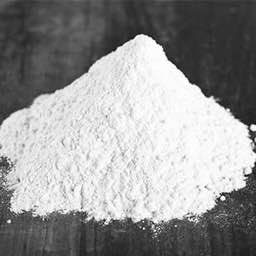
Dextroamphetamine Powder
Prijsklasse: €170 tot €1,600
Selecteer opties
Dit product is verkrijgbaar in meerdere varianten. De gewenste opties kunt u selecteren op de productpagina.
DMT Crystals
Prijsklasse: €180 tot €790
Selecteer opties
Dit product is verkrijgbaar in meerdere varianten. De gewenste opties kunt u selecteren op de productpagina.
 English
 German
 Dutch
 Polish
 Portuguese
Recensies
Er zijn nog geen recensies.