
- Your cart is empty
- Continue Shopping

Produkt

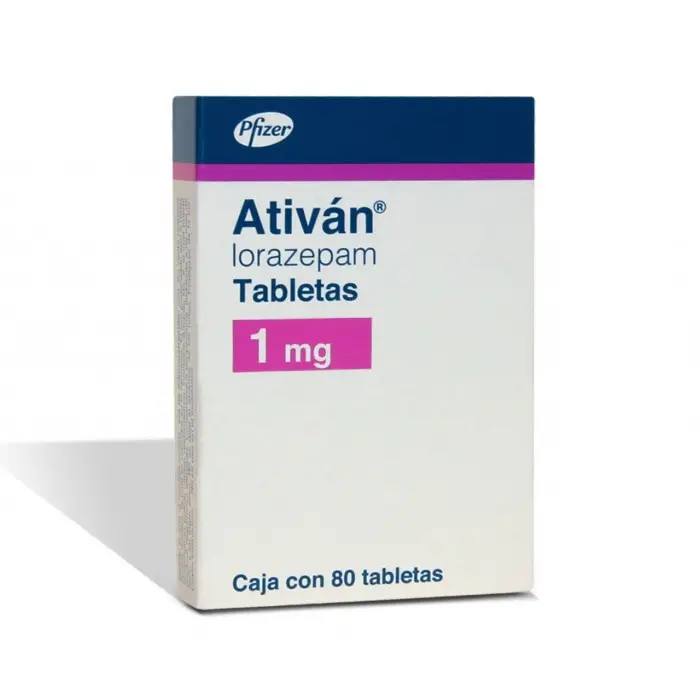
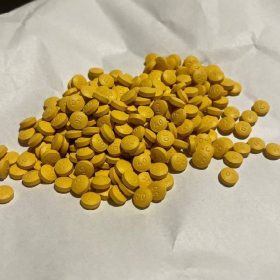
Ativan Lorazepam
Ativan Lorazepam
Zakres cen: od €250 do €490
Ilość
Choose an option
Dodaj do koszyka
Kup teraz
Ativan Lorazepam
Ativan Lorazepam is an intermediate-acting benzodiazepine derivative containing lorazepam. Classified as a Schedule IV controlled substance, Ativan is indicated for the short-term relief of severe anxiety symptoms, the management of anxiety disorders, preoperative sedation, and the acute termination of status epilepticus. Demonstrating potent anxiolytic, sedative, anticonvulsant, and amnestic properties, its clinical application requires careful medical supervision and controlled dosing protocols.
Podstawowe wskazania kliniczne
-
Anxiety Disorders & Short-Term Relief: Indicated for the management of anxiety disorders or the short-term mitigation of acute anxiety symptoms associated with depressive states.
-
Pre-Anesthetic Medication: Administered parenterally or orally prior to surgical or diagnostic procedures to produce sedation, relieve anxiety, and induce anterograde amnesia.
-
Status Epilepticus Control: Intravenous formulations serve as a primary first-line therapeutic agent to terminate acute, continuous seizure activity.
-
Ostre odstawienie alkoholu: Utilized in acute medical protocols to suppress central autonomic hyperactivity, delirium tremens, and withdrawal-related seizures.
Mechanizm działania farmakologicznego
Ativan exerts its central depressant effects by enhancing gamma-aminobutyric acid ($\text{GABA}$) inhibitory activity across the central nervous system:
$$\text{Lorazepam} + \text{GABA}_\text{A}\text{ Receptor Complex} \longrightarrow \uparrow \text{Chloride Ion Conductance} \longrightarrow \text{Neuronal Membrane Hyperpolarization}$$
-
Wiązanie receptora benzodiazepinowego: Lorazepam binds non-selectively with high affinity to benzodiazepine sites on postsynaptic $\text{GABA}_\text{A}$ receptor complexes in the amygdala, limbic system, and brainstem.
-
Potentiated Chloride Flux: Allosterically increases the opening frequency of integral ligand-gated chloride channels in response to endogenous $\text{GABA}$.
-
Subcortical Depression: Influx of negatively charged chloride ions hyperpolarizes neuronal membranes, dampening overall subcortical arousal and seizure foci.
-
Farmakokinetyka: Szybko wchłania się po podaniu doustnym, osiągając maksymalne stężenie w osoczu ($T_{\max}$) w 2 hours. Lorazepam undergoes direct hepatic glucuronidation (via $UGT2B7/UGT2B15$) into inactive lorazepam-glucuronide—bypassing cytochrome P450 enzymes—and exhibits an elimination half-life of 10 to 20 hours.
Zalety kliniczne a wady
Zalety
-
Glucuronidation-Only Metabolism: Does not rely on hepatic cytochrome P450 (450 CYP) enzymes, making it safer for patients with liver impairment, elderly populations, or those on complex multi-drug regimens.
-
Versatile Formulations & Indications: Available in oral, sublingual, intramuscular, and intravenous routes for rapid emergency seizure control or routine anxiety management.
-
Predictable Anterograde Amnesia: Highly effective as a pre-procedure agent to minimize patient recall of painful or distressing interventions.
Wady
-
Wysokie ryzyko uzależnienia fizycznego: Prolonged use leads rapidly to tolerance, psychological dependence, and addiction.
-
Poważne ryzyko odstawienia: Nagłe zaprzestanie zażywania leku może wywołać zagrażające życiu objawy odstawienia, w tym bezsenność z odbicia, silny niepokój, drżenie, majaczenie i drgawki.
-
Zaburzenia psychomotoryczne i poznawcze: Często powoduje znaczną senność, brak koordynacji ruchowej, amnezję anterogradową i zwiększone ryzyko upadku u grup ryzyka.
Profil działań niepożądanych i ostrzeżenia dotyczące bezpieczeństwa
| Kategoria ważności | Typowe objawy kliniczne |
| Częste / Łagodne | Ospałość, senność, zawroty głowy, osłabienie, chwiejność, ataksja, dyzartria i upośledzenie pamięci. |
| Ciężkie / Niekorzystne | Depresja oddechowa, ciężkie niedociśnienie, paradoksalne pobudzenie/agresja, halucynacje lub dyskrazje krwi. |
| Ostrzeżenia krytyczne | Ostrzeżenie dotyczące czarnej skrzynki: Ryzyko głębokiego uspokojenia, depresji oddechowej, śpiączki i zgonu w przypadku jednoczesnego stosowania z opioidami, alkoholem lub innymi depresantami ośrodkowego układu nerwowego. Należy unikać nagłego przerwania podawania ze względu na ryzyko śmiertelnego odstawienia. Czas trwania must not exceed 2 to 4 weeks w przypadku wskazań lękowych. |
Informacje dodatkowe
| Ilość | 60 Tabs, 90 Tabs, 180 Tabs |
|---|
Powiązane produkty
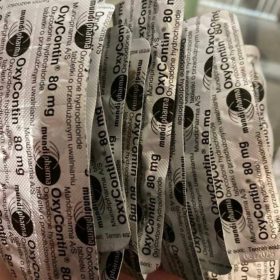
Oxycontin 80 mg
Zakres cen: od €250 do €730
Wybierz opcje
Ten produkt występuje w wielu wariantach. Opcje można wybrać na stronie produktu.
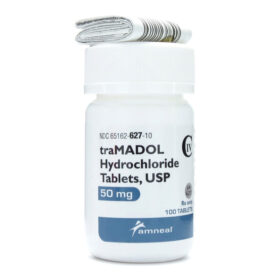

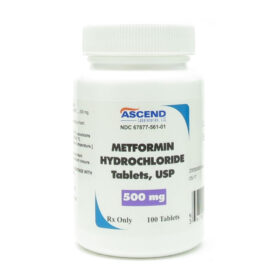
Metformina 500 mg
€1,500
Wybierz opcje
Ten produkt występuje w wielu wariantach. Opcje można wybrać na stronie produktu.
Oxycontin 40 mg
Zakres cen: od €200 do €580
Wybierz opcje
Ten produkt występuje w wielu wariantach. Opcje można wybrać na stronie produktu.
 English
 German
 Dutch
 Polish
 Portuguese
Recenzje
Nie ma jeszcze żadnych opinii.