
- Your cart is empty
- Continue Shopping

Produto

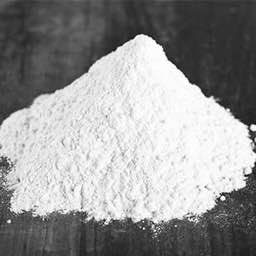
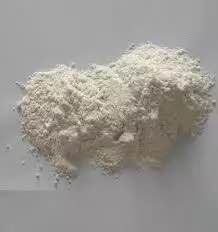
Dextroamphetamine Powder
Dextroamphetamine Powder
Price range: €170 through €1,600
Quantidade
Choose an option
Adicionar ao carrinho
Mehr lesen
Dextroamphetamine Powder
Dextroanfetamina Powder (chemically designated as (2S)-1-phenylpropan-2-amine, typically supplied in pharmaceutical compounding or analytical chemistry as sulfato de dextroanfetamina active pharmaceutical ingredient [$\text{API}$] powder) is the potent dextrorotatory ($d$-) enantiomer of amphetamine. Classified as a Schedule II controlled substance in the United States and a strictly regulated psychotropic central nervous system (CNS) stimulant internationally, bulk Dextroamphetamine Powder is restricted exclusively to licensed pharmaceutical compounding, institutional formulation manufacturing, and certified forensic/analytical reference laboratories (Uncompounded bulk powder is not for direct human consumption). Clinically formulated dextroamphetamine exhibits roughly 3- to 4-fold greater central dopaminergic potency than levoamphetamine.
Clinical & Analytical Applications
-
Licensed Pharmaceutical Compounding & Formulation: Utilized by accredited compounding pharmacies and manufacturers to prepare precision oral capsules, tablets, or oral solutions for Attention-Deficit/Hyperactivity Disorder ($\text{ADHD}$) e narcolepsy.
-
Forensic & Toxicological Reference Standard: Employed in analytical chemistry laboratories (via GC-MS e $\text{LC-MS/MS}$) as a primary chiral reference standard to differentiate enantiomeric amphetamine profiles in clinical and forensic toxicology.
-
Neuropharmacological Research: Studied in receptor-binding and monoamine release assays to characterize trace amine-associated receptor 1 ($\text{TAAR1}$) and vesicular monoamine transporter 2 ($\text{VMAT2}$) kinetics.
Mecanismo de ação farmacológica
Dextroamphetamine acts as an indirect-acting sympathomimetic amine that elevates synaptic concentrations of dopamine and norepinephrine across prefrontal cortical and striatal circuits:
$$\text{Dextroamphetamine} + \text{TAAR1 / VMAT2} \longrightarrow \text{Vesicular Efflux \& DAT/NET Reversal} \longrightarrow \uparrow\uparrow [\text{Dopamine \& Norepinephrine}]_{\text{Synaptic}}$$
-
$\text{TAAR1}$ Activation & Transporter Reversal: Enters presynaptic catecholaminergic terminals via dopamine ($\text{DAT}$) and norepinephrine ($\text{NET}$) transporters, activating intracellular $\text{TAAR1}$ to trigger protein kinase A ($\text{PKA}$) and protein kinase C ($\text{PKC}$) phosphorylation—reversing $\text{DAT}$ e $\text{NET}$ transport direction to actively pump catecholamines into the synaptic cleft.
-
$\text{VMAT2}$ Inhibition & Vesicular Redistribution: Disrupts vesicular proton gradients via $\text{VMAT2}$, redistributing stored dopamine and norepinephrine from synaptic vesicles into the cytoplasm for non-exocytotic efflux while weakly inhibiting monoamine oxidase ($\text{MAO}$).
-
Farmacocinética: Well absorbed orally when properly formulated (greater than 75% bioavailability), achieving peak plasma concentrations ($T_{\max}$) dentro de 1 to 3 hours (immediate-release). Hepatic metabolism occurs partially via $CYP2D6$-mediated aromatic hydroxylation (yielding 4-hydroxyamphetamine) and oxidative deamination into benzoic acid and hippuric acid, while 30% to 40% is excreted unchanged in urine in a pH-dependent manner (acidic urine accelerates clearance; alkaline urine prolongs half-life). Elimination half-life averages 10 a 12 horas em adultos.
Analytical & Clinical Advantages vs. Disadvantages
Vantagens
-
High Central-to-Peripheral Selectivity: Produces stronger prefrontal cortical dopaminergic/noradrenergic cognitive enhancement with fewer peripheral cardiovascular side effects per milligram than racemic amphetamine.
-
Established Therapeutic Efficacy: Well-characterized dose-response profile when accurately compounded into calibrated pharmaceutical dosage forms for $\text{ADHD}$ and narcolepsy.
Disadvantages & Toxicological Hazards
-
Extreme Gravimetric Dosing Error Hazard (Uncompounded Powder): Pure bulk powder cannot be safely measured without analytical microbalances; minor weighing errors cause severe acute sympathomimetic overdose.
-
High Abuse, Dependence, & Diversion Liability: Potent mesolimbic dopamine efflux creates high potential for psychological dependence, compulsive misuse, and rapid tolerance.
-
Cardiovascular & Neuropsychiatric Toxicity: Elevates heart rate and blood pressure, posing severe risks of arrhythmias, myocardial ischemia, and stimulant-induced psychosis.
Informações adicionais
| Quantidade | 10g, 25g, 50g, 100g |
|---|
Produtos relacionados
Ethylphenidate
Price range: €160 through €1,000
Selecione as opções
Este produto possui diversas variantes. As opções podem ser selecionadas na página do produto.
 English
 German
 Dutch
 Polish
 Portuguese
Avaliações
Ainda não há avaliações.