
- Your cart is empty
- Continue Shopping

Produto

Zopiclone 7.5mg Tablets
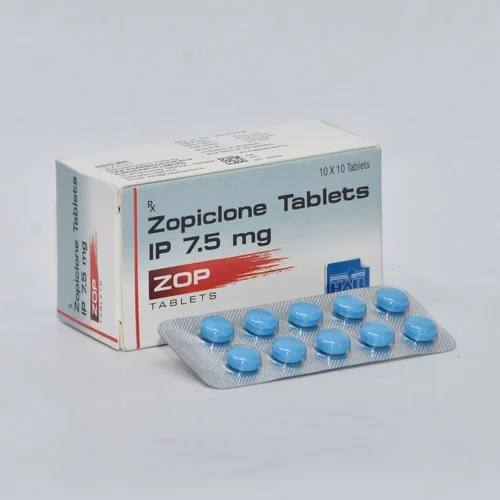
Zopiclone 7.5mg Tablets
€125
Adicionar ao carrinho
Mehr lesen
Zopiclone 7.5mg Tablets
Zopiclone 7.5mg Tablets are an oral, short-acting non-benzodiazepine sedative-hypnotic formulation containing 7.5mg of racemic zopiclone (a cyclopyrrolone-class agent commonly categorized as a “Z-drug”). Regulated internationally as a Schedule IV controlled substance or strict prescription-only hypnotic, Zopiclone 7.5mg Tablets represent the standard adult therapeutic dose indicated for the short-term management of severe, disabling insomnia. Although structurally distinct from traditional benzodiazepines, zopiclone modulates central GABAA receptor complexes to accelerate sleep onset, reduce nocturnal awakenings, and stabilize sleep continuity.
Indicações clínicas primárias
-
Severe Acute & Situational Insomnia: Indicated for short-term management (typically 7 to 14 days, not exceeding 4 weeks including gradual tapering) of transient or chronic insomnia causing marked daytime impairment.
-
Sleep-Onset & Sleep-Maintenance Disturbances: Prescribed to shorten prolonged sleep-onset latency and prevent fragmented nocturnal awakenings in adult patients when non-pharmacological interventions (such as cognitive behavioral therapy for insomnia, $\text{CBT-I}$) prove insufficient.
Mecanismo de ação farmacológica
Zopiclone 7.5mg Tablets induce sedative-hypnotic effects by selectively enhancing inhibitory gamma-aminobutyric acid (GABA) neurotransmission in the central nervous system:
$$\text{Zopiclone} + \text{GABA}_\text{A}\text{ Receptor (}\alpha_1/\alpha_2/\alpha_3\text{ Subunits)} \longrightarrow \uparrow \text{Cl}^-\text{ Channel Opening Frequency} \longrightarrow \text{Neuronal Hyperpolarization}$$
-
Cyclopyrrolone Allosteric GABAA Binding: Binds with high affinity to the benzodiazepine recognition site located on postsynaptic GABAA receptor complexes containing $\alpha_1$, $\alpha_2$, e $\alpha_3$ subunits, inducing a distinct receptor conformational shift that increases endogenous GABA binding affinity.
-
Chloride Influx & Cortical Suppression: Increases the opening frequency of transmembrane chloride ion ($\text{Cl}^-$) channels, hyperpolarizing neuronal membranes and dampening hyperarousal across thalamocortical and limbic sleep-wake circuits.
-
Farmacocinética: Rapidly absorbed from the gastrointestinal tract following oral administration (75% to 80% absolute bioavailability), reaching peak plasma concentrations ($T_{\max}$) dentro de 1,5 a 2 horas. Hepatic biotransformation occurs primarily via $CYP3A4$ e $CYP2C8$ into an active metabolite (N-oxide-zopiclone) and an inactive metabolite (N-desmethyl-zopiclone), yielding an elimination half-life of 5 a 6 horas in healthy adults (extending to 7 to 8 hours in geriatric patients or those with hepatic dysfunction).
Vantagens clínicas versus desvantagens
Vantagens
-
Rapid Sleep Induction: Quick oral absorption initiates sleep within 30 to 45 minutes, effectively resolving acute sleep-latency complaints.
-
Reduced Morning Hangover Relative to Long-Acting Benzodiazepines: Its 5-to-6-hour elimination half-life clears substantially faster than diazepam or flurazepam, minimizing next-day residual sedation when followed by an uninterrupted 7-to-8-hour sleep period.
-
Favorable Deep-Sleep Preservation: Maintains slow-wave ($\text{N3}$) sleep architecture more effectively than barbiturates or over-the-counter anticholinergic antihistamines.
Desvantagens
-
Prominent Metallic / Bitter Dysgeusia: Salivary excretion of zopiclone frequently produces a persistent bitter or metallic taste upon waking.
-
Physical Dependence, Tolerance, & Rebound Insomnia: Nightly administration beyond 2 to 4 weeks promotes $\text{GABA}_\text{A}$ receptor adaptation, tolerance, and severe rebound insomnia if discontinued abruptly.
-
Complex Sleep Behaviors & Psychomotor Impairment: Carries risks of sleepwalking, sleep-driving, anterograde amnesia, and impaired morning coordination.
Perfil de efeitos colaterais e avisos de segurança
| Categoria de gravidade | Manifestações Clínicas Comuns |
| Comum/Leve | Bitter or metallic aftertaste (dysgeusia), xerostomia (dry mouth), daytime somnolence, dizziness, lightheadedness, headache, fatigue, and mild dyspepsia. |
| Grave/Adverso | Complex sleep-related behaviors (sleep-driving, sleep-eating, sleepwalking with complete amnesia), severe respiratory depression, paradoxical behavioral agitation or hallucinations, angioedema, and acute withdrawal seizures. |
| Avisos críticos | Respiratory Arrest, Complex Sleep Behaviors, & Dependence Hazard: Strictly contraindicated in patients with myasthenia gravis, severe respiratory insufficiency, severe obstructive sleep apnea, severe hepatic impairment, or any prior history of complex sleep behaviors following Z-drug ingestion. Co-administration with opioids, alcohol, benzodiazepines, or other CNS depressants substantially elevates the risk of profound sedation, fatal respiratory depression, coma, and death. Elderly or hepatically impaired patients must initiate therapy at a reduced 3.75mg dose to prevent drug accumulation and falls. Limit duration to 4 weeks maximum and taper gradually upon cessation. |
Produtos relacionados
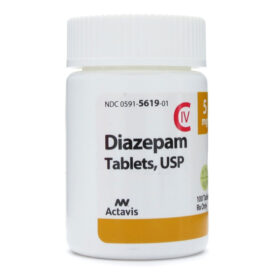
Comprimidos de Diazepam 10mg
Price range: €95 through €600
Selecione as opções
Este produto possui diversas variantes. As opções podem ser selecionadas na página do produto.
 English
 German
 Dutch
 Polish
 Portuguese
Avaliações
Ainda não há avaliações.