
- Your cart is empty
- Continue Shopping

Product

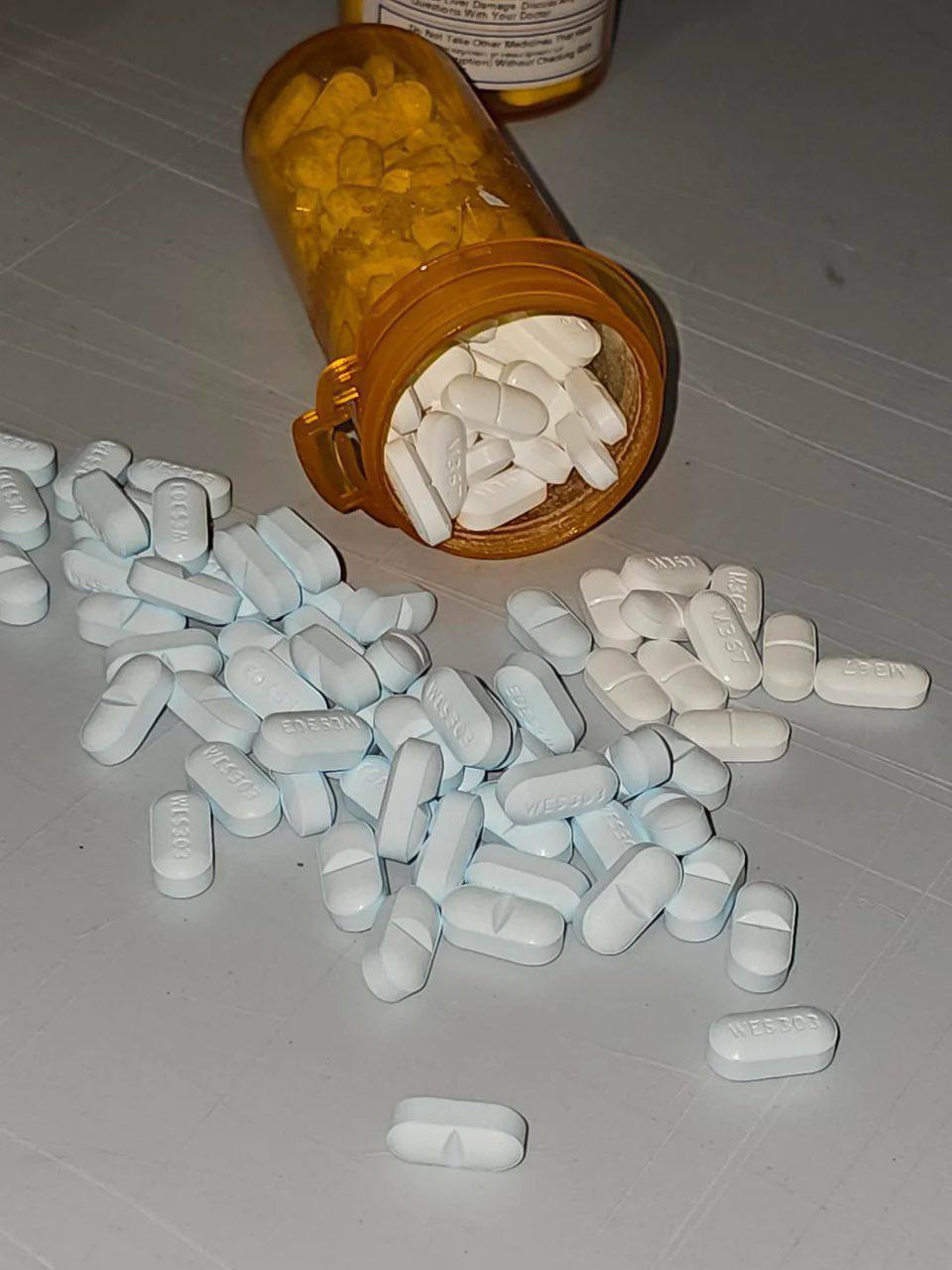
Hydrocodone 10mg
Hydrocodone 10mg
Price range: €90 through €490
Quantity
Choose an option
Add to cart
Buy Now
Hydrocodone 10mg
Hydrocodone 10mg is a potent, semi-synthetic hydrogenated codeine derivative classified as a Schedule II controlled substance. Formulated in immediate-release or extended-release oral combinations (commonly combined with acetaminophen), Hydrocodone 10mg is indicated for the management of severe pain requiring an opioid analgesic when alternative treatment strategies prove inadequate. Designed to modulate central pain signaling, its clinical deployment demands precise titration and rigorous risk management to ensure optimal therapeutic outcomes.
Primary Clinical Indications
-
Management of Severe Acute Pain: Indicated for short-term control of severe pain secondary to major surgical procedures, severe physical trauma, or orthopedic interventions.
-
Breakthrough Pain Coverage: Utilized in structured pain protocols to control severe episodic pain spikes when non-opioid baseline analgesics fail.
-
Refractory Multimodal Pain Relief: Integrated into short-term clinical protocols when nonsteroidal anti-inflammatory drugs (NSAIDs) or acetaminophen alone cannot achieve functional pain relief.
Pharmacological Mechanism of Action
Hydrocodone 10mg exerts its analgesic action primarily through central nervous system modulation:
$$\text{Hydrocodone} + \mu\text{-Opioid Receptors} \longrightarrow \begin{cases} \text{Presynaptic: } \downarrow \text{Ca}^{2+} \text{ Influx} \longrightarrow \downarrow \text{Substance P / Glutamate} \\ \text{Postsynaptic: } \uparrow \text{K}^+ \text{ Efflux} \longrightarrow \text{Neuronal Membrane Hyperpolarization} \end{cases}$$
-
Selective Agonism: Hydrocodone acts as a full agonist primarily at central $\mu$-opioid receptors located throughout the brainstem and spinal cord.
-
Inhibitory Cascade: Receptor binding activates $G_i/G_o$ protein complexes, inhibiting adenylyl cyclase, reducing intracellular cyclic AMP ($\text{cAMP}$), blocking presynaptic voltage-gated calcium channels, and promoting postsynaptic potassium efflux. This dual action suppresses ascending nociceptive pathways.
-
Metabolism & Elimination: Undergoes hepatic metabolism via $CYP2D6$ (converting to its active metabolite hydromorphone) and $CYP3A4$ (converting to norhydrocodone). The elimination half-life averages 3.8 to 4.5 hours.
Clinical Advantages vs. Disadvantages
Advantages
-
Potent Analgesic Efficacy: Provides predictable, high-level pain control for moderate-to-severe pain states.
-
Synergistic Formulations: Frequently combined with non-opioid analgesics (e.g., acetaminophen) to yield synergistic pain relief while lowering individual drug burden.
-
Multiple Dosing Kinetics: Available in immediate-release options for acute flare-ups and extended-release options for continuous coverage.
Disadvantages
-
High Abuse Potential: Carries significant risks of dependence, tolerance, physical addiction, and diversion.
-
Organ Toxicity Risks: Combination products containing acetaminophen carry risks of severe hepatotoxicity if daily limits (typically 3,000mg–4,000mg) are exceeded.
-
Nervous System & GI Suppression: Produces baseline dose-dependent central nervous system depression and gastrointestinal hypomotility.
Side Effects Profile & Safety Warnings
| Severity Category | Common Clinical Manifestations |
| Common / Transient | Nausea, vomiting, constipation, somnolence, dizziness, sedation, and lightheadedness. |
| Severe / Adverse | Severe bradycardia, hypotension, urinary retention, bowel obstruction, or confusion. |
| Critical Warnings | Black Box Warning: Risk of fatal respiratory depression, addiction, abuse, and misuse. Co-administration with benzodiazepines, alcohol, or other CNS depressants greatly increases the risk of coma and death. |
Additional Information
| Quantity | 10ct, 25ct, 50ct |
|---|
Related products
Diazepam 10mg Tablets
Price range: €95 through €600
Select options
This product has multiple variants. The options may be chosen on the product page
 English
 German
 Dutch
 Polish
 Portuguese
Reviews
There are no reviews yet.