
- Your cart is empty
- Continue Shopping

Product

Azithromycin 250mg
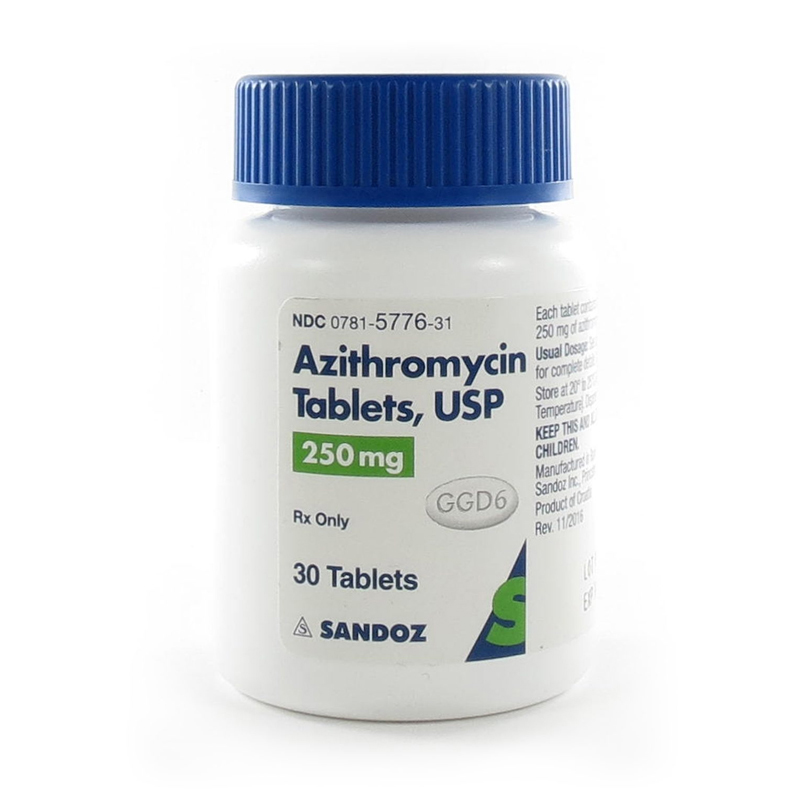
Azithromycin 250mg
€50
Add to cart
Buy Now
Azithromycin 250mg
Azithromycin 250mg (commonly recognized by brand names such as Zithromax or “Z-Pak”) is an oral, broad-spectrum macrolide antibiotic belonging to the azalide subclass. Regulated as a prescription-only antimicrobial medication, the 250mg film-coated tablet or capsule is widely prescribed for managing mild-to-moderate respiratory, dermatological, and sexually transmitted bacterial infections caused by susceptible microorganisms.
Primary Clinical Indications
-
Respiratory Tract Infections: Indicated for acute bacterial exacerbations of chronic obstructive pulmonary disease (COPD), acute bacterial sinusitis, community-acquired pneumonia, pharyngitis, and tonsillitis.
-
Skin and Soft Tissue Infections: Prescribed for uncomplicated skin and skin structure infections caused by Staphylococcus aureus, Streptococcus pyogenes, or Streptococcus agalactiae.
-
Sexually Transmitted Infections (STIs): Effective as a single-dose or short-course regimen for non-gonococcal urethritis and cervicitis caused by Chlamydia trachomatis.
-
Otitis Media: Used in acute middle ear infections in pediatric and adult populations.
Mechanism of Action: Protein Synthesis Inhibition
Azithromycin exerts its antibacterial activity by interfering with bacterial protein translation:
$$\text{Azithromycin} + \text{50S Ribosomal Subunit} \longrightarrow \text{Inhibition of Translocation} \longrightarrow \text{Bacterial Growth Arrest}$$
-
Ribosomal Binding: Binds reversibly to the 50S ribosomal subunit of susceptible microorganisms, specifically targeting the 23S rRNA.
-
Translation Blockade: Inhibits the translocation step of protein synthesis, preventing the assembly of essential bacterial proteins and halting bacterial proliferation (bacteriostatic effect, which can become bactericidal at higher concentrations).
-
Pharmacokinetics: Exhibits extensive tissue distribution and high intracellular concentration in phagocytes. Peak plasma levels ($T_{\max}$) occur within 2.1 to 3.2 hours, featuring a prolonged terminal elimination half-life of approximately 68 hours, enabling convenient short-course dosing.
Dosing and Administration Guidelines
| Clinical Parameter | Standard Clinical Dosing Protocol |
| Standard “Z-Pak” Regimen | 500mg (two 250mg tablets) as a single dose on Day 1, followed by 250mg once daily on Days 2 through 5. |
| Chlamydia Trachomatis STI | 1,000mg (four 250mg tablets) as a single oral dose. |
| Administration Protocol | May be taken with or without food. Taking with meals reduces potential gastrointestinal discomfort. |
Critical Safety Warnings and Clinical Precautions
-
QT Interval Prolongation: Can prolong cardiac repolarization and the QT interval, creating a risk for cardiac arrhythmias, including Torsades de Pointes. Caution is advised in patients with known proarrhythmic conditions or uncorrected hypokalemia.
-
Hepatotoxicity Risk: Abnormal liver function, hepatitis, cholestatic jaundice, and hepatic necrosis have been reported. Discontinue therapy immediately if signs of hepatitis occur.
-
Clostridioides difficile-Associated Diarrhea (CDAD): Like most antibacterial agents, treatment can alter normal colonic flora, leading to C. difficile overgrowth and potentially severe pseudomembranous colitis.
Related products
Butalbital Acetaminophen
Price range: €30 through €90
Select options
This product has multiple variants. The options may be chosen on the product page
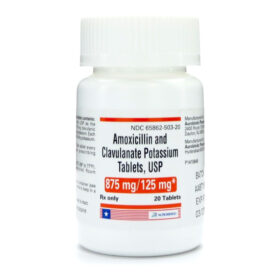
Amoxicillin 875mg/125mg
Price range: €25 through €45
Select options
This product has multiple variants. The options may be chosen on the product page
 English
 German
 Dutch
 Polish
 Portuguese
Reviews
There are no reviews yet.