
- Your cart is empty
- Continue Shopping


Product

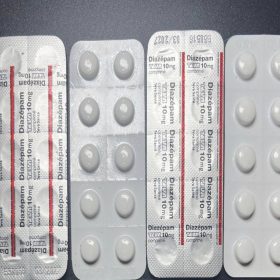
Diazepam 10mg Teva
Diazepam 10mg Teva
€90
Add to cart
Buy Now
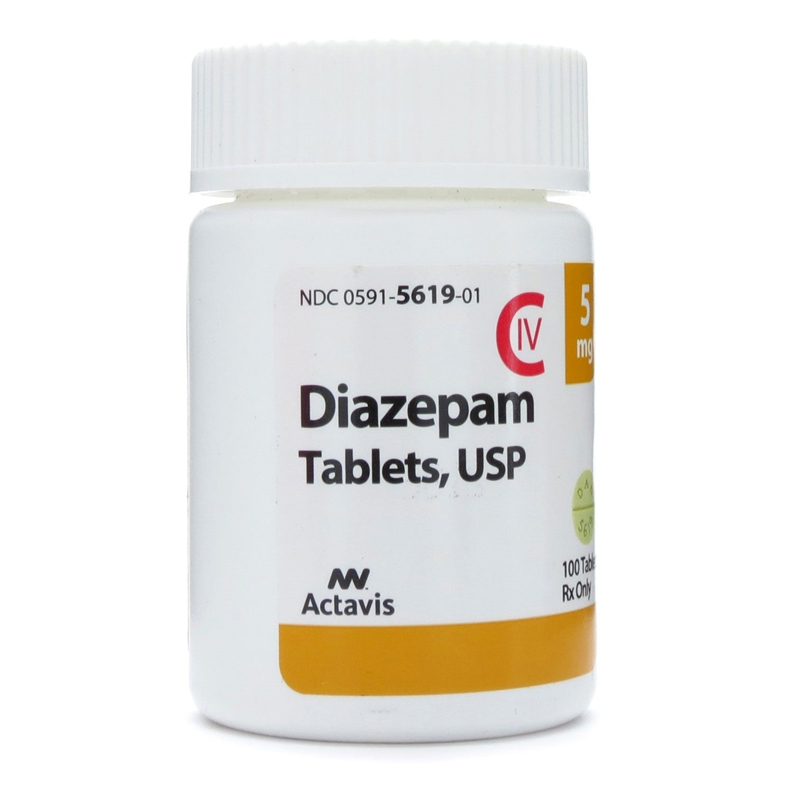
Diazepam 10mg Teva
Diazepam 10mg Teva (manufactured by Teva Pharmaceuticals) is an oral, long-acting generic formulation of the classic benzodiazepine Valium. Regulated as a Schedule IV controlled substance in the United States and strictly controlled as a prescription-only medication globally, Diazepam 10mg Teva represents a standard high-potency single-dose strength. It is prescribed for the clinical management of severe anxiety disorders, acute alcohol withdrawal symptoms, skeletal muscle spasms, and as an adjunct in convulsive seizure disorders.
Primary Clinical Indications
-
Severe Anxiety Management: Prescribed for the short-term symptomatic relief of severe, disabling anxiety and acute psychoneurotic states.
-
Acute Alcohol Withdrawal: Indicated to control acute agitation, tremors, impending delirium tremens, and hallucinations in severe alcohol detoxification protocols.
-
Skeletal Muscle Spasm Relief: Used as an adjunctive treatment for spasticity resulting from local muscle trauma or central upper motor neuron disorders, such as cerebral palsy and paraplegia.
-
Convulsive Disorders: Prescribed as an adjunctive oral therapy for managing status epilepticus and recurrent seizure conditions.
Mechanism of Action: Potentiating Central GABAergic Inhibition
Diazepam Teva functions as a positive allosteric modulator at the central nervous system $\text{GABA}_\text{A}$ receptor complex:
$$\text{Diazepam (Teva)} + \text{GABA}_\text{A}\text{ Receptor} \longrightarrow \uparrow \text{Chloride Channel Opening Frequency} \longrightarrow \text{Neuronal Hyperpolarization}$$
-
Allosteric Facilitation: Binds directly to benzodiazepine recognition sites on postsynaptic $\text{GABA}_\text{A}$ receptors, enhancing the binding affinity of the primary inhibitory neurotransmitter $\gamma$-aminobutyric acid ($\text{GABA}$).
-
Neuronal Membrane Hyperpolarization: Increases the opening frequency of chloride ion channels, driving hyperpolarization across neuronal membranes and dampening excessive neuronal firing within the limbic system, thalamus, and cortex.
-
Pharmacokinetics: Rapidly absorbed through the gastrointestinal tract, reaching peak plasma concentration ($T_{\max}$) within 0.5 to 2 hours. It exhibits an extended biphasic elimination half-life of 20 to 50 hours (and up to 100 hours for its primary active metabolite, N-desmethyldiazepam).
Dosing and Administration Guidelines
| Clinical Parameter | Standard Clinical Dosing Protocol |
| Severe Outpatient Anxiety | 2mg to 10mg orally 2 to 4 times daily, tailored to patient response. |
| Acute Alcohol Withdrawal | 10mg orally 3 to 4 times during the first 24 hours, reduced to 5mg 3 to 4 times daily as needed. |
| Muscle Spasm / Seizure Adjunct | 2mg to 10mg orally 3 to 4 times daily. |
| Geriatric & Debilitated Dosing | 2mg to 2.5mg orally 1 or 2 times daily initially to prevent severe ataxia or prolonged sedation. |
Critical Safety Warnings and Clinical Precautions
-
Black Box Warning — Concomitant Opioid Risk: Co-administration with opioids, alcohol, or other central nervous system depressants significantly increases the risk of severe respiratory depression, profound sedation, coma, and death.
-
Black Box Warning — Abuse, Misuse, and Dependence: High potential for physical dependence and addiction. Abrupt cessation following chronic use can trigger life-threatening withdrawal symptoms, including delirium tremens and grand mal seizures.
-
Cognitive & Motor Impairment: Causes somnolence and motor incoordination; patients must avoid driving or operating heavy machinery during treatment.
Related products
Clindamycin 150mg
Price range: €45 through €260
Select options
This product has multiple variants. The options may be chosen on the product page
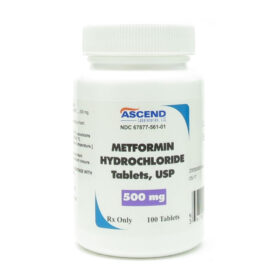
Metformin 500mg
€1,500
Select options
This product has multiple variants. The options may be chosen on the product page
 English
 German
 Dutch
 Polish
 Portuguese
Reviews
There are no reviews yet.