
- Your cart is empty
- Continue Shopping

Product

Tilidin AL Comp
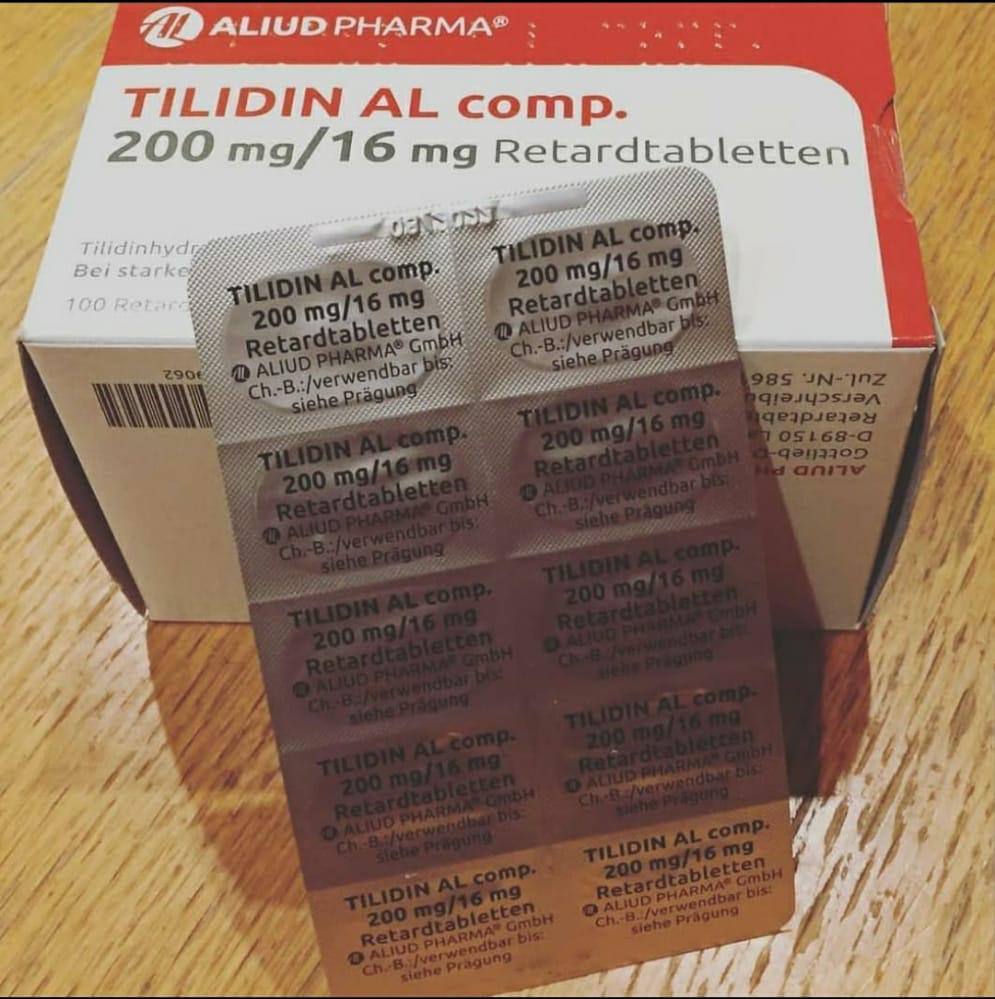
Tilidin AL Comp
Price range: €146 through €650
Quantity
Choose an option
Add to cart
Buy Now
Tilidin AL Comp
Tilidin AL Comp is an oral fixed-dose combination analgesic containing tilidine hydrochloride (a synthetic opioid agonist) and naloxone hydrochloride (an opioid receptor antagonist). Commonly prescribed across European jurisdictions, Tilidin AL Comp is indicated for the treatment of severe, intractable pain in adults and adolescents aged 14 years and older when non-opioid analgesics prove inadequate. The formulation is engineered with a built-in protective mechanism: when taken orally as prescribed, the naloxone undergoes extensive first-pass metabolism, allowing tilidine’s active metabolite to deliver central analgesia.
Primary Clinical Indications
-
Management of Severe Chronic Pain: Prescribed for long-term management of persistent, severe pain conditions such as advanced osteoarthritis, severe spinal syndromes, and chronic musculoskeletal pain.
-
Oncology Pain Management: Integrated into round-the-clock opioid protocols to manage moderate-to-severe pain associated with malignant tumors.
-
Refractory Post-Surgical & Post-Traumatic Pain: Utilized in controlled clinical settings for severe acute pain following major orthopedic, abdominal, or traumatic interventions when lower-tier analgesics fail.
Pharmacological Mechanism of Action
Tilidin AL Comp produces analgesia through a prodrug conversion process combined with a first-pass antagonist safety mechanism:
$$\text{Tilidine (Prodrug)} \xrightarrow[\text{First-Pass Cleavage}]{\text{Hepatic } CYP3A4 / CYP2C19} \text{Nortilidine (Active Agonist)} \longrightarrow \mu\text{-Opioid Activation}$$
$$\text{Oral Naloxone} \xrightarrow[\text{First-Pass Metabolism}]{\text{Hepatic Glucuronidation } (>97\%)} \text{Inactive Glucuronide (No Systemic Blockade)}$$
-
Hepatic Bioactivation: Tilidine itself possesses weak intrinsic opioid activity. Upon oral ingestion, it undergoes rapid hepatic metabolism via $CYP3A4$ and $CYP2C19$ into its primary active metabolite, nortilidine, a potent full agonist at central $\mu$-opioid receptors.
-
First-Pass Antagonist Elimination: Oral naloxone undergoes extensive ($>97\%$) hepatic first-pass metabolism into inactive metabolites, allowing nortilidine to bind freely to central $\mu$-opioid receptors to inhibit nociceptive signal transmission.
-
Parenteral Abuse Prevention: If the tablets are crushed, dissolved, and injected or taken in extreme excess, systemic naloxone bypasses or saturates first-pass metabolism, binding to $\mu$-opioid receptors and blocking nortilidine‘s actions, thereby preventing euphoria or triggering acute withdrawal in opioid-dependent individuals.
-
Pharmacokinetics: Peak plasma concentration ($T_{\max}$) of nortilidine is reached within 1 to 2 hours (immediate-release) or 2 to 4 hours (extended-release). The elimination half-life of nortilidine is approximately 3 to 5 hours.
Clinical Advantages vs. Disadvantages
Advantages
-
Built-in Misuse Deterrence: The inclusion of naloxone significantly reduces parenteral abuse and non-medical diversion potential.
-
Effective Multimodal Analgesia: High potency and predictable central analgesia for mixed nociceptive pain states.
-
Available Extended-Release Profiles: Retard formulation options allow stable, twice-daily dosing regimens for consistent 24-hour pain control.
Disadvantages
-
Metabolic Dependency: Analgesic efficacy depends entirely on functional hepatic conversion of tilidine to nortilidine by $CYP$ enzymes; severe liver impairment reduces therapeutic output.
-
Ceiling Effect from Naloxone at Extreme Oral Doses: Ingesting massive oral quantities can overwhelm first-pass hepatic metabolism, causing naloxone to enter systemic circulation and antagonize pain relief.
-
Opioid-Related Side Effects: Frequently causes central nervous system depression and gastrointestinal hypomotility.
Side Effects Profile & Safety Warnings
| Severity Category | Common Clinical Manifestations |
| Common / Mild | Dizziness, somnolence, nausea, vomiting, constipation, headache, hyperhidrosis (excessive sweating), and fatigue. |
| Severe / Adverse | Severe hypotension, bradycardia, confusion, respiratory depression, bowel obstruction, or severe hypersensitivity reactions. |
| Critical Warnings | Contraindicated in Severe Hepatic Impairment: Patients with compromised liver function cannot effectively metabolize naloxone on first pass, leading to systemic naloxone accumulation and loss of analgesic efficacy. Concomitant use with alcohol, benzodiazepines, or other CNS depressants carries severe risks of profound sedation, coma, and fatal respiratory arrest. |
Additional Information
| Quantity | 50 Tabs, 100 Tabs, 200 Tabs |
|---|
Related products
Oxycontin 40mg
Price range: €200 through €580
Select options
This product has multiple variants. The options may be chosen on the product page
Y21 Xanax
Price range: €80 through €300
Select options
This product has multiple variants. The options may be chosen on the product page
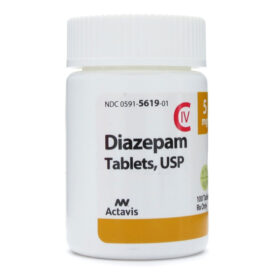
Diazepam 10mg Tablets
Price range: €95 through €600
Select options
This product has multiple variants. The options may be chosen on the product page
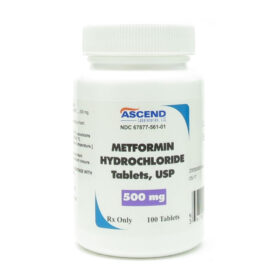
Metformin 500mg Tablets
Price range: €150 through €500
Select options
This product has multiple variants. The options may be chosen on the product page
 English
 German
 Dutch
 Polish
 Portuguese
Reviews
There are no reviews yet.