
- Your cart is empty
- Continue Shopping

Produkt

Hydromorphon 4 mg
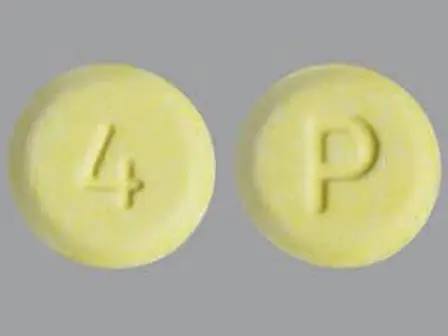
Hydromorphon 4 mg
€240
In den Warenkorb legen
Jetzt kaufen
Hydromorphon 4 mg
Hydromorphon 4 mg is a high-potency, immediate-release semi-synthetic opioid analgesic tablet containing 4mg of hydromorphone hydrochloride (dihydromorphinone). Classified globally as a Schedule II controlled substance, Hydromorphon 4mg is indicated for the management of acute or chronic severe pain that requires an opioid analgesic and for which alternative non-opioid treatments are inadequate. Exhibiting approximately 5 to 7 times the analgesic potency of oral morphine, the 4mg oral tablet provides rapid systemic nociceptive relief under strict medical supervision.
Primäre klinische Indikationen
-
Severe Acute & Post-Operative Pain: Indicated for short-term control of intense nociceptive pain following major surgical procedures, severe trauma, or acute visceral crises.
-
Chronic Oncological & Palliative Pain: Prescribed in opioid-tolerant patients requiring around-the-clock or breakthrough analgesia for advanced malignancy-related pain.
-
Opioid Rotation Protocols: Utilized as an alternative strong opioid analgesic in patients experiencing refractory pain or intolerable adverse effects from morphine or oxycodone.
Pharmakologischer Wirkmechanismus
Hydromorphon 4mg produces profound central analgesia by selectively binding and activating inhibitory opioid receptors across the brain and spinal cord:
$$\text{Hydromorphone} + \mu\text{-Opioid Receptors (CNS)} \longrightarrow \downarrow \text{cAMP \& Ca}^{2+}\text{ Influx} \longrightarrow \text{Inhibition of Ascending Pain Pathways}$$
-
Selektiv $\mu$-Opioidrezeptor-Agonismus: Acts primarily as a full agonist at central $\mu$-Opioidrezeptoren (with minor affinity for $\delta$- Und $\kappa$-opioid receptors), inhibiting adenylate cyclase, closing voltage-gated N-type calcium channels, and opening G-protein-coupled inwardly rectifying potassium ($\text{GIRK}$) channels.
-
Nociceptive Signal Suppression: Hyperpolarizes postsynaptic neurons in the dorsal horn of the spinal cord and alters emotional pain perception within the limbic system and periaqueductal gray.
-
Pharmakokinetik: Rapidly absorbed following oral administration, achieving peak plasma concentrations ($T_{\max}$) innerhalb 0,5 bis 1 Stunde (with oral bioavailability averaging 24% to 62% due to extensive first-pass hepatic metabolism). Hydromorphone is metabolized primarily via hepatic glucuronidation (mediated by $UGT2B7$) into inactive hydromorphone-3-glucuronide ($\text{H3G}$), exhibiting an immediate-release elimination half-life of 2 bis 3 Stunden.
Klinische Vorteile vs. Nachteile
Vorteile
-
Rapid Analgesic Onset: Fast gastrointestinal absorption produces measurable pain relief within 15 to 30 minutes, ideal for acute breakthrough pain episodes.
-
Absence of Active Renally Cleared Morphine Metabolites: Unlike morphine, hydromorphone does not form morphine-6-glucuronide ($\text{M6G}$), offering a cleaner metabolic profile in mild-to-moderate renal impairment (though $\text{H3G}$ accumulation still requires caution).
-
Minimal Cytochrome P450 Drug Interactions: Metabolized predominantly through glucuronidation rather than $CYP450$ enzymes, reducing metabolic interference with $CYP3A4$ oder $CYP2D6$ substrates.
Nachteile
-
Extreme Abuse, Misuse, & Overdose Potential: High potency and rapid onset confer substantial risks of psychological addiction, diversion, and fatal respiratory arrest.
-
Schnelle Toleranzentwicklung und körperliche Abhängigkeit: Bei kontinuierlicher Verabreichung kommt es zu einer Desensibilisierung der Rezeptoren, weshalb eine sorgfältige Dosistitration und ein strukturiertes ärztliches Ausschleichen erforderlich sind, um akute Opioidentzugserscheinungen zu verhindern.
-
Ausgeprägte gastrointestinale und ZNS-Nebenwirkungen: Häufige Folge von schwerer opioidinduzierter Obstipation (OIC), Übelkeit, Schwindel und ausgeprägter kognitiver Sedierung.
Nebenwirkungsprofil & Sicherheitshinweise
| Schweregradkategorie | Häufige klinische Manifestationen |
| Häufig / Mild | Verstopfung, Übelkeit, Erbrechen, Schläfrigkeit, Schwindel, Benommenheit, Juckreiz, Mundtrockenheit und Schwitzen. |
| Schwerwiegend / Nachteilig | Lebensbedrohliche Atemdepression, ausgeprägte Hypotonie, paralytischer Ileus, neuroexzitatorischer Myoklonus (bei hohen Dosen) oder Nebenniereninsuffizienz. |
| Kritische Warnungen | Warnung im schwarzen Kasten: Es birgt ein extrem hohes Risiko von Abhängigkeit, Missbrauch und Fehlgebrauch, was zu einer tödlichen Überdosis führen kann. Schwere, lebensbedrohliche oder tödliche Atemdepressionen können auftreten, insbesondere zu Beginn der Behandlung oder nach einer Dosiserhöhung. Die versehentliche Einnahme auch nur einer einzigen 4-mg-Tablette kann gefährlich sein – insbesondere durch Kinder oder Personen, die noch nie Opioide eingenommen haben.—Kann zu einer tödlichen Überdosis führen. Die gleichzeitige Anwendung mit Benzodiazepinen, Alkohol oder anderen zentraldämpfenden Mitteln kann zu starker Sedierung, Atemdepression, Koma und Tod führen. |
Ähnliche Produkte
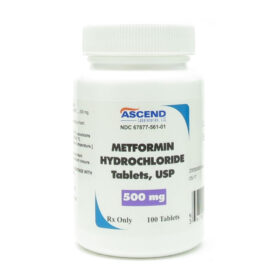
Metformin 500 mg Tabletten
Preisspanne: €150 bis €500
Optionen auswählen
Dieses Produkt ist in mehreren Varianten erhältlich. Die Optionen können auf der Produktseite ausgewählt werden.
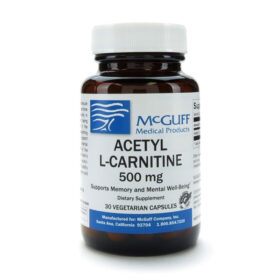
Metformin 500 mg
€1,500
Optionen auswählen
Dieses Produkt ist in mehreren Varianten erhältlich. Die Optionen können auf der Produktseite ausgewählt werden.
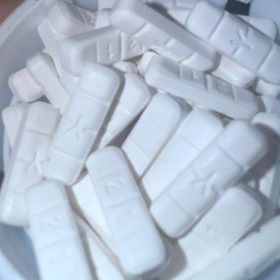
Y21 Xanax
Preisspanne: €80 bis €300
Optionen auswählen
Dieses Produkt ist in mehreren Varianten erhältlich. Die Optionen können auf der Produktseite ausgewählt werden.
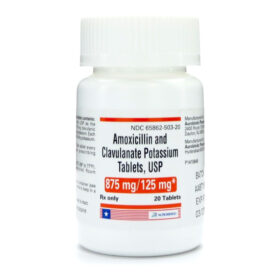
Amoxicillin 875 mg/125 mg
Preisspanne: €25 bis €45
Optionen auswählen
Dieses Produkt ist in mehreren Varianten erhältlich. Die Optionen können auf der Produktseite ausgewählt werden.
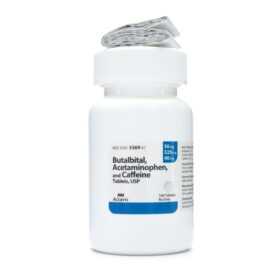
Butalbital Paracetamol
Preisspanne: €30 bis €90
Optionen auswählen
Dieses Produkt ist in mehreren Varianten erhältlich. Die Optionen können auf der Produktseite ausgewählt werden.
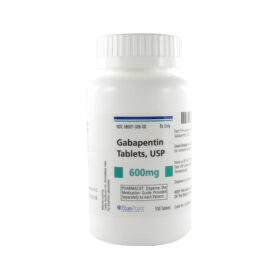
Gabapentin 600 mg
Preisspanne: €60 bis €180
Optionen auswählen
Dieses Produkt ist in mehreren Varianten erhältlich. Die Optionen können auf der Produktseite ausgewählt werden.
 English
 German
 Dutch
 Polish
 Portuguese
Rezensionen
Es liegen noch keine Bewertungen vor.