
- Your cart is empty
- Continue Shopping

Product

Hydromorphon 4mg
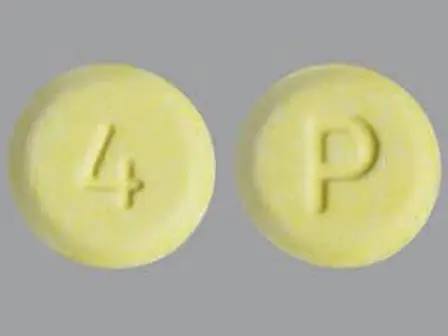
Hydromorphon 4mg
€240
Add to cart
Buy Now
Hydromorphon 4mg
Hydromorphon 4mg is a high-potency, immediate-release semi-synthetic opioid analgesic tablet containing 4mg of hydromorphone hydrochloride (dihydromorphinone). Classified globally as a Schedule II controlled substance, Hydromorphon 4mg is indicated for the management of acute or chronic severe pain that requires an opioid analgesic and for which alternative non-opioid treatments are inadequate. Exhibiting approximately 5 to 7 times the analgesic potency of oral morphine, the 4mg oral tablet provides rapid systemic nociceptive relief under strict medical supervision.
Primary Clinical Indications
-
Severe Acute & Post-Operative Pain: Indicated for short-term control of intense nociceptive pain following major surgical procedures, severe trauma, or acute visceral crises.
-
Chronic Oncological & Palliative Pain: Prescribed in opioid-tolerant patients requiring around-the-clock or breakthrough analgesia for advanced malignancy-related pain.
-
Opioid Rotation Protocols: Utilized as an alternative strong opioid analgesic in patients experiencing refractory pain or intolerable adverse effects from morphine or oxycodone.
Pharmacological Mechanism of Action
Hydromorphon 4mg produces profound central analgesia by selectively binding and activating inhibitory opioid receptors across the brain and spinal cord:
$$\text{Hydromorphone} + \mu\text{-Opioid Receptors (CNS)} \longrightarrow \downarrow \text{cAMP \& Ca}^{2+}\text{ Influx} \longrightarrow \text{Inhibition of Ascending Pain Pathways}$$
-
Selective $\mu$-Opioid Receptor Agonism: Acts primarily as a full agonist at central $\mu$-opioid receptors (with minor affinity for $\delta$– and $\kappa$-opioid receptors), inhibiting adenylate cyclase, closing voltage-gated N-type calcium channels, and opening G-protein-coupled inwardly rectifying potassium ($\text{GIRK}$) channels.
-
Nociceptive Signal Suppression: Hyperpolarizes postsynaptic neurons in the dorsal horn of the spinal cord and alters emotional pain perception within the limbic system and periaqueductal gray.
-
Pharmacokinetics: Rapidly absorbed following oral administration, achieving peak plasma concentrations ($T_{\max}$) within 0.5 to 1 hour (with oral bioavailability averaging 24% to 62% due to extensive first-pass hepatic metabolism). Hydromorphone is metabolized primarily via hepatic glucuronidation (mediated by $UGT2B7$) into inactive hydromorphone-3-glucuronide ($\text{H3G}$), exhibiting an immediate-release elimination half-life of 2 to 3 hours.
Clinical Advantages vs. Disadvantages
Advantages
-
Rapid Analgesic Onset: Fast gastrointestinal absorption produces measurable pain relief within 15 to 30 minutes, ideal for acute breakthrough pain episodes.
-
Absence of Active Renally Cleared Morphine Metabolites: Unlike morphine, hydromorphone does not form morphine-6-glucuronide ($\text{M6G}$), offering a cleaner metabolic profile in mild-to-moderate renal impairment (though $\text{H3G}$ accumulation still requires caution).
-
Minimal Cytochrome P450 Drug Interactions: Metabolized predominantly through glucuronidation rather than $CYP450$ enzymes, reducing metabolic interference with $CYP3A4$ or $CYP2D6$ substrates.
Disadvantages
-
Extreme Abuse, Misuse, & Overdose Potential: High potency and rapid onset confer substantial risks of psychological addiction, diversion, and fatal respiratory arrest.
-
Rapid Tolerance & Physical Dependence: Continuous administration induces receptor desensitization, necessitating careful dose titration and structured medical tapering to prevent acute opioid withdrawal.
-
Pronounced Gastrointestinal & CNS Side Effects: Frequently triggers severe opioid-induced constipation (OIC), nausea, dizziness, and marked cognitive sedation.
Side Effects Profile & Safety Warnings
| Severity Category | Common Clinical Manifestations |
| Common / Mild | Constipation, nausea, vomiting, somnolence, dizziness, lightheadedness, pruritus (itching), dry mouth, and diaphoresis. |
| Severe / Adverse | Life-threatening respiratory depression, profound hypotension, paralytic ileus, neuroexcitatory myoclonus (at high doses), or adrenal insufficiency. |
| Critical Warnings | Black Box Warning: Carries extreme risks of addiction, abuse, and misuse, which can lead to fatal overdose. Serious, life-threatening, or fatal respiratory depression may occur, especially upon initiation or following a dose increase. Accidental ingestion of even one 4mg tablet—particularly by children or opioid-naive individuals—can result in fatal overdose. Concomitant use with benzodiazepines, alcohol, or other CNS depressants may result in profound sedation, respiratory depression, coma, and death. |
Related products
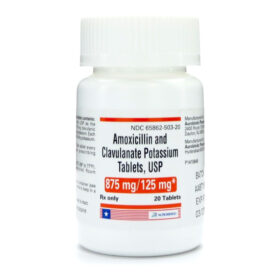
Amoxicillin 875mg/125mg
Price range: €25 through €45
Select options
This product has multiple variants. The options may be chosen on the product page
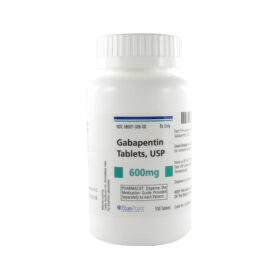
Gabapentin 600mg
Price range: €60 through €180
Select options
This product has multiple variants. The options may be chosen on the product page
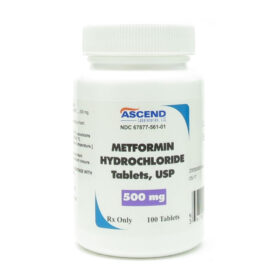
Metformin 500mg Tablets
Price range: €150 through €500
Select options
This product has multiple variants. The options may be chosen on the product page
 English
 German
 Dutch
 Polish
 Portuguese
Reviews
There are no reviews yet.