
- Your cart is empty
- Continue Shopping

Product

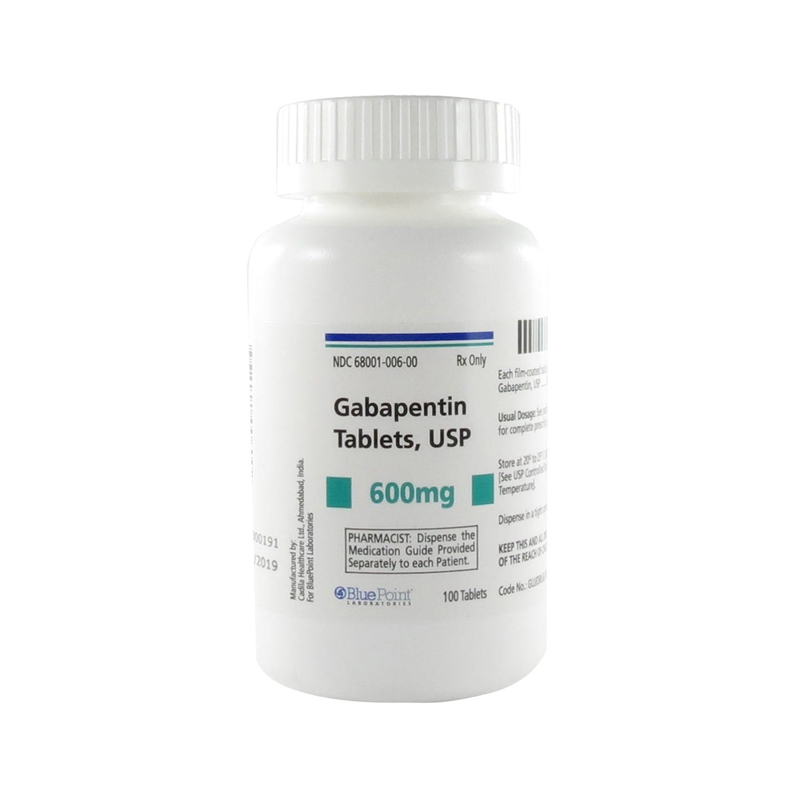
Gabapentin 600mg
Gabapentin 600mg
Price range: €60 through €180
Quantity
Choose an option
Add to cart
Buy Now
Gabapentin 600mg
Gabapentin 600mg (commonly recognized under the brand name Neurontin) is an oral anticonvulsant and neuropathic analgesic agent. Regulated as a prescription-only medication—and classified as a controlled substance in several jurisdictions due to potential misuse—the 600mg film-coated tablet is a standard high-potency dosage strength. It is indicated for managing postherpetic neuralgia, focal partial seizures, and various chronic neuropathic pain conditions.
Primary Clinical Indications
-
Postherpetic Neuralgia (PHN): Prescribed for the management of persistent, burning neuropathic pain following herpes zoster (shingles) outbreaks in adults.
-
Adjunctive Seizure Control: Indicated as adjunctive therapy in the treatment of partial-onset seizures, with or without secondary generalization, in adults and pediatric patients aged 3 years and older.
-
Off-Label Neuropathic Pain: Frequently utilized in clinical settings to treat diabetic peripheral neuropathy, fibromyalgia, restless legs syndrome (RLS), and central neuropathic pain.
Mechanism of Action: Modulating Voltage-Gated Calcium Channels
Despite its structural similarity to $\gamma$-aminobutyric acid ($\text{GABA}$), Gabapentin does not bind directly to $\text{GABA}_\text{A}$ or $\text{GABA}_\text{B}$ receptors, nor does it alter $\text{GABA}$ uptake or degradation:
$$\text{Gabapentin} + \alpha_2\delta\text{ Subunit (Cav Channels)} \longrightarrow \downarrow \text{Calcium Influx} \longrightarrow \downarrow \text{Excitatory Neurotransmitter Release}$$
-
Alpha-2-Delta Binding: High-affinity binding to the $\alpha_2\delta-1$ auxiliary subunit of presynaptic voltage-gated calcium channels ($\text{Ca}_\text{v}$) in the central nervous system.
-
Neurotransmitter Downregulation: Decreases calcium influx into presynaptic nerve terminals, reducing the release of excitatory neurotransmitters such as glutamate, substance P, and calcitonin gene-related peptide ($\text{CGRP}$).
-
Pharmacokinetics: Absorbed via saturable L-amino acid transport systems in the proximal small intestine. Peak plasma levels ($T_{\max}$) occur in 2 to 3 hours. Gabapentin exhibits non-linear kinetics (bioavailability decreases as dose increases) and an elimination half-life of 5 to 7 hours, cleared entirely unchanged via renal excretion.
Dosing and Administration Guidelines
| Clinical Parameter | Standard Clinical Dosing Protocol |
| Postherpetic Neuralgia | Initiated at 300mg on Day 1, 600mg on Day 2 (300mg twice daily), and 900mg on Day 3; titrated up to 1800mg to 3600mg daily in 3 divided doses. |
| Epilepsy Adjunct (Adults) | Standard maintenance dose ranges from 900mg to 1800mg daily (e.g., one 600mg tablet 3 times daily). |
| Renal Impairment Adjustment | Dosage must be reduced in patients with creatinine clearance ($\text{CrCl}$) $< 60\,\text{mL/min}$. |
Critical Safety Warnings and Clinical Precautions
-
Central Nervous System Sedation: Commonly causes somnolence, dizziness, ataxia, and peripheral edema. Driving or operating machinery should be avoided until individual tolerance is established.
-
Respiratory Depression Risk: Severe respiratory depression can occur, particularly when combined with opioids, alcohol, or central nervous system depressants, or in patients with underlying respiratory disease.
-
Tapering Requirement: Abrupt cessation increases the risk of withdrawal symptoms (anxiety, insomnia, nausea, sweating) and can precipitate status epilepticus in patients with seizure disorders. Taper gradually over at least 1 week.
Additional Information
| Quantity | 30 Tabs, 60 Tabs, 90 Tabs |
|---|
 English
 German
 Dutch
 Polish
 Portuguese
Reviews
There are no reviews yet.