
- Your cart is empty
- Continue Shopping

Product

Buy Tramadol 100mg Online
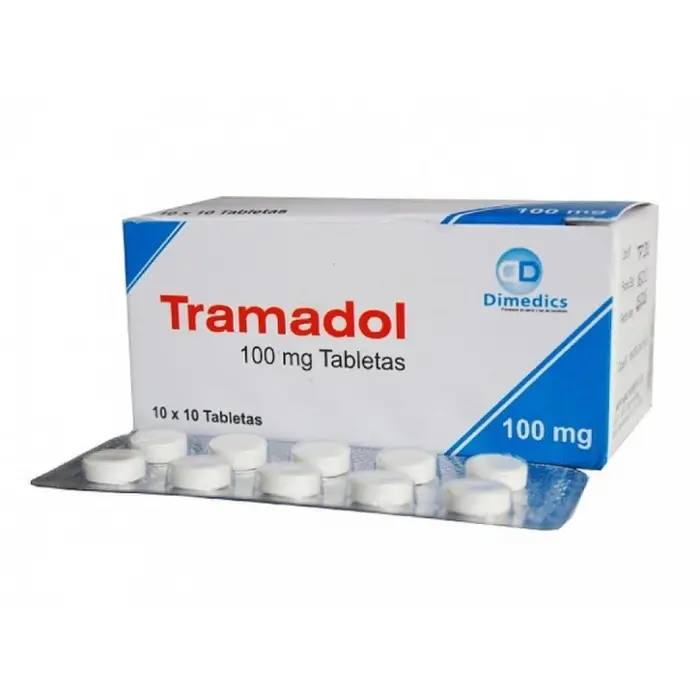
Buy Tramadol 100mg Online
Price range: €140 through €490
Quantity
Choose an option
Add to cart
Buy Now
Buy Tramadol 100mg Online
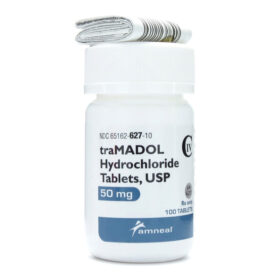
Buy Tramadol 100mg Online is a centrally acting synthetic opioid analgesic formulation containing 100mg of tramadol hydrochloride ((1RS,2RS)-2-[(dimethylamino)methyl]-1-(3-methoxyphenyl)cyclohexanol hydrochloride), available clinically in both immediate-release and extended-release oral dosage forms. Classified as a Schedule IV controlled substance in the United States and a strictly regulated prescription-only medication globally, Tramadol 100mg is indicated for the management of moderate to moderately severe acute or chronic pain in adults when alternative non-opioid treatments are inadequate. Uniquely, tramadol combines weak $\mu$-opioid receptor agonism with monoamine reuptake inhibition to modulate both ascending and descending pain pathways.
Primary Clinical Indications
-
Moderate to Moderately Severe Acute Pain: Indicated for short-term management of post-operative, musculoskeletal, dental, or post-traumatic nociceptive pain requiring opioid-level analgesia.
-
Chronic Pain Syndromes (Extended-Release): Prescribed for around-the-clock management of persistent, severe osteoarthritis, chronic lower back pain, or mixed nociceptive-neuropathic pain states in adults.
-
Step-Up Analgesic Therapy: Utilized as a Step II analgesic on the World Health Organization (WHO) pain ladder when acetaminophen or nonsteroidal anti-inflammatory drugs (NSAIDs) fail to provide adequate relief.
Pharmacological Mechanism of Action
Tramadol 100mg produces dual-pathway analgesia by simultaneously activating central opioid receptors and enhancing descending serotonergic and noradrenergic pain inhibition:
$$\text{Tramadol (O-Desmethyltramadol)} + \mu\text{-Opioid Receptors} \longrightarrow \downarrow \text{cAMP \& Ca}^{2+}\text{ Influx} \longrightarrow \text{Ascending Pain Inhibition}$$
$$\text{Tramadol} + \text{SERT / NET} \longrightarrow \downarrow \text{5-HT \& Norepinephrine Reuptake} \longrightarrow \uparrow \text{Descending Pain Modulation}$$
-
Dual-Enantiomer Monoamine Reuptake Inhibition: Racemic tramadol consists of $(+)$– and $(-)$-enantiomers; $(+)$-tramadol inhibits presynaptic serotonin ($\text{5-HT}$) reuptake, while $(-)$-tramadol inhibits norepinephrine ($\text{NE}$) reuptake, amplifying descending inhibitory pain pathways in the spinal dorsal horn.
-
Active Metabolite $\mu$-Opioid Agonism: Parent tramadol exhibits low affinity for $\mu$-opioid receptors, whereas its primary hepatic metabolite, O-desmethyltramadol ($\text{M1}$), binds $\mu$-opioid receptors with approximately 200-fold greater affinity, mediating central opioid analgesia.
-
Pharmacokinetics: Rapidly and nearly completely absorbed following oral administration (approximately 75% absolute bioavailability for immediate-release formulations), reaching peak plasma concentrations ($T_{\max}$) within 1.5 to 2 hours (or 10 to 12 hours for extended-release tablets). Hepatic metabolism occurs via $CYP2D6$ (forming active $\text{M1}$) and $CYP3A4$/$CYP2B6$ (forming inactive $N$-desmethyltramadol), exhibiting an elimination half-life of 6 hours for parent tramadol and 7 hours for $\text{M1}$.
Clinical Advantages vs. Disadvantages
Advantages
-
Dual Nociceptive & Neuropathic Efficacy: Combining opioid receptor activation with serotonin-norepinephrine reuptake inhibition provides broader efficacy across mixed pain syndromes compared to pure $\mu$-opioid agonists.
-
Lower Acute Respiratory Depression at Therapeutic Doses: Demonstrates a comparatively milder respiratory depressant ceiling than equianalgesic doses of morphine or oxycodone in normal metabolizers.
-
Reduced Gastrointestinal Dysmotility: Induces lower rates of severe constipation and biliary spasm than traditional full-agonist opioids at standard clinical doses.
Disadvantages
-
Lowered Seizure Threshold: Increases seizure risk even at therapeutic doses, particularly in patients with epilepsy or those taking SSRIs, SNRIs, tricyclic antidepressants, or bupropion.
-
Genetic $CYP2D6$ Metabolic Variability: Poor $CYP2D6$ metabolizers experience reduced analgesic efficacy due to minimal $\text{M1}$ formation, whereas ultra-rapid metabolizers face life-threatening opioid toxicity.
-
Serotonin Syndrome & Dual Withdrawal Risk: Abrupt cessation precipitates both classic opioid withdrawal and SNRI-like discontinuation symptoms (severe anxiety, panic, paresthesias).
Side Effects Profile & Safety Warnings
| Severity Category | Common Clinical Manifestations |
| Common / Mild | Dizziness, vertigo, nausea, constipation, headache, somnolence, vomiting, pruritus (itching), diaphoresis, and dry mouth. |
| Severe / Adverse | Tonic-clonic seizures, serotonin syndrome (agitation, hyperthermia, clonus, autonomic instability), life-threatening respiratory depression, hyponatremia, and adrenal insufficiency. |
| Critical Warnings | Black Box Warning: Carries serious risks of addiction, abuse, and misuse, which can lead to overdose and death. Life-threatening respiratory depression may occur, especially during initiation, dose escalation, or in ultra-rapid $CYP2D6$ metabolizers. Strictly contraindicated in children under 12 years of age and in patients under 18 following tonsillectomy or adenoidectomy. Concomitant use with benzodiazepines, alcohol, or other CNS depressants risks fatal respiratory arrest; co-administration with MAOIs or serotonergic agents risks fatal serotonin syndrome. Obtain only via a valid medical prescription from a licensed pharmacy; unverified online sources carry extreme risks of counterfeit adulteration. |
Additional Information
| Quantity | 30 Tabs, 60 Tabs, 90 Tabs, 180 Tabs |
|---|
Related products
Clindamycin 150mg
Price range: €45 through €260
Select options
This product has multiple variants. The options may be chosen on the product page
Y21 Xanax
Price range: €80 through €300
Select options
This product has multiple variants. The options may be chosen on the product page
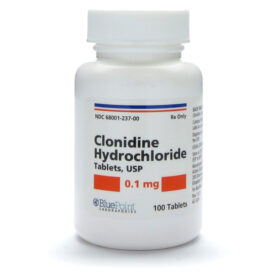
Clonidine Hydrochloride 0.1mg
Price range: €90 through €360
Select options
This product has multiple variants. The options may be chosen on the product page
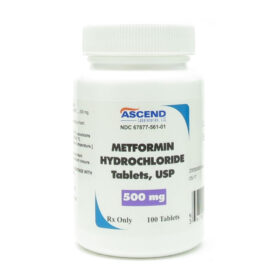
Metformin 500mg
€1,500
Select options
This product has multiple variants. The options may be chosen on the product page
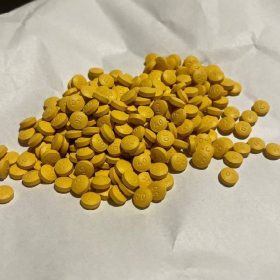
Oxycontin 40mg
Price range: €200 through €580
Select options
This product has multiple variants. The options may be chosen on the product page
 English
 German
 Dutch
 Polish
 Portuguese
Reviews
There are no reviews yet.