
- Your cart is empty
- Continue Shopping

Product

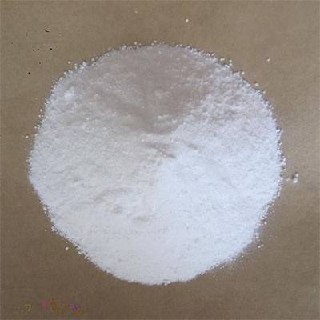
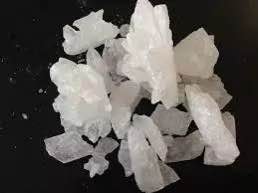
Fentanyl Powder
Fentanyl Powder
€105
Add to cart
Buy Now
Fentanyl Powder
Fentanyl Powder (chemically designated as $N$-phenyl-$N$-[1-(2-phenylethyl)piperidin-4-yl]propanamide, supplied in licensed pharmaceutical manufacturing as fentanyl citrate or fentanyl base active pharmaceutical ingredient [$\text{API}$] powder) is an ultra-potent, synthetic phenylpiperidine opioid analgesic exhibiting approximately 50- to 100-fold greater milligram potency than morphine (and roughly 30- to 50-fold greater potency than diacetylmorphine/heroin). Classified internationally under Schedule I of the 1961 UN Single Convention on Narcotic Drugs and as a Schedule II controlled substance in the United States, bulk Fentanyl Powder is restricted exclusively to licensed pharmaceutical manufacturing facilities and certified forensic, toxicological, and analytical reference laboratories (Uncompounded bulk powder is strictly not for human consumption; microgram-level exposure can be rapidly fatal).
Clinical & Analytical Applications
-
Licensed Pharmaceutical Manufacturing: Utilized under closed-system, high-containment cGMP conditions by accredited pharmaceutical manufacturers to formulate precision microgram-dosed sterile parenteral injections, transdermal delivery systems (patches), and transmucosal lozenges/tablets for general anesthesia, perioperative analgesia, and severe breakthrough cancer pain.
-
Forensic & Toxicological Reference Standard: Employed in certified analytical chemistry laboratories (via $\text{GC-MS}$ and $\text{LC-MS/MS}$) as a primary quantitative reference material to identify and quantify fentanyl and its metabolites in post-mortem toxicology, clinical emergency medicine, and seized drug analysis.
-
Opioid Receptor Pharmacology Research: Studied in in vitro radioligand binding and functional $\text{G}$-protein/$\beta$-arrestin signaling assays to characterize high-affinity $\mu$-opioid receptor kinetics.
Pharmacological Mechanism of Action
Fentanyl produces profound analgesia, sedation, anesthesia, and respiratory depression through high-affinity, full agonist activation of central $\mu$-opioid receptors:
$$\text{Fentanyl} + \mu\text{-Opioid Receptor (MOR)} \longrightarrow \text{G}_{\text{i/o}}\text{ Protein Activation} \longrightarrow \downarrow \text{cAMP}, \downarrow \text{Ca}^{2+}\text{ Influx}, \uparrow \text{K}^+\text{ Efflux} \longrightarrow \text{CNS \& Respiratory Depression}$$
-
High-Affinity $\mu$-Opioid Receptor ($\text{MOR}$) Agonism: Binds stereospecifically with sub-nanomolar affinity to central $\mu$-opioid receptors throughout the brain, brainstem medullary respiratory centers, and spinal dorsal horn, inhibiting adenylyl cyclase, closing voltage-gated $\text{N}$-type $\text{Ca}^{2+}$ channels, opening inwardly rectifying $\text{K}^+$ channels, and hyperpolarizing nociceptive and respiratory neurons.
-
Rapid Blood-Brain Barrier Penetration: High lipophilicity ($\log P \approx 4.05$) enables almost instantaneous diffusion across the blood-brain barrier following intravenous or transmucosal absorption, producing rapid peak analgesia and abrupt suppression of medullary hypercapnic respiratory drive.
-
Pharmacokinetics: Exhibits rapid redistribution from plasma into highly perfused tissues (brain, heart, lungs) followed by sequestration in skeletal muscle and adipose tissue. Hepatic oxidative metabolism occurs predominantly via $CYP3A4$-mediated $N$-dealkylation into the primary pharmacologically inactive metabolite norfentanyl (with minor amide hydrolysis to despropionylfentanyl and hydroxylation to hydroxyfentanyl) prior to renal excretion. Intravenous fentanyl demonstrates a rapid onset within 1 to 2 minutes, duration of analgesia of 30 to 60 minutes (after a single bolus), and a terminal elimination half-life of 3 to 7 hours (extending to 17 to 27 hours following transdermal patch removal due to cutaneous depot release).
Analytical & Pharmaceutical Advantages vs. Toxicological Disadvantages
Pharmaceutical & Analytical Advantages (Strictly in Calibrated Formulations)
-
Rapid Onset & Hemodynamic Stability in Anesthesia: Fast blood-brain barrier equilibration and minimal histamine release make calibrated parenteral fentanyl a cornerstone analgesic during cardiac and major surgical anesthesia.
-
Multiple Non-Oral Delivery Routes: High potency and lipophilicity allow effective transdermal and transmucosal formulation for opioid-tolerant cancer patients unable to tolerate oral medications.
Toxicological Disadvantages & Extreme Lethality Hazards
-
Sub-Milligram Lethal Dose Threshold: The estimated lethal dose of fentanyl in an opioid-naive adult is approximately $2\text{mg}$ (varying by body mass, tolerance, and route); raw powder cannot be safely handled or weighed outside certified negative-pressure containment isolators.
-
Rapid Apnea & Thoracic Wall Rigidity (“Wooden Chest Syndrome”): High-dose exposure induces abrupt medullary respiratory arrest accompanied by centrally mediated skeletal muscle rigidity of the chest wall and laryngospasm, severely impeding bag-valve-mask ventilation.
-
Illicit Adulteration & Extreme Overdose Mortality: Illicitly manufactured fentanyl powder frequently contaminates counterfeit prescription tablets and street drugs with uneven “hot spots,” driving rapid, unheralded fatal overdoses.
Side Effects Profile & Safety Warnings
| Severity Category | Reported Clinical & Toxicological Manifestations |
| Common / Acute (Clinical) | Profound sedation, dizziness, nausea, vomiting, constipation, miosis (pinpoint pupils), diaphoresis, pruritus, urinary retention, bradycardia, and mild hypotension. |
| Severe / Life-Threatening | Rapid-onset fatal respiratory depression and apnea, thoracic/laryngeal muscle rigidity (“wooden chest syndrome”), severe bradycardia, circulatory collapse, coma, hypoxic brain injury, paralytic ileus, and severe physical dependence/withdrawal. |
| Critical Warnings | EXTREME LETHALITY & BLACK BOX WARNING (Life-Threatening Respiratory Depression, Addiction, Abuse, & CYP3A4 Interactions): Uncompounded Fentanyl Powder is an acute lethal hazard—microgram quantities can cause immediate respiratory arrest and death. Strictly restricted to licensed pharmaceutical manufacturers and certified forensic/analytical personnel operating within validated containment hoods using personal protective equipment ($\text{PPE}$). Concomitant administration with benzodiazepines, alcohol, gabapentinoids, or other CNS depressants—as well as strong or moderate $CYP3A4$ inhibitors (e.g., ritonavir, ketoconazole, clarithromycin, diltiazem)—dramatically elevates plasma concentrations and risks fatal overdose. Emergency overdose reversal requires immediate airway/ventilatory support and prompt administration of the competitive opioid antagonist naloxone (often requiring higher initial doses and repeat administration due to fentanyl’s high $\text{MOR}$ affinity and longer duration relative to naloxone). |
Related products

Dextroamphetamine Powder
Price range: €170 through €1,600
Select options
This product has multiple variants. The options may be chosen on the product page
Ethylphenidate
Price range: €160 through €1,000
Select options
This product has multiple variants. The options may be chosen on the product page
 English
 German
 Dutch
 Polish
 Portuguese
Reviews
There are no reviews yet.