
- Your cart is empty
- Continue Shopping

Product

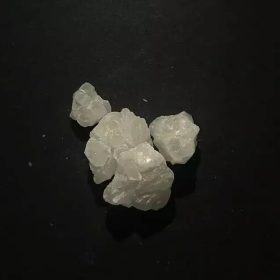
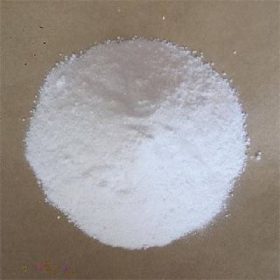
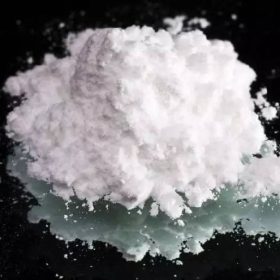
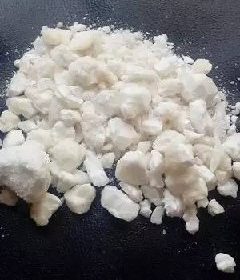
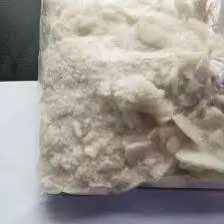
Ethylphenidate
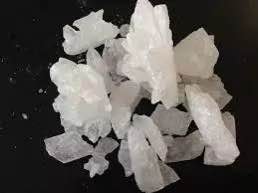
Ethylphenidate
Price range: €160 through €1,000
Quantity
Choose an option
Add to cart
Buy Now
Ethylphenidate
Ethylphenidate (commonly abbreviated as EPH; chemically designated as ethyl 2-phenyl-2-(piperidin-2-yl)acetate) is a synthetic phenidate-class central nervous system (CNS) stimulant and the ethyl ester analogue of methylphenidate (Ritalin). Endogenously formed in vivo as an active metabolite when methylphenidate is co-ingested with ethanol via hepatic transesterification, ethylphenidate has also been distributed illicitly as a New Psychoactive Substance ($\text{NPS}$). Classified as a controlled substance across major international jurisdictions (including Schedule I/analogue controls in the US and Class B/Schedule II controls in the UK and Europe), ethylphenidate possesses no approved human or veterinary therapeutic indications and is restricted exclusively to certified forensic, toxicological, and analytical reference laboratory applications (Not for Human Consumption).
Analytical & Research Context
-
Forensic & Clinical Toxicology Biomarker: Utilized in analytical chemistry laboratories (via $\text{GC-MS}$ and $\text{LC-MS/MS}$) as a specific forensic marker confirming concurrent ingestion of methylphenidate and ethanol in post-mortem and clinical toxicology investigations.
-
Dopamine Transporter ($\text{DAT}$) Selectivity Research: Studied in in vitro monoamine uptake assays as a selective catecholaminergic ligand to examine how ester chain elongation alters $\text{DAT}$-versus-$\text{NET}$ binding ratios compared to parent methylphenidate.
-
No Therapeutic Indications: Possesses zero recognized clinical utility; standalone human exposure is exclusively associated with illicit stimulant misuse and acute toxicological emergencies.
Pharmacological Mechanism of Action
Ethylphenidate functions as a selective norepinephrine-dopamine reuptake inhibitor ($\text{NDRI}$) with markedly greater preference for dopamine transporters over norepinephrine transporters relative to racemic methylphenidate:
$$\text{Ethylphenidate} + \text{DAT / NET} \longrightarrow \text{Selective Reuptake Blockade} \longrightarrow \uparrow\uparrow [\text{Dopamine}]_{\text{Synaptic}} > \uparrow [\text{Norepinephrine}]_{\text{Synaptic}}$$
-
Preferential Dopamine Transporter ($\text{DAT}$) Inhibition: Binds stereospecifically (predominantly via the active (2R,2’R)-threo enantiomer) to presynaptic $\text{DAT}$ proteins in striatal and mesolimbic pathways, blocking synaptic dopamine clearance and elevating extracellular dopamine concentrations with higher $\text{DAT}/\text{NET}$ selectivity than methylphenidate.
-
Norepinephrine Transporter ($\text{NET}$) Blockade: Inhibits presynaptic $\text{NET}$ to enhance central arousal and peripheral sympathetic tone (vasoconstriction, positive chronotropy, and elevated blood pressure), while demonstrating negligible affinity for serotonin transporters ($\text{SERT}$).
-
Toxicokinetics: Formed in vivo via hepatic carboxylesterase 1 ($\text{CES1}$)-mediated transesterification when methylphenidate and ethanol co-exist. Exogenous ethylphenidate undergoes rapid hepatic ester hydrolysis by $\text{CES1}$ into inactive ritalinic acid prior to renal elimination, yielding a relatively short duration of action (approximately 2 to 4 hours following oral or intranasal exposure) that frequently drives compulsive redosing patterns.
Analytical Advantages vs. Toxicological Disadvantages
Analytical / Research Advantages
-
Diagnostic Specificity for Co-Ingestion: Serves as an unambiguous analytical biomarker in forensic toxicology to distinguish combined methylphenidate-alcohol intake from standalone methylphenidate administration.
-
High $\text{DAT}$-to-$\text{NET}$ Binding Ratio: Useful in vitro pharmacological tool for probing selective dopaminergic reuptake inhibition relative to noradrenergic transport.
Toxicological Disadvantages & Clinical Hazards
-
Severe Compulsive Redosing & Abuse Liability: High dopaminergic selectivity paired with rapid hepatic esterase clearance produces intense reinforcement followed by abrupt crash symptoms, driving rapid, compulsive redosing cycles.
-
Acute Cardiovascular & Sympathomimetic Toxicity: Elevates myocardial oxygen demand, blood pressure, and heart rate, precipitating tachyarrhythmias, chest pain, and hypertensive crises.
-
Severe Mucosal & Vascular Tissue Necrosis: Possesses pronounced caustic properties; intranasal insufflation or intravenous injection causes severe nasal septal ulceration, tissue necrosis, thrombophlebitis, and localized soft-tissue abscesses.
Additional Information
| Quantity | 10g, 25g, 50g, 100g |
|---|
Related products
DMT Crystals
Price range: €180 through €790
Select options
This product has multiple variants. The options may be chosen on the product page
 English
 German
 Dutch
 Polish
 Portuguese
Reviews
There are no reviews yet.