
- Your cart is empty
- Continue Shopping

Product

MDPHP
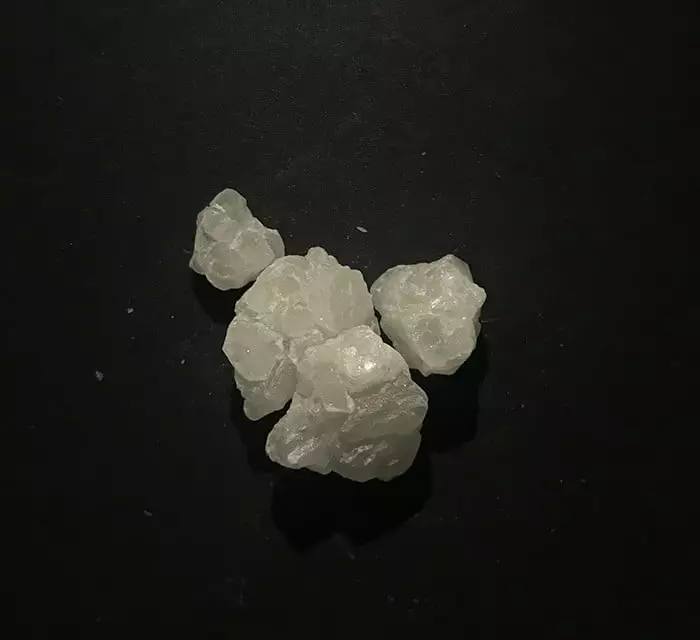
MDPHP
€130
Add to cart
Buy Now
MDPHP
MDPHP (chemically designated as 1-(1,3-benzodioxol-5-yl)-2-(pyrrolidin-1-yl)hexan-1-one, also known as $3′,4’$-methylenedioxy-$\alpha$-pyrrolidinohexiophenone or “monkey dust” in illicit street parlance) is a potent, synthetic pyrovalerone-class cathinone central nervous system (CNS) stimulant and the higher $\alpha$-hexyl homologue of MDPV ($3′,4’$-methylenedioxypyrovalerone). Classified as a New Psychoactive Substance ($\text{NPS}$) and strictly controlled under national and international synthetic cathinone and positional-isomer/analogue statutes (including Schedule I/analogue controls in the United States, Class B controls in the United Kingdom, and European $\text{NPS}$ legislation), MDPHP possesses no approved human or veterinary medical indications and is restricted exclusively to certified forensic, toxicological, and analytical reference laboratories (Not for Human Consumption).
Analytical & Research Context
-
Forensic & Clinical Toxicology Reference Standard: Utilized in certified analytical chemistry laboratories (via $\text{GC-MS}$ and $\text{LC-MS/MS}$) as a primary quantitative standard to identify MDPHP and its ring-opened/hydroxylated metabolites in seized powders, tablets, and biological specimens from acute emergency or post-mortem toxicology investigations.
-
Pyrovalerone Structure-Activity Relationship ($\text{SAR}$) Research: Studied in in vitro synaptosomal monoamine uptake assays to characterize how extending the $\alpha$-alkyl side chain from propyl ($\text{MDPV}$) to butyl ($\text{MDPHP}$) modulates lipophilicity, blood-brain barrier permeability, and inhibitory potency at catecholamine transporters.
-
No Therapeutic Indications: Possesses zero recognized clinical utility; human exposure is exclusively associated with illicit recreational consumption (insufflation, vaporization, oral ingestion, or intravenous injection) and severe sympathomimetic and neuropsychiatric toxicity.
Pharmacological Mechanism of Action
MDPHP acts as an ultra-potent, selective norepinephrine-dopamine reuptake inhibitor ($\text{NDRI}$) without inducing non-exocytotic monoamine release:
$$\text{MDPHP} + \text{DAT / NET} \longrightarrow \text{Potent Reuptake Blockade (Non-Substrate)} \longrightarrow \uparrow\uparrow [\text{Dopamine \& Norepinephrine}]_{\text{Synaptic}}$$
-
High-Potency Dopamine ($\text{DAT}$) & Norepinephrine ($\text{NET}$) Reuptake Inhibition: Binds stereospecifically with low-nanomolar affinity to presynaptic $\text{DAT}$ ($\text{IC}_{50} \approx 10\text{–}30\text{ nM}$) and $\text{NET}$ proteins across mesolimbic, striatal, and prefrontal circuits, blocking catecholamine clearance and dramatically elevating extracellular dopamine and norepinephrine concentrations while exhibiting negligible affinity for serotonin transporters ($\text{SERT}$).
-
Lipophilic Blood-Brain Barrier Retention: The combination of the $3,4$-methylenedioxy ring, pyrrolidine moiety, and extended four-carbon ($\alpha$-butyl) alkyl chain confers high lipophilicity ($\log P \approx 3.8$), facilitating rapid blood-brain barrier penetration and prolonged central receptor occupancy.
-
Toxicokinetics: Hepatic oxidative biotransformation occurs via cytochrome P450-mediated demethylenation of the methylenedioxy bridge (yielding dihydroxy/catechol intermediates), $O$-methylation via catechol-$O$-methyltransferase ($\text{COMT}$), oxidation of the pyrrolidine ring (forming lactam metabolites), and aliphatic hydroxylation of the hexyl side chain, followed by Phase II glucuronide and sulfate conjugation prior to renal excretion.
Analytical Advantages vs. Toxicological Disadvantages
Analytical / Research Advantages
-
Distinct Diagnostic Mass-Spectrometric Signature: Produces characteristic pyrrolidinium iminium fragment ions ($m/z\ 140$) alongside the methylenedioxybenzoyl cation ($m/z\ 149$), enabling unambiguous chromatographic and mass-spectrometric differentiation from lower homologues such as $\text{MDPV}$ ($m/z\ 126$) and $\alpha$-PHP.
-
Benchmark Probe for High-Potency Pure $\text{NDRI}$ Kinetics: Valuable in vitro pharmacological ligand for evaluating pure transporter blockade versus substrate-mediated monoamine efflux.
Toxicological Disadvantages & Clinical Hazards
-
Extreme Compulsive Redosing & Severe Psychological Dependence: Potent, selective dopaminergic reuptake inhibition drives intense reinforcement and rapid, compulsive binge redosing cycles lasting days, culminating in severe sleep deprivation and neuropsychiatric collapse.
-
Acute Excited Delirium & Paranoid Psychosis: Strongly associated with severe acute agitated delirium, persecutory paranoia, auditory/visual hallucinations, hyper-vigilance, and erratic or violent behavior that poses high risk of self-harm or accidental trauma.
-
Severe Sympathomimetic Cardiovascular & Hyperthermic Toxicity: Profound peripheral noradrenergic stimulation precipitates malignant hyperthermia, hypertensive crisis, tachyarrhythmias, myocardial ischemia, rhabdomyolysis, and multi-organ failure.
Adverse Effects Profile & Safety Warnings
| Severity Category | Reported Toxicological Manifestations |
| Common / Acute | Severe tachycardia, palpitations, hypertension, diaphoresis (profuse sweating), mydriasis (pupillary dilation), bruxism (jaw clenching), tremor, intense restlessness, anxiety, insomnia, and peripheral vasoconstriction. |
| Severe / Life-Threatening | Acute excited/agitated delirium, severe paranoid psychosis and hallucinations, malignant hyperthermia, hypertensive crisis, supraventricular/ventricular arrhythmias, myocardial infarction, ischemic/hemorrhagic stroke, generalized tonic-clonic seizures, rhabdomyolysis, acute kidney injury, and disseminated intravascular coagulation ($\text{DIC}$). |
| Critical Warnings | NOT FOR HUMAN CONSUMPTION — HIGH-POTENCY SYNTHETIC CATHINONE HAZARD: MDPHP is an unapproved, strictly controlled pyrovalerone stimulant with no established safe human dosage and extreme risks of acute cardiovascular collapse, malignant hyperthermia, and severe neuropsychiatric decompensation. Sub-10mg gravimetric variations can precipitate severe toxicity, particularly when vaporized or administered parenterally. No specific pharmacological antagonist exists; emergency medical management relies on rapid sedation with high-dose benzodiazepines (avoiding physical restraint without chemical sedation due to rhabdomyolysis/acidosis risk), aggressive active cooling for hyperthermia, intravenous fluid resuscitation, and continuous cardiac and renal monitoring. Controlled under synthetic cathinone and controlled substance analogue statutes across the United States, United Kingdom, European Union, and international jurisdictions. |
Related products
Dextroamphetamine Powder
Price range: €170 through €1,600
Select options
This product has multiple variants. The options may be chosen on the product page
Ethylphenidate
Price range: €160 through €1,000
Select options
This product has multiple variants. The options may be chosen on the product page
 English
 German
 Dutch
 Polish
 Portuguese
Reviews
There are no reviews yet.