
- Your cart is empty
- Continue Shopping

Product

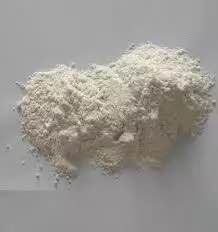
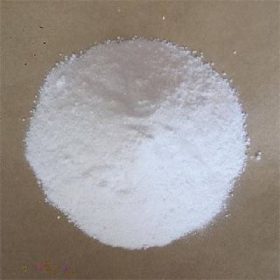
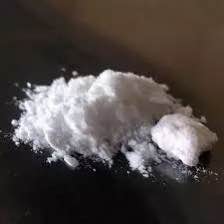
DMT Crystals
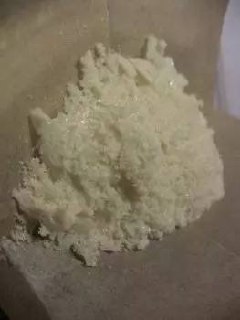
DMT Crystals
Price range: €180 through €790
Quantity
Choose an option
Add to cart
Buy Now
DMT Crystals
DMT Crystals (chemically designated as 2-(1H-indol-3-yl)-$N,N$-dimethylethan-1-amine, or $N,N$-dimethyltryptamine freebase crystalline solid) is a naturally occurring, fast-acting indolealkylamine serotonergic hallucinogen found endogenously in trace amounts across various plant species (such as Psychotria viridis and Mimosa tenuiflora) and mammalian tissues. Classified internationally as a Schedule I controlled substance under the 1971 UN Convention on Psychotropic Substances and the US Controlled Substances Act, DMT has no approved routine clinical medical indications outside strictly regulated Phase I/II clinical research protocols and certified forensic/analytical reference laboratories (Not for Human Consumption).
Analytical & Clinical Research Context
-
Forensic & Toxicological Reference Standard: Utilized in analytical chemistry laboratories (via $\text{GC-MS}$ and $\text{LC-MS/MS}$) as a certified reference material to identify and quantify $N,N$-dimethyltryptamine and its oxidative metabolites in forensic casework and botanical specimens.
-
Investigational Neuropsychiatric Research: Studied under controlled hospital supervision (typically as pharmaceutical-grade intravenous fumarate formulations) for potential utility in treatment-resistant major depressive disorder ($\text{MDD}$), neuroplasticity modulation, and functional neuroimaging of cortical connectivity.
-
No Routine Therapeutic Indications: Crystalline freebase DMT possesses zero approved clinical indications; non-research human exposure is associated with illicit inhalation or insufflation and acute neuropsychiatric and autonomic adverse events.
Pharmacological Mechanism of Action
DMT exerts intense, short-duration perceptual, cognitive, and autonomic effects primarily through agonist activity at central serotonin ($5\text{-HT}$) receptors:
$$\text{DMT} + 5\text{-HT}_{2\text{A}}\text{ Receptors (Layer V Cortical Pyramidal Neurons)} \longrightarrow \text{G}_{\text{q/11}}\text{ / PLC Signaling} \longrightarrow \uparrow \text{Glutamate Release \& Cortical Desynchronization}$$
-
High-Affinity $5\text{-HT}_{2\text{A}}$ Receptor Agonism: Binds as a partial-to-full agonist at postsynaptic cortical $5\text{-HT}_{2\text{A}}$ receptors (with additional agonist activity at $5\text{-HT}_{1\text{A}}$ and $5\text{-HT}_{2\text{C}}$ subtypes), activating $\text{G}_{\text{q/11}}$-mediated phospholipase C ($\text{PLC}$) signaling, elevating intracellular calcium, and triggering asynchronous glutamate release across prefrontal and visual association cortices.
-
Sigma-1 ($\sigma_1$) & Trace Amine-Associated Receptor ($\text{TAAR}$) Interactions: Demonstrates low-micromolar affinity for intracellular $\sigma_1$ chaperone receptors and $\text{TAAR1}$, though $5\text{-HT}_{2\text{A}}$ activation mediates its primary psychotomimetic and hallucinogenic effects.
-
Pharmacokinetics: Orally inactive when administered alone due to rapid, complete first-pass oxidative deamination by gastrointestinal and hepatic monoamine oxidase A ($\text{MAO-A}$) into inactive indole-3-acetic acid ($\text{IAA}$). When inhaled (vaporized) or administered intravenously, DMT bypasses first-pass $\text{MAO-A}$ clearance, crossing the blood-brain barrier within 15 to 60 seconds, reaching peak neurological effects within 2 to 5 minutes, and exhibiting an ultra-short plasma elimination half-life of 5 to 15 minutes (returning to baseline within 30 to 45 minutes).
Research Advantages vs. Toxicological Disadvantages
Research & Analytical Advantages
-
Ultra-Short Pharmacokinetic Window: Rapid clearance via endogenous $\text{MAO-A}$ allows controlled clinical researchers to induce and terminate acute cortical $5\text{-HT}_{2\text{A}}$ activation within a brief, closely monitored hospital session.
-
Absence of Classical Pharmacological Tolerance: Unlike $\text{LSD}$ or psilocybin, repeated closely spaced administration of DMT does not readily induce rapid $5\text{-HT}_{2\text{A}}$ tachyphylaxis in human laboratory models.
Toxicological Disadvantages & Clinical Hazards
-
Acute Psychological Distress & Dissociative Panic: Rapid onset of overwhelming visual/auditory hallucinations, ego dissolution, and altered time perception can precipitate severe panic, paranoia, confusion, and behavioral disorganization.
-
Transient Sympathomimetic & Cardiovascular Strain: Produces acute elevations in heart rate, systolic/diastolic blood pressure, and pupillary dilation, posing risks to individuals with underlying cardiovascular or cerebrovascular disease.
-
Severe Serotonin Toxicity Risk with $\text{MAOIs}$: Combining DMT with monoamine oxidase inhibitors ($\text{MAOIs}$), $\text{SSRIs}$, or serotonergic drugs dramatically prolongs exposure and risks life-threatening serotonin syndrome and hypertensive crisis.
Additional Information
| Quantity | 10g, 25g, 50g |
|---|
Related products
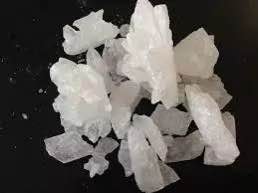
Dibutylone
Price range: €120 through €600
Select options
This product has multiple variants. The options may be chosen on the product page
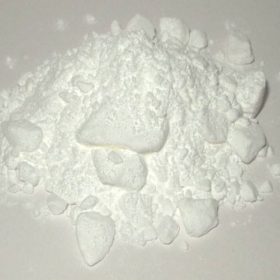
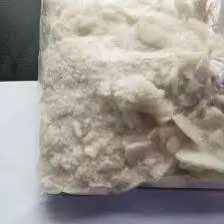
Ethylphenidate
Price range: €160 through €1,000
Select options
This product has multiple variants. The options may be chosen on the product page
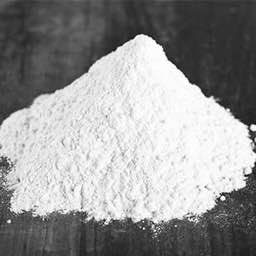
Dextroamphetamine Powder
Price range: €170 through €1,600
Select options
This product has multiple variants. The options may be chosen on the product page
 English
 German
 Dutch
 Polish
 Portuguese
Reviews
There are no reviews yet.