
- Your cart is empty
- Continue Shopping

Product

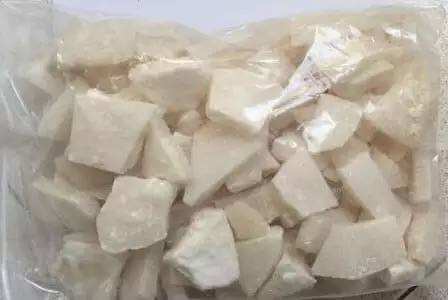
Dibutylone
Dibutylone
Price range: €120 through €600
Quantity
Choose an option
Add to cart
Buy Now
Dibutylone
Dibutylone (chemically designated as 1-(1,3-benzodioxol-5-yl)-2-(dimethylamino)butan-1-one, also known as $\beta$-keto-$N,N$-dimethyl-1,3-benzodioxolylbutanamine [$\text{bk-DMBDB}$] or methylbutylone) is a synthetic cathinone and $\beta$-keto-methylenedioxyamphetamine derivative with stimulant and mild entactogenic properties. Structurally, it is the $N$-methylated analogue of butylone and the $\beta$-keto analogue of $\text{DMBDB}$. Classified as a New Psychoactive Substance ($\text{NPS}$) and controlled as a Schedule I substance in the United States (as a positional isomer of pentylone) and across major international jurisdictions, Dibutylone has no approved human or veterinary medical indications and is restricted exclusively to certified forensic, toxicological, and analytical reference laboratory applications (Not for Human Consumption).
Analytical & Research Context
-
Forensic & Toxicological Reference Standard: Utilized in analytical chemistry laboratories (via $\text{GC-MS}$ and $\text{LC-MS/MS}$) to identify and differentiate ring-substituted $\beta$-keto phenethylamines and their metabolites in seized materials and biological matrices.
-
Monoamine Transporter Structure-Activity Research: Studied in in vitro synaptosomal uptake and release assays to evaluate how tertiary $N,N$-dimethyl substitution on methylenedioxycathinones alters potency and selectivity across dopamine, norepinephrine, and serotonin transporters.
-
No Therapeutic Indications: Possesses zero recognized clinical utility; human exposure is exclusively associated with illicit recreational consumption (often encountered as an adulterant in counterfeit $\text{MDMA}$ tablets) and acute toxicological emergencies.
Pharmacological Mechanism of Action
Dibutylone acts primarily as a mixed monoamine reuptake inhibitor with weak substrate-releasing activity across catecholamine and indoleamine transporters, functioning in part as a metabolic prodrug for butylone:
$$\text{Dibutylone (bk-DMBDB)} \xrightarrow{\text{DAT / NET / SERT Blockade \& } N\text{-Demethylation}} \uparrow [\text{Dopamine, Norepinephrine, \& Serotonin}]_{\text{Synaptic}}$$
-
Predominant Dopamine ($\text{DAT}$) & Norepinephrine ($\text{NET}$) Reuptake Inhibition: Binds to presynaptic $\text{DAT}$ and $\text{NET}$ proteins, inhibiting synaptic clearance of dopamine and norepinephrine and producing central psychomotor stimulation and peripheral sympathetic activation.
-
Serotonin Transporter ($\text{SERT}$) Interaction & Active Metabolite Contribution: Exhibits lower direct affinity for $\text{SERT}$ compared to $\text{MDMA}$, though hepatic $N$-demethylation generates active butylone ($\text{bk-MBDB}$), which contributes additional monoamine reuptake inhibition and serotonin-releasing activity in vivo.
-
Toxicokinetics: Hepatic biotransformation occurs via cytochrome P450-mediated $N$-demethylation (forming butylone and norbutylone), demethylenation of the methylenedioxy ring (yielding catechol intermediates), $O$-methylation via $\text{COMT}$, and $\beta$-keto reduction prior to Phase II glucuronide and sulfate conjugation and renal excretion.
Analytical Advantages vs. Toxicological Disadvantages
Analytical / Research Advantages
-
Distinct Structural Comparator for Tertiary Cathinones: Serves as a valuable analytical reference for distinguishing tertiary amine cathinones ($N,N$-dimethyl) from secondary amine isomers (such as pentylone and ethylone) in forensic toxicology.
-
Characteristic Mass Spectrometric Fragmentation: Generates specific iminium fragment ions ($m/z\ 86$), aiding reliable chromatographic and mass-spectrometric differentiation from positional isomers.
Toxicological Disadvantages & Clinical Hazards
-
Acute Sympathomimetic & Cardiovascular Toxicity: Elevates heart rate, myocardial oxygen demand, and systemic vascular resistance, precipitating tachycardia, hypertension, arrhythmias, and chest pain.
-
Hyperthermia & Serotonergic/Catecholaminergic Overstimulation: High-dose exposure or co-ingestion with other stimulants/serotonergic agents risks malignant hyperthermia, agitation, and serotonin toxicity.
-
Adulterant Misrepresentation & Compulsive Redosing: Frequently sold covertly as $\text{MDMA}$ (“ecstasy” or “molly”); lower entactogenic potency compared to $\text{MDMA}$ often prompts users to redose repeatedly, escalating acute sympathomimetic toxicity.
Additional Information
| Quantity | 10g, 25g, 50g, 100g |
|---|
Related products
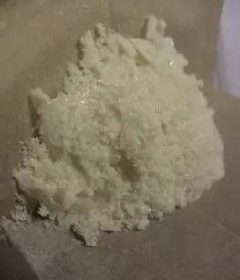
DMT Crystals
Price range: €180 through €790
Select options
This product has multiple variants. The options may be chosen on the product page
 English
 German
 Dutch
 Polish
 Portuguese
Reviews
There are no reviews yet.