
- Your cart is empty
- Continue Shopping

Product

Fioricet 40mg
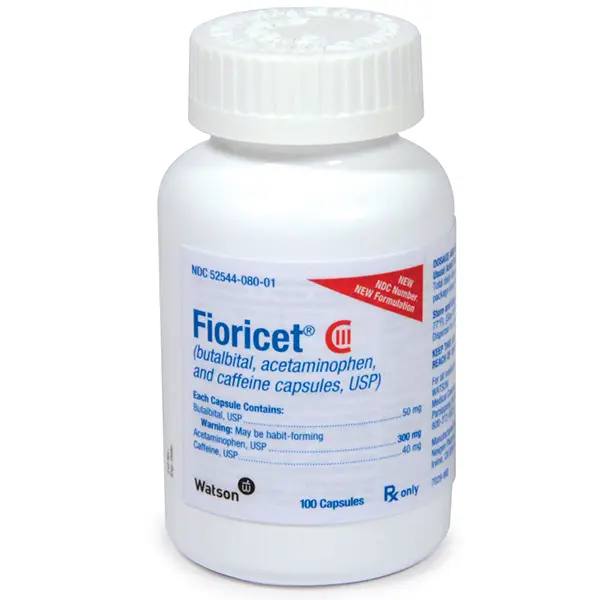
Fioricet 40mg
€170
Add to cart
Buy Now
Fioricet 40mg
Fioricet 40mg is an oral triple-combination prescription analgesic formulated with butalbital 50mg (a short-to-intermediate-acting barbiturate), acetaminophen 300mg (a non-opioid analgesic/antipyretic), and caffeine 40mg (a central nervous system stimulant and methylxanthine derivative). Indicated specifically for the symptomatic relief of complex tension-type (muscle contraction) headaches, Fioricet 40mg targets both central pain perception and musculoskeletal tension when single-agent analgesics prove insufficient.
Primary Clinical Indications
-
Acute Tension-Type Headache Relief: Prescribed for episodic, moderate-to-severe tension headaches characterized by bilateral pressure and pericranial muscle tightness.
-
Refractory Stress-Induced Cephalalgia: Applied in short-term clinical protocols when standard over-the-counter analgesics (e.g., NSAIDs or acetaminophen monotherapy) fail to provide adequate relief.
-
Somatic Muscle-Contraction Pain: Utilized to interrupt the pain-spasm cycle associated with stress-related cervical and cranial muscle hypertonicity.
Pharmacological Mechanism of Action
Fioricet 40mg delivers synergistic cephalalgia relief across three distinct neurochemical pathways:
$$\text{Butalbital} + \text{GABA}_\text{A}\text{ Receptor} \longrightarrow \uparrow \text{Cl}^- \text{ Channel Duration} \longrightarrow \text{Anxiolysis \& Muscle Relaxation}$$
$$\text{Acetaminophen} + \text{CNS COX / Serotonergic Pathways} \longrightarrow \downarrow \text{Prostaglandins} \longrightarrow \uparrow \text{Pain Threshold}$$
$$\text{Caffeine} + \text{Adenosine } A_1 / A_{2\text{A}} \text{ Receptors} \longrightarrow \text{Cerebral Vasoconstriction} \longrightarrow \uparrow \text{Analgesic Potency}$$
-
Barbiturate $\text{GABA}_\text{A}$ Modulation: Butalbital binds to the barbiturate site on postsynaptic $\text{GABA}_\text{A}$ receptor complexes, prolonging chloride ion ($\text{Cl}^-$) channel opening duration to produce anxiolysis and central skeletal muscle relaxation.
-
Central Analgesia: Acetaminophen inhibits central prostaglandin synthesis and modulates descending serotonergic pain-inhibitory pathways, elevating the somatic pain threshold without gastrointestinal mucosal irritation.
-
Adjuvant Vasoconstriction & Absorption Enhancement: Caffeine (40mg) blocks central adenosine receptors, inducing mild cerebral vasoconstriction while counteracting barbiturate-induced drowsiness and accelerating gastrointestinal absorption of acetaminophen.
-
Pharmacokinetics: Rapidly absorbed post-oral ingestion, reaching peak plasma concentrations ($T_{\max}$) within 1 to 2 hours. Acetaminophen undergoes hepatic glucuronidation and sulfation (half-life: 1.25 to 3 hours), caffeine is metabolized via $CYP1A2$ (half-life: 3 to 5 hours), and butalbital undergoes slow hepatic oxidation with an extended elimination half-life of 35 hours.
Clinical Advantages vs. Disadvantages
Advantages
-
Multi-Mechanistic Synergy: Addresses vascular, muscular, and central nociceptive components of complex tension headaches simultaneously.
-
Caffeine-Balanced Alertness: The 40mg caffeine component mitigates excessive daytime sedation caused by butalbital while enhancing analgesic efficacy by up to 40%.
-
Gastrointestinal Tolerability: Avoids the gastric ulceration and antiplatelet bleeding risks associated with high-dose NSAIDs or aspirin combinations.
Disadvantages
-
High Dependence & Rebound Headache Risk: Frequent administration (more than 2 days per week) triggers medication-overuse headaches (MOH), barbiturate tolerance, and physical dependence.
-
Cumulative Acetaminophen Hepatotoxicity: Exceeding $4,000\text{ mg}$ of total daily acetaminophen across all sources poses severe risks of acute hepatic necrosis.
-
Extended Barbiturate Half-Life: Butalbital’s 35-hour half-life leads to drug accumulation with repeated dosing, impairing psychomotor coordination.
Side Effects Profile & Safety Warnings
| Severity Category | Common Clinical Manifestations |
| Common / Mild | Drowsiness, lightheadedness, dizziness, sedation, shortness of breath, nausea, abdominal discomfort, and intoxicated feeling. |
| Severe / Adverse | Acute hepatic failure (acetaminophen overdose), severe respiratory depression, Stevens-Johnson syndrome (SJS), toxic epidermal necrolysis (TEN), and barbiturate withdrawal seizures. |
| Critical Warnings | Black Box Warning (Hepatotoxicity): Acetaminophen has been associated with cases of acute liver failure, sometimes resulting in liver transplant and death. Do NOT exceed maximum daily acetaminophen limits ($4,000\text{ mg}$/24 hours). Butalbital is habit-forming; abrupt cessation after prolonged use can precipitate life-threatening barbiturate withdrawal delirium and seizures. Avoid concurrent use with alcohol, opioids, or benzodiazepines due to severe CNS and respiratory depression risks. |
Related products
SaleHot
Ringerfundin
Price range: €100 through €140
Select options
This product has multiple variants. The options may be chosen on the product page
Hot
Hot
 English
 German
 Dutch
 Polish
 Portuguese
Reviews
There are no reviews yet.