
- Your cart is empty
- Continue Shopping

Product

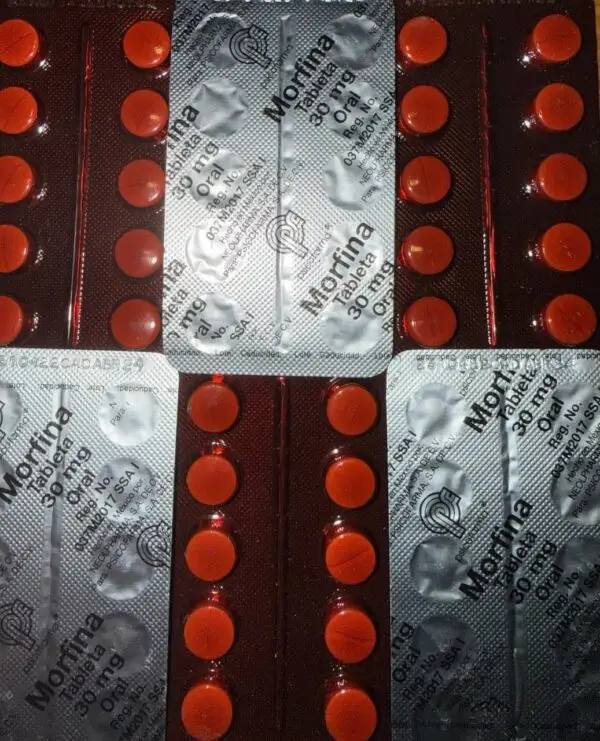
Morphine 30mg
Morphine 30mg
Price range: €300 through €730
Quantity
Choose an option
Add to cart
Buy Now
Morphine 30mg
Morphine 30mg is a foundational, natural opioid alkaloid derived from the opium poppy (Papaver somniferum) and serves as the prototypical Schedule II opioid agonist. Available in immediate-release (IR) oral tablets (such as round, purple or brown tablets) and extended-release (ER) formulations (such as “MS Contin 30mg” purple tablets), Morphine 30mg is an essential analgesic reserved for managing moderate-to-severe pain where non-opioid medications or lower-strength opioid regimens are clinically inadequate.
Primary Clinical Indications
-
Severe Acute Post-Surgical & Traumatic Pain: Immediate-release Morphine 30mg is indicated for the acute management of intense pain following major surgical, orthopedic, or traumatic interventions.
-
Chronic Cancer Pain Management: Extended-release 30mg formulations provide round-the-clock systemic analgesia for oncological pain requiring continuous opioid coverage.
-
Opioid-Tolerant Pain Protocols: Utilized as a standard reference agent in clinical dose titration for patients accustomed to daily opioid therapy under strict medical supervision.
Mechanism of Action: Central $\mu$-Opioid Receptor Agonism
Morphine 30mg produces powerful systemic analgesia by acting as a full agonist at central and peripheral opioid receptors:
$$\text{Morphine} + \mu\text{-Opioid Receptors} \longrightarrow \downarrow \text{Intracellular cAMP} \longrightarrow \text{Suppression of Ascending Nociceptive Pathways}$$
-
Selective Receptor Binding: Morphine binds with high intrinsic activity to $\mu$-opioid receptors heavily concentrated in the periaqueductal gray, locus coeruleus, dorsal horn of the spinal cord, and peripheral afferent neurons.
-
Neuronal Membrane Hyperpolarization: Inhibits presynaptic voltage-gated calcium channels while opening postsynaptic inwardly rectifying potassium channels, suppressing intracellular cyclic AMP ($\text{cAMP}$) synthesis.
-
Inhibition of Excitatory Transmitters: Blocks the presynaptic release of nociceptive neurotransmitters (including Substance P and glutamate) along the spinothalamic tract, halting ascending pain impulse conduction to higher cortical centers.
-
Pharmacokinetics: Absorbed via the gastrointestinal tract, undergoing significant first-pass hepatic metabolism. Immediate-release forms achieve peak plasma levels ($T_{\max}$) within 1 hour with an elimination half-life of 2 to 4 hours, whereas extended-release formulations release active drug steadily over 12 to 24 hours.
Dosing and Administration Guidelines
| Clinical Parameter | Standard Prescribing Protocol |
| Immediate-Release (IR) | Administered orally every 4 hours as needed for acute severe pain under direct physician oversight. |
| Extended-Release (ER) | Swallowed whole every 8 to 12 hours; never crush, break, or chew ER tablets, as doing so causes rapid drug release (“dose dumping”). |
| Ingestion Protocol | Take with water. May be ingested with food to minimize potential gastrointestinal distress or nausea. |
Critical Safety Warnings and Clinical Precautions
-
Black Box Warning — Misuse, Abuse, and Overdose: Morphine 30mg carries severe risks of physical dependence, tolerance, addiction, life-threatening respiratory failure, and fatal toxicity.
-
Life-Threatening Respiratory Depression: Serious, life-threatening, or fatal respiratory depression may occur; monitor closely during treatment initiation and dose adjustments.
-
CNS Depressant Interactions: Concomitant use with alcohol, benzodiazepines, barbiturates, or other sedatives creates severe risks of profound hypotension, severe respiratory arrest, coma, and death.
-
Illicit Counterfeit Hazard: Oral morphine tablets are targeted by illicit pressers who produce counterfeit pills containing unpredictable, fatal doses of synthetic opioids such as fentanyl.
Additional Information
| Quantity | 15 Pills, 20 Pills, 30 Pills |
|---|
Related products
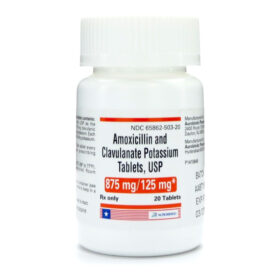
Amoxicillin 875mg/125mg
Price range: €25 through €45
Select options
This product has multiple variants. The options may be chosen on the product page
 English
 German
 Dutch
 Polish
 Portuguese
Reviews
There are no reviews yet.