
- Your cart is empty
- Continue Shopping

Product

Tramadol 250mg
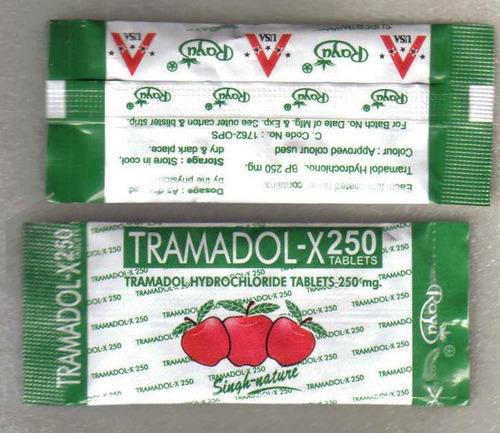
Tramadol 250mg
Price range: €145 through €190
Quantity
Choose an option
Add to cart
Buy Now
Tramadol 250mg
Tramadol 250mg is an ultra-high-potency, central-acting synthetic analgesic. Classified as a Schedule IV controlled substance in many jurisdictions, Tramadol 250mg is indicated for the management of severe acute or chronic pain in adults when alternative non-opioid or lower-dose combination therapies are inadequate or un-tolerated. Unlike typical opioids, Tramadol possesses a distinct dual mechanism of action combining weak opioid receptor agonism with monoaminergic reuptake inhibition, requiring precise dosing oversight to mitigate systemic and neurological risks.
Primary Clinical Indications
-
Management of Severe Chronic Pain: Prescribed for round-the-clock control of intractable pain states, such as advanced osteoarthritis, severe neuropathic pain, or cancer-related pain.
-
Refractory Post-Surgical Analgesia: Utilized in acute hospital or specialized outpatient protocols following major orthopedic or abdominal surgeries when lower doses fail to provide sufficient pain relief.
-
Multimodal Breakthrough Pain Control: Integrated into comprehensive pain management plans for patients requiring high-strength dual-action analgesia.
Pharmacological Mechanism of Action
Tramadol 250mg produces analgesia by simultaneously targeting opioid and monoaminergic ascending and descending pain pathways:
$$\text{Tramadol} \longrightarrow \begin{cases} \text{Primary: } \mu\text{-Opioid Agonism (via } M1 \text{ metabolite } \text{O-desmethyltramadol}) \\ \text{Secondary: } \text{Inhibition of Serotonin (5-HT) and Norepinephrine (NE) Reuptake} \end{cases}$$
-
Dual Systemic Modulation: The parent compound and its primary active liver metabolite, $O$-desmethyltramadol ($M1$), bind to central $\mu$-opioid receptors to inhibit nociceptive signal transmission.
-
Monoamine Reuptake Inhibition: Simultaneously inhibits the presynaptic neuronal reuptake of serotonin ($5\text{-HT}$) and norepinephrine ($\text{NE}$) in the spinal cord, enhancing descending inhibitory pain pathways.
-
Pharmacokinetics: Rapidly absorbed from the gastrointestinal tract, reaching peak plasma levels ($T_{\max}$) within 1.5 to 2 hours. Tramadol undergoes hepatic metabolism via $CYP2D6$ (producing $M1$) and $CYP3A4$, featuring an elimination half-life of 6 to 7.5 hours.
Clinical Advantages vs. Disadvantages
Advantages
-
Dual-Action Synergistic Relief: Combines opioid analgesia with monoamine-mediated pain modulation, making it particularly effective for mixed nociceptive and neuropathic pain.
-
Lower Respiratory Suppression Risk: At therapeutic doses, it causes less severe respiratory depression compared to traditional full $\mu$-opioid agonists like morphine or oxycodone.
-
Reduced Gastrointestinal Hypomotility: Exhibits a lower incidence of severe opioid-induced constipation relative to single-entity strong opioids.
Disadvantages
-
Seizure Threshold Reduction: Significantly lowers the seizure threshold, especially at elevated doses ($\ge 250\text{mg}$) or in patients with pre-existing seizure disorders.
-
Serotonin Syndrome Hazard: High risk of triggering potentially fatal serotonin syndrome when co-administered with SSRIs, SNRIs, MAOIs, or triptans.
-
Metabolic Variability: Analgesic efficacy depends heavily on individual $CYP2D6$ metabolizer status (poor metabolizers experience reduced efficacy, while ultra-rapid metabolizers face toxicity risks).
Side Effects Profile & Safety Warnings
| Severity Category | Common Clinical Manifestations |
| Common / Mild | Nausea, dizziness, somnolence, headache, dry mouth, constipation, excessive sweating, and vomiting. |
| Severe / Adverse | Seizures, serotonin syndrome, severe hypotension, hallucinations, confusion, or anaphylaxis. |
| Critical Warnings | High Risk of Seizures & Addiction: High-dose single administrations markedly increase seizure risks and physical dependence. Concomitant use with alcohol, benzodiazepines, or other CNS depressants carries severe risks of coma and death. |
Additional Information
| Quantity | 100 Tabs, 180 Tabs |
|---|
Related products
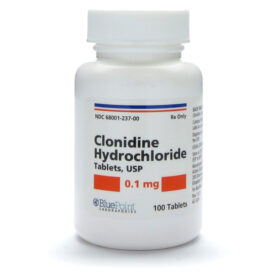
Clonidine Hydrochloride 0.1mg
Price range: €90 through €360
Select options
This product has multiple variants. The options may be chosen on the product page
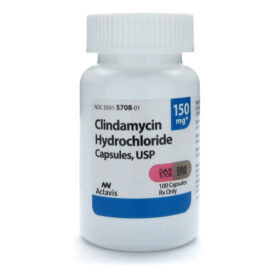
Clindamycin 150mg
Price range: €45 through €260
Select options
This product has multiple variants. The options may be chosen on the product page
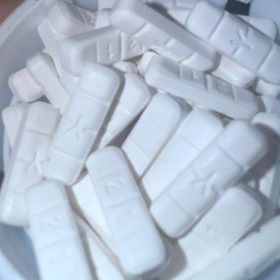
Y21 Xanax
Price range: €80 through €300
Select options
This product has multiple variants. The options may be chosen on the product page
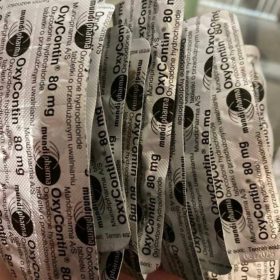
Oxycontin 80mg
Price range: €250 through €730
Select options
This product has multiple variants. The options may be chosen on the product page
 English
 German
 Dutch
 Polish
 Portuguese
Reviews
There are no reviews yet.