
- Your cart is empty
- Continue Shopping

Product

Alko 1
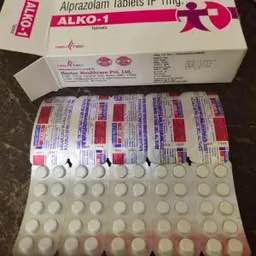
Alko 1
Price range: €110 through €180
Quantity
Choose an option
Add to cart
Buy Now
Alko 1
Alko 1 is a high-potency oral tablet formulation containing alprazolam 1mg, a triazolo-benzodiazepine derivative. Classified as a Schedule IV controlled substance, Alko 1 is indicated for the acute management of panic disorder (with or without agoraphobia) and the short-term relief of severe generalized anxiety disorder (GAD) in adults. By modulating central inhibitory pathways, Alko 1 delivers rapid anxiolytic, sedative, muscle relaxant, and anticonvulsant effects under direct medical supervision.
Primary Clinical Indications
-
Panic Disorder Management: Indicated to reduce the frequency, duration, and severity of acute panic attacks and anticipatory terror.
-
Generalized Anxiety Disorder (GAD): Prescribed for short-term control of severe anxiety, tension, emotional agitation, and somatic hyper-arousal.
-
Anxiety Associated with Depression: Utilized as an adjunct in short-term regimens to alleviate comorbid anxiety symptoms accompanying depressive disorders.
Pharmacological Mechanism of Action
Alko 1 exerts its central nervous system effects by allosterically potentiating gamma-aminobutyric acid ($\text{GABA}$) neurotransmission:
$$\text{Alprazolam} + \text{GABA}_\text{A}\text{ Receptor Complex} \longrightarrow \uparrow \text{Chloride Ion Influx} \longrightarrow \text{Neuronal Membrane Hyperpolarization}$$
-
Benzodiazepine Site Agonism: Alprazolam binds with high affinity to specific benzodiazepine sites on $\text{GABA}_\text{A}$ receptor complexes across the limbic system, amygdala, and cerebral cortex.
-
Enhanced Chloride Conductance: Increases the opening frequency of integral ligand-gated chloride ion channels in response to endogenous $\text{GABA}$.
-
Postsynaptic Suppression: The influx of negatively charged chloride ions hyperpolarizes postsynaptic neuronal membranes, suppressing excessive firing and reducing anxiety signaling.
-
Pharmacokinetics: Rapidly absorbed from the GI tract, reaching peak plasma concentration ($T_{\max}$) in 1 to 2 hours. Alprazolam undergoes hepatic oxidation via $CYP3A4$ into micro-active metabolites ($\alpha$-hydroxyalprazolam), with an elimination half-life of 11 to 16 hours.
Clinical Advantages vs. Disadvantages
Advantages
-
Rapid Onset of Action: Provides fast symptom control, relieving acute panic and severe anxiety within 30 to 60 minutes.
-
High Anxiolytic Potency: Highly effective at low milligram doses compared to lower-potency benzodiazepines.
-
Targeted Panic Coverage: Proven clinical efficacy in reducing both spontaneous panic attacks and anticipatory anxiety.
Disadvantages
-
High Risk of Physical Dependence: Rapidly induces tolerance and physiological dependence, even with short-term prescribed use.
-
Severe Withdrawal Reactions: Abrupt discontinuation can provoke severe rebound anxiety, tremors, delirium, or life-threatening seizures.
-
Cognitive & Motor Impairment: Frequently causes drowsiness, ataxia, impaired memory consolidation, and slowed reaction times.
Side Effects Profile & Safety Warnings
| Severity Category | Common Clinical Manifestations |
| Common / Mild | Drowsiness, sedation, lightheadedness, impaired coordination, memory impairment, and dysarthria. |
| Severe / Adverse | Paradoxical agitation, severe confusion, hallucinations, hypotension, or syncope. |
| Critical Warnings | Black Box Warning: Risk of profound sedation, respiratory depression, coma, and death when co-administered with opioids, alcohol, or other CNS depressants. Abrupt cessation risks fatal withdrawal. |
Additional Information
| Quantity | 100 Tabs, 180 Tabs, 200 Tabs |
|---|
Related products
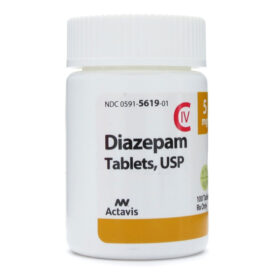
Diazepam 10mg Tablets
Price range: €95 through €600
Select options
This product has multiple variants. The options may be chosen on the product page
 English
 German
 Dutch
 Polish
 Portuguese
Reviews
There are no reviews yet.