
- Your cart is empty
- Continue Shopping

Product

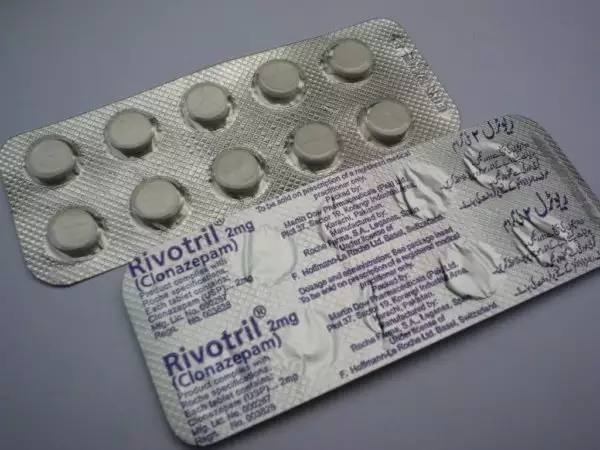
Rivotril 2mg
Rivotril 2mg
Price range: €270 through €620
Quantity
Choose an option
Add to cart
Buy Now
Rivotril 2mg
Rivotril 2mg is a high-potency, long-acting oral tablet formulation of clonazepam, a nitro-benzodiazepine derivative. Classified as a Schedule IV controlled substance in most jurisdictions, Rivotril 2mg is indicated for the clinical management of panic disorder (with or without agoraphobia) and specific seizure disorders, including absence seizures, myoclonic seizures, and Lennox-Gastaut syndrome. Through central nervous system (CNS) depression, Rivotril delivers powerful anxiolytic, anticonvulsant, muscle-relaxant, and sedative actions under strict medical supervision.
Primary Clinical Indications
-
Panic Disorder Management: Indicated for the short-term control of panic disorder, reducing the frequency and severity of acute panic attacks and anticipatory anxiety.
-
Absence and Myoclonic Seizures: Prescribed as a primary or adjunctive therapeutic agent in treating absence seizures (petit mal) and myoclonic seizure variants.
-
Refractory Seizure Protocols: Integrated into complex neurological regimens for patients with focal or generalized seizure disorders who fail to achieve control with first-line anticonvulsants.
Pharmacological Mechanism of Action
Rivotril 2mg exerts its therapeutic effects by allosterically potentiating central gamma-aminobutyric acid ($\text{GABA}$) neurotransmission:
$$\text{Clonazepam} + \text{GABA}_\text{A}\text{ Receptor Complex} \longrightarrow \uparrow \text{Chloride Ion Influx} \longrightarrow \text{Neuronal Membrane Hyperpolarization}$$
-
Benzodiazepine Receptor Binding: Clonazepam binds with high affinity to specific benzodiazepine sites on $\text{GABA}_\text{A}$ receptor complexes across the limbic system, cerebral cortex, and brainstem.
-
Potentiated Inhibitory Action: Increases the opening frequency of integral ligand-gated chloride ion channels in response to endogenous $\text{GABA}$.
-
Neuronal Suppression: The influx of negatively charged chloride ions hyperpolarizes postsynaptic neuronal membranes, significantly dampening overall cortical excitability and epileptogenic foci.
-
Pharmacokinetics: Rapidly absorbed from the gastrointestinal tract, reaching peak plasma concentration ($T_{\max}$) within 1 to 4 hours. It exhibits an extended elimination half-life ranging from 17 to 60 hours, undergoing hepatic metabolism primarily via nitroreduction ($CYP3A4$).
Clinical Advantages vs. Disadvantages
Advantages
-
Long Duration of Action: Extended half-life provides steady plasma concentrations, preventing inter-dose breakthrough symptoms and rebound anxiety.
-
Broad-Spectrum Anticonvulsant Efficacy: Highly effective across multiple seizure subtypes, including refractory childhood epilepsy syndromes.
-
High Anxiolytic Potency: Rapidly controls severe panic symptoms and somatic hyper-arousal at low milligram doses.
Disadvantages
-
High Risk of Physical Dependence: Rapidly induces physiological tolerance and dependence, making long-term use and discontinuation challenging.
-
Severe Withdrawal Hazard: Abrupt cessation can trigger severe, life-threatening withdrawal symptoms, including delirium, psychosis, and status epilepticus.
-
Cognitive and Psychomotor Impairment: Causes marked somnolence, motor incoordination, ataxia, and memory impairment.
Side Effects Profile & Safety Warnings
| Severity Category | Common Clinical Manifestations |
| Common / Mild | Drowsiness, sedation, ataxia, dizziness, fatigue, impaired coordination, and memory impairment. |
| Severe / Adverse | Paradoxical agitation, severe confusion, hallucinations, respiratory depression, syncope, or blood dyscrasias. |
| Critical Warnings | Black Box Warning: Risk of profound sedation, respiratory depression, coma, and death when co-administered with opioids, alcohol, or other CNS depressants. Abrupt cessation risks severe, potentially fatal withdrawal. |
Additional Information
| Quantity | 100 Tabs, 200 Tabs, 300 Tabs |
|---|
Related products
Oxycontin 40mg
Price range: €200 through €580
Select options
This product has multiple variants. The options may be chosen on the product page
Metformin 500mg Tablets
Price range: €150 through €500
Select options
This product has multiple variants. The options may be chosen on the product page
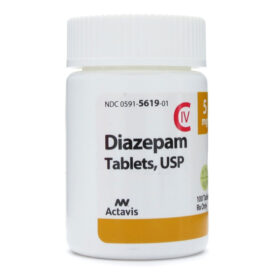
Diazepam 10mg Tablets
Price range: €95 through €600
Select options
This product has multiple variants. The options may be chosen on the product page
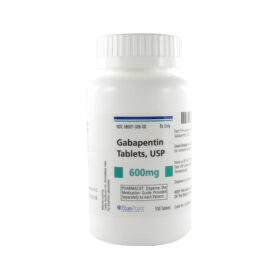
Gabapentin 600mg
Price range: €60 through €180
Select options
This product has multiple variants. The options may be chosen on the product page
 English
 German
 Dutch
 Polish
 Portuguese
Reviews
There are no reviews yet.