
- Your cart is empty
- Continue Shopping

Product

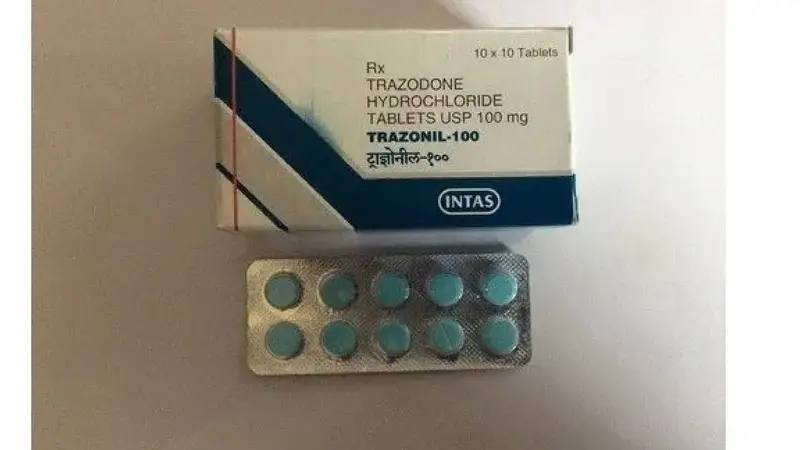
Trazodon 100mg
Trazodon 100mg
€150
Add to cart
Buy Now
Trazodon 100mg
Trazodon 100mg is an oral triazolopyridine-derivative serotonin antagonist and reuptake inhibitor (SARI) containing 100mg of trazodone hydrochloride. Regulated as a prescription-only antidepressant medication globally, Trazodon 100mg is indicated primarily for the treatment of major depressive disorder (MDD) in adults. Because of its dose-dependent sedative-hypnotic profile, this 100mg strength is also extensively prescribed off-label for primary and secondary insomnia, antidepressant-induced sleep fragmentation, and agitation in geriatric populations without the physical dependence risks of benzodiazepines.
Primary Clinical Indications
-
Major Depressive Disorder (MDD): Approved for the acute and maintenance management of major depressive episodes, particularly when accompanied by prominent anxiety, psychomotor agitation, or sleep disturbances.
-
Chronic & Secondary Insomnia (Off-Label): Widely utilized at 50mg to 100mg doses prior to bedtime to improve sleep continuity, reduce nocturnal awakenings, and restore slow-wave sleep architecture.
-
Adjunctive Antidepressant Sleep Support: Co-prescribed alongside activating selective serotonin reuptake inhibitors ($\text{SSRIs}$) or $\text{SNRIs}$ to counteract serotonergic insomnia.
Pharmacological Mechanism of Action
Trazodon 100mg exhibits a dose-dependent multimodal mechanism, shifting from potent postsynaptic receptor antagonism at lower doses (50–100mg) to serotonin transporter blockade at higher antidepressant doses (150–400mg):
$$\text{Trazodone} + 5\text{-HT}_{2\text{A}} / H_1 / \alpha_1 \text{ Receptors} \longrightarrow \text{Receptor Antagonism} \longrightarrow \text{Anxiolysis \& Sedation}$$
$$\text{Trazodone} + \text{SERT} \longrightarrow \downarrow \text{5-HT Reuptake} \longrightarrow \uparrow [\text{Serotonin}]_{\text{Synaptic}} \text{ (Antidepressant Effect)}$$
-
Potent $5\text{-HT}_{2\text{A}}$ and $5\text{-HT}_{2\text{C}}$ Antagonism: Blocks postsynaptic serotonin $5\text{-HT}_{2\text{A}}$ and $5\text{-HT}_{2\text{C}}$ receptors with high affinity, preventing the insomnia, anxiety, and sexual dysfunction typically triggered by non-selective serotonergic stimulation.
-
Histaminergic ($H_1$) & $\alpha_1$-Adrenergic Blockade: Exhibits moderate-to-high antagonism at central histamine $H_1$ receptors and peripheral/central $\alpha_1$-adrenergic receptors, mediating rapid sleep induction alongside potential orthostatic hypotension.
-
Serotonin Transporter ($\text{SERT}$) Inhibition: Moderately inhibits presynaptic serotonin reuptake, elevating extracellular $5\text{-HT}$ concentrations to exert antidepressant efficacy at higher titrated doses.
-
Pharmacokinetics: Well-absorbed following oral administration (administration shortly after a light meal enhances total absorption and blunts peak-concentration dizziness), reaching peak plasma concentrations ($T_{\max}$) within 1 hour (fasting) to 2 hours (fed). Hepatic metabolism occurs predominantly via $CYP3A4$ into the active metabolite meta-chlorophenylpiperazine ($\text{mCPP}$, subsequently cleared via $CYP2D6$), exhibiting a biphasic elimination half-life averaging 5 to 9 hours.
Clinical Advantages vs. Disadvantages
Advantages
-
Non-Habit Forming Hypnotic Alternative: Lacks affinity for $\text{GABA}_\text{A}$ benzodiazepine receptors, eliminating controlled-substance scheduling, tolerance escalation, and physical withdrawal dependence.
-
Preserves Slow-Wave Sleep & Minimal Sexual Dysfunction: Unlike traditional $\text{SSRIs}$, $5\text{-HT}_{2\text{A}}$ antagonism deepens restorative slow-wave sleep and rarely causes erectile dysfunction or anorgasmia.
-
Minimal Anticholinergic Burden: Exhibits negligible affinity for muscarinic acetylcholine receptors, avoiding severe urinary retention, cognitive delirium, or narrow-angle glaucoma precipitation.
Disadvantages
-
Orthostatic Hypotension & Syncope Risk: $\alpha_1$-adrenergic receptor blockade can trigger postural drops in blood pressure, dizziness, and falls—especially in elderly patients or upon rapid standing.
-
Next-Day Residual Somnolence: Daytime grogginess and psychomotor sluggishness frequently occur when the 100mg dose is taken late at night or combined with other CNS depressants.
-
Risk of Priapism: Rare but medically urgent $\alpha_1$-mediated penile engorgement requiring immediate emergency intervention to prevent permanent erectile tissue damage.
Side Effects Profile & Safety Warnings
| Severity Category | Common Clinical Manifestations |
| Common / Mild | Drowsiness, somnolence, dizziness, lightheadedness, dry mouth, blurred vision, fatigue, nausea, headache, and nasal congestion. |
| Severe / Adverse | Priapism (prolonged, painful erection lasting longer than 4 hours), orthostatic hypotension with syncope, QT interval prolongation (torsades de pointes), serotonin syndrome, and hyponatremia ($\text{SIADH}$). |
| Critical Warnings | Black Box Warning (Suicidality): Antidepressants increase the risk of suicidal thoughts and behaviors in pediatric, adolescent, and young adult patients (ages 18–24) during initial therapy or dose changes; close clinical monitoring is mandatory. Strictly contraindicated within 14 days of monoamine oxidase inhibitor ($\text{MAOI}$) therapy or concurrent linezolid/intravenous methylene blue due to fatal serotonin syndrome risks. Avoid co-administration with strong $CYP3A4$ inhibitors (e.g., ketoconazole, ritonavir) or QT-prolonging antiarrhythmics. Seek immediate emergency medical care if priapism occurs. |
Related products
Metformin 500mg
€1,500
Select options
This product has multiple variants. The options may be chosen on the product page
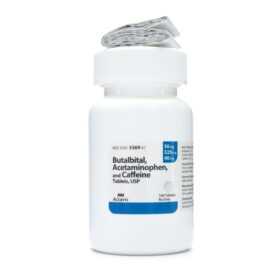
Butalbital Acetaminophen
Price range: €30 through €90
Select options
This product has multiple variants. The options may be chosen on the product page
 English
 German
 Dutch
 Polish
 Portuguese
Reviews
There are no reviews yet.