
- Your cart is empty
- Continue Shopping

Product

Tramadol 200mg
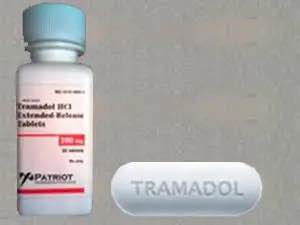
Tramadol 200mg
Price range: €260 through €400
Quantity
Choose an option
Add to cart
Buy Now
Tramadol 200mg
Tramadol 200mg is a high-strength, centrally acting synthetic opioid analgesic formulation containing 200mg of tramadol hydrochloride ((1RS,2RS)-2-[(dimethylamino)methyl]-1-(3-methoxyphenyl)cyclohexanol hydrochloride), manufactured almost exclusively as a modified- or extended-release (ER) once-daily oral tablet or capsule. Classified as a Schedule IV controlled substance in the United States and a strictly regulated prescription-only medication globally, Tramadol 200mg is indicated for the management of severe, persistent pain that requires daily, around-the-clock, long-term opioid treatment and for which alternative non-opioid options are inadequate. By combining $\mu$-opioid receptor agonism with serotonin-norepinephrine reuptake inhibition ($\text{SNRI}$), it modulates both ascending nociceptive signals and descending inhibitory pain pathways.
Primary Clinical Indications
-
Severe Chronic Musculoskeletal & Osteoarthritic Pain: Indicated for around-the-clock management of refractory pain associated with advanced osteoarthritis, degenerative disc disease, and chronic lower back pain.
-
Persistent Mixed Nociceptive-Neuropathic Pain: Prescribed in opioid-experienced adults requiring continuous 24-hour analgesia for complex pain syndromes involving both somatic tissue injury and neuropathic sensitization.
-
Maintenance Step-Up Analgesia: Utilized for patients already stabilized on lower divided doses of immediate-release tramadol (typically $150\text{–}200\text{ mg/day}$) transitioning to simplified once-daily dosing.
Pharmacological Mechanism of Action
Tramadol 200mg delivers sustained 24-hour analgesia through complementary central opioid receptor activation and monoaminergic reuptake blockade:
$$\text{O-Desmethyltramadol (M1)} + \mu\text{-Opioid Receptors} \longrightarrow \downarrow \text{cAMP \& Ca}^{2+}\text{ Influx} \longrightarrow \text{Ascending Nociceptive Inhibition}$$
$$\text{Tramadol} + \text{SERT / NET} \longrightarrow \downarrow \text{5-HT \& Norepinephrine Reuptake} \longrightarrow \uparrow \text{Descending Pain Modulation}$$
-
Stereoselective Monoamine Reuptake Inhibition: Racemic tramadol comprises $(+)$– and $(-)$-enantiomers; $(+)$-tramadol inhibits presynaptic serotonin ($\text{5-HT}$) reuptake via $\text{SERT}$, while $(-)$-tramadol inhibits norepinephrine ($\text{NE}$) reuptake via $\text{NET}$, reinforcing descending spinal pain-inhibitory tracts.
-
Active Metabolite $\mu$-Opioid Agonism: While parent tramadol displays weak $\mu$-opioid affinity, hepatic $O$-demethylation yields O-desmethyltramadol ($\text{M1}$), which exhibits roughly 200-fold greater affinity for central $\mu$-opioid receptors, driving sustained opioid analgesia.
-
Pharmacokinetics: Extended-release 200mg formulations regulate gastrointestinal dissolution to prevent rapid peak dumping, achieving peak plasma concentrations ($T_{\max}$) within 10 to 12 hours (with overall bioavailability approximating 85% to 90% relative to immediate-release dosing). Metabolized in the liver via $CYP2D6$ (forming active $\text{M1}$) and $CYP3A4$/$CYP2B6$ (forming inactive $N$-desmethyltramadol), steady-state elimination half-lives reach approximately 7 to 9 hours for parent tramadol and 8 to 10 hours for $\text{M1}$ due to prolonged absorption kinetics.
Clinical Advantages vs. Disadvantages
Advantages
-
24-Hour Sustained Analgesia & Convenience: Extended-release matrix technology smooths peak-to-trough plasma fluctuations, eliminating nocturnal breakthrough pain and improving adherence via once-daily administration.
-
Dual-Pathway Efficacy: Simultaneous $\mu$-opioid and $\text{SNRI}$ mechanisms provide broader clinical utility across mixed inflammatory and neuropathic pain conditions than pure opioid agonists.
-
Lower Acute Gastrointestinal Dysmotility: Produces comparatively less severe constipation and biliary sphincter spasm than equianalgesic doses of traditional full-agonist opioids.
Disadvantages
-
Elevated Seizure Risk at High Doses: Approaching or exceeding the maximum recommended daily limit of $300\text{ mg}$ (for ER formulations) markedly lowers the seizure threshold, especially when co-administered with antidepressants or antipsychotics.
-
Unsuitable for Opioid-Naive Initiation or Acute Pain: The high 200mg strength carries excessive toxicity risks if used to initiate therapy or treat intermittent, short-term breakthrough pain.
-
Genetic $CYP2D6$ Variability & Dual Withdrawal: Ultra-rapid $CYP2D6$ metabolizers risk fatal opioid overdose, while abrupt cessation triggers both classic opioid withdrawal and severe $\text{SNRI}$-like neuropsychiatric discontinuation symptoms.
Side Effects Profile & Safety Warnings
| Severity Category | Common Clinical Manifestations |
| Common / Mild | Dizziness, vertigo, nausea, constipation, somnolence, headache, vomiting, pruritus (itching), hyperhidrosis (excessive sweating), and dry mouth. |
| Severe / Adverse | Generalized tonic-clonic seizures, life-threatening respiratory depression, serotonin syndrome (hyperthermia, clonus, agitation, autonomic instability), severe hypotension, hyponatremia, and adrenal insufficiency. |
| Critical Warnings | Black Box Warning: Tramadol 200mg exposes patients and other users to the risks of opioid addiction, abuse, and misuse, which can lead to overdose and death. Serious, life-threatening, or fatal respiratory depression may occur—swallow tablets/capsules whole; crushing, chewing, breaking, or dissolving extended-release 200mg formulations destroys the controlled-release mechanism and causes rapid release and absorption of a potentially fatal tramadol dose. Strictly contraindicated in children under 12 years of age, post-tonsillectomy/adenoidectomy pediatric patients under 18, and patients with severe hepatic or renal impairment ($\text{CrCl} < 30\text{ mL/min}$). Co-administration with benzodiazepines, alcohol, or other CNS depressants risks fatal respiratory arrest; concomitant use with MAOIs or serotonergic drugs risks fatal serotonin syndrome. |
Additional Information
| Quantity | 60 Tabs, 120 Tabs, 180 Tabs |
|---|
Related products
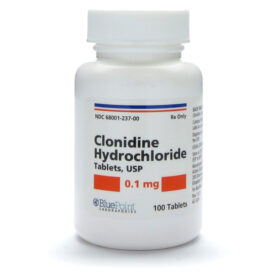
Clonidine Hydrochloride 0.1mg
Price range: €90 through €360
Select options
This product has multiple variants. The options may be chosen on the product page
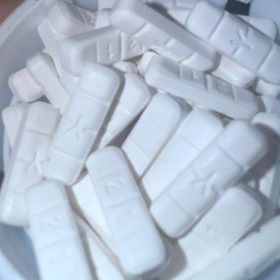
Y21 Xanax
Price range: €80 through €300
Select options
This product has multiple variants. The options may be chosen on the product page
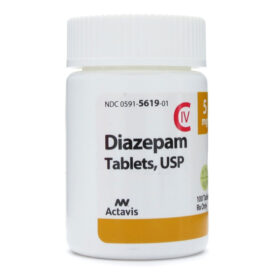
Diazepam 10mg Tablets
Price range: €95 through €600
Select options
This product has multiple variants. The options may be chosen on the product page
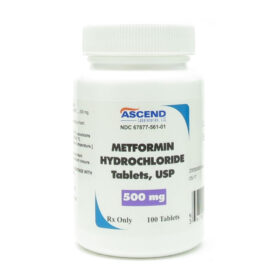
Metformin 500mg Tablets
Price range: €150 through €500
Select options
This product has multiple variants. The options may be chosen on the product page
 English
 German
 Dutch
 Polish
 Portuguese
Reviews
There are no reviews yet.