
- Your cart is empty
- Continue Shopping

Product

Arimidex 1mg
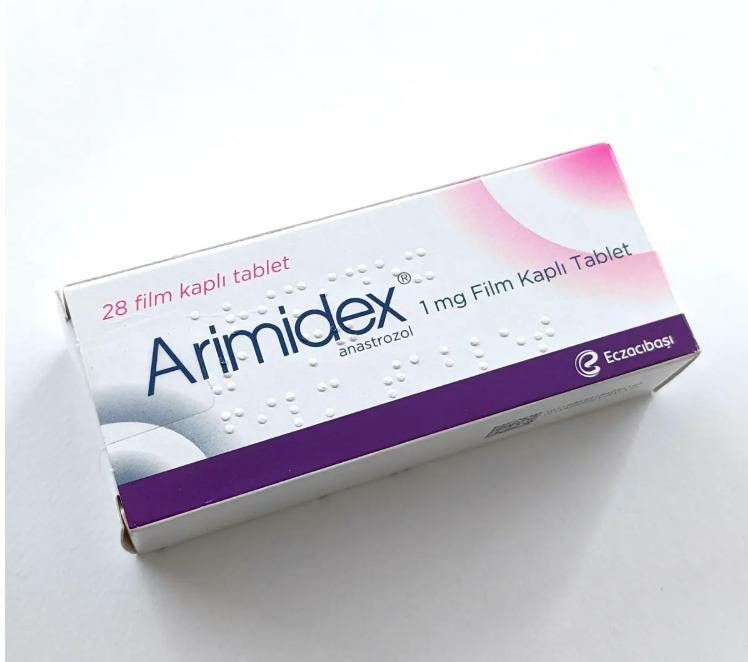
Arimidex 1mg
€165
Add to cart
Buy Now
Arimidex 1mg
Arimidex 1mg is a non-steroidal, highly selective third-generation aromatase inhibitor containing anastrozole. Unclassified as a controlled substance, Arimidex 1mg is a foundational hormonal therapy indicated for the treatment of hormone receptor-positive ($\text{HR}^+$) breast cancer in postmenopausal women. It is prescribed for adjuvant treatment of early-stage breast cancer, initial treatment of locally advanced or metastatic disease, and as secondary treatment following tamoxifen failure. By blocking peripheral estrogen synthesis, Arimidex deprives estrogen-dependent tumor cells of the growth signals required for proliferation.
Primary Clinical Indications
-
Adjuvant Treatment of Early $\text{HR}^+$ Breast Cancer: Prescribed to reduce the risk of disease recurrence and contralateral primary breast cancer in postmenopausal women following initial surgery or chemotherapy.
-
First-Line Treatment of Advanced or Metastatic Breast Cancer: Indicated for the first-line endocrine management of locally advanced or metastatic hormone-receptor-positive or hormone-receptor-unknown postmenopausal breast carcinoma.
-
Secondary Endocrine Therapy: Applied as a secondary option for postmenopausal patients whose disease has progressed following prior tamoxifen therapy.
Pharmacological Mechanism of Action: Selective Aromatase Inhibition
Arimidex 1mg suppresses circulating estrogen levels by targeting the rate-limiting enzyme in peripheral estrogen biosynthesis:
$$\text{Androstenedione / Testosterone} + \text{Aromatase Enzyme} \xrightarrow[\text{Anastrozole Blockade}]{\text{Competitive Inhibition}} \cancel{\text{Estrone / Estradiol}}$$
-
Selective Enzyme Inactivation: Anastrozole competitively binds to the heme group of the cytochrome P450 aromatase enzyme ($\text{CYP19A1}$), inhibiting the conversion of adrenal androgens (androstenedione and testosterone) into estrogens (estrone and estradiol) in peripheral tissues.
-
Profound Systemic Estrogen Suppression: In postmenopausal women—where peripheral conversion in adipose and muscle tissue is the primary source of circulating estrogen—a daily 1mg dose reduces serum estradiol levels by approximately 80% to 85%.
-
Tumor Growth Arrest: Deprives $\text{HR}^+$ breast carcinoma cells of circulating estrogen, halting estrogen-receptor-mediated gene transcription and cellular replication.
-
Pharmacokinetics: Well absorbed from the gastrointestinal tract, achieving steady-state plasma concentrations within 7 days of daily administration. Anastrozole undergoes extensive hepatic metabolism via $N$-dealkylation, glucuronidation, and hydroxylation, featuring an elimination half-life of approximately 50 hours.
Clinical Advantages vs. Disadvantages
Advantages
-
Superior Efficacy over Tamoxifen: Clinical trials (e.g., the ATAC trial) demonstrate superior disease-free survival and lower recurrence rates compared to tamoxifen in postmenopausal early breast cancer.
-
No Thromboembolic or Endometrial Risk: Unlike selective estrogen receptor modulators (SERMs), it does not carry an increased risk of deep vein thrombosis, pulmonary embolism, or endometrial cancer.
-
Convenient Dosing: Long elimination half-life allows for once-daily dosing with or without food.
Disadvantages
-
Accelerated Bone Mineral Density Loss: Estrogen depletion accelerates bone resorption, significantly increasing the risk of osteopenia, osteoporosis, and bone fractures.
-
Arthralgia and Musculoskeletal Pain: Causes joint stiffness, arthralgia, and myalgia in up to 30% to 40% of patients, occasionally limiting long-term compliance.
-
Lipid Profile Disturbances: May cause mild hypercholesterolemia, requiring periodic monitoring of serum lipid parameters.
Side Effects Profile & Safety Warnings
| Severity Category | Common Clinical Manifestations |
| Common / Mild | Hot flashes, night sweats, arthralgia, joint stiffness, asthenia, fatigue, nausea, headache, cutaneous rash, and vaginal dryness. |
| Severe / Adverse | Osteoporotic fractures, severe hypercholesterolemia, dyspnea, peripheral edema, elevated hepatic enzymes, or ischemic cardiovascular events. |
| Critical Warnings | Contraindicated in Pregnancy and Premenopausal Women: Ineffective in premenopausal women with intact ovarian estrogen production and causes fetal harm if administered during pregnancy. Bone mineral density baseline scans and routine monitoring are strictly recommended. |
Related products

Y21 Xanax
Price range: €80 through €300
Select options
This product has multiple variants. The options may be chosen on the product page
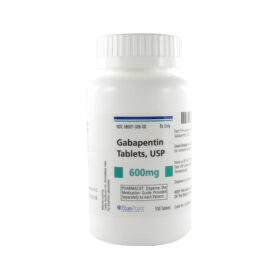
Gabapentin 600mg
Price range: €60 through €180
Select options
This product has multiple variants. The options may be chosen on the product page
 English
 German
 Dutch
 Polish
 Portuguese
Reviews
There are no reviews yet.