
- Your cart is empty
- Continue Shopping

Product

Lorazepam 2mg
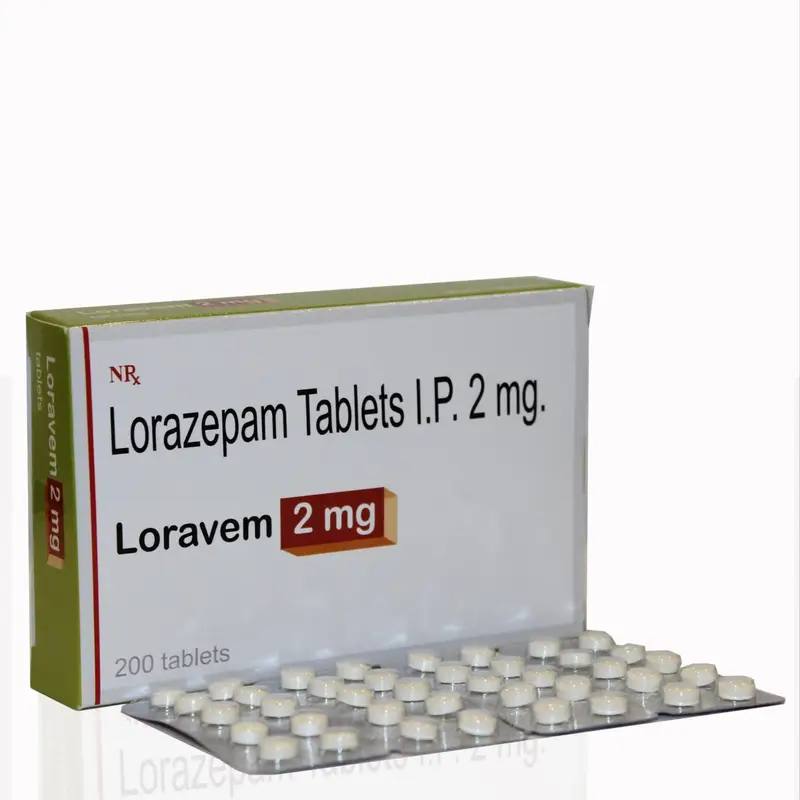
Lorazepam 2mg
€170
Add to cart
Buy Now
Lorazepam 2mg
Lorazepam 2mg is an intermediate-acting, high-potency benzodiazepine oral tablet containing 2mg of lorazepam (a 3-hydroxy benzodiazepine derivative). Classified internationally as a Schedule IV controlled substance, Lorazepam 2mg is indicated for the short-term management of severe anxiety disorders, anxiety associated with depressive symptoms, acute insomnia, and pre-operative sedation. Because it undergoes direct hepatic glucuronidation without forming active metabolites, it represents a foundational clinical option across acute psychiatric and general medical settings.
Primary Clinical Indications
-
Acute Anxiety & Panic Episodes: Indicated for short-term symptomatic relief of severe generalized anxiety disorder (GAD), acute situational stress, and debilitating panic attacks.
-
Anxiety Associated with Depressive Disorders: Prescribed as a transient adjunctive therapy to stabilize acute agitation and somatic tension prior to the onset of primary antidepressant therapy.
-
Pre-Anesthetic Sedation & Amnesia: Administered orally prior to surgical or diagnostic procedures to reduce pre-operative apprehension and induce anterograde amnesia.
-
Alcohol Withdrawal & Seizure Prophylaxis: Utilized in inpatient and outpatient protocols to prevent acute alcohol withdrawal agitation, autonomic instability, and withdrawal seizures.
Pharmacological Mechanism of Action
Lorazepam 2mg exerts anxiolytic, sedative-hypnotic, anticonvulsant, and muscle-relaxant properties by potentiating inhibitory neurotransmission across the central nervous system:
$$\text{Lorazepam} + \text{GABA}_\text{A}\text{ Benzodiazepine Site} \longrightarrow \uparrow \text{Cl}^-\text{ Channel Opening Frequency} \longrightarrow \text{Neuronal Hyperpolarization}$$
-
Allosteric $\text{GABA}_\text{A}$ Receptor Modulation: Binds stereospecifically to the benzodiazepine site at the interface of $\alpha$ and $\gamma$ subunits on postsynaptic $\text{GABA}_\text{A}$ receptor complexes, increasing the affinity of gamma-aminobutyric acid ($\text{GABA}$) for its binding site.
-
Chloride Influx & Hyperpolarization: Enhances the frequency of chloride ion ($\text{Cl}^-$) channel opening, hyperpolarizing neuronal membranes and inhibiting action potential propagation across the limbic system, thalamus, and hypothalamus.
-
Pharmacokinetics: Rapidly and completely absorbed following oral administration (approximately 90% absolute bioavailability), reaching peak plasma concentrations ($T_{\max}$) within 2 hours. Unlike diazepam or alprazolam, lorazepam bypasses Phase I cytochrome P450 oxidation, undergoing direct Phase II hepatic conjugation via $UGT2B15$ into inactive lorazepam glucuronide, exhibiting an intermediate elimination half-life of 10 to 20 hours.
Clinical Advantages vs. Disadvantages
Advantages
-
No Active Metabolites & Safe in Hepatic Impairment: Direct glucuronidation prevents drug accumulation in elderly patients or individuals with hepatic cirrhosis, offering a predictable clearance profile.
-
Minimal Cytochrome P450 Interactions: Bypasses $CYP3A4$ and $CYP2C19$ oxidative pathways, minimizing metabolic drug-drug interactions with complex medication regimens.
-
Reliable Oral Absorption: High bioavailability ensures consistent systemic exposure without erratic gastrointestinal absorption curves.
Disadvantages
-
High Tolerance, Dependence, & Withdrawal Risk: Rapid neuroadaptation occurs with daily use beyond 2 to 4 weeks, creating severe physical dependence and rebound anxiety upon cessation.
-
Marked Psychomotor & Cognitive Impairment: The 2mg strength produces substantial sedation, ataxia, and anterograde amnesia, elevating fall and motor–vehicle accident risks.
-
Misuse & Diversion Potential: Frequently targeted for non-medical misuse or co-ingestion with other central depressants.
Side Effects Profile & Safety Warnings
| Severity Category | Common Clinical Manifestations |
| Common / Mild | Sedation, drowsiness, dizziness, asthenia (weakness), unsteadiness (ataxia), anterograde amnesia, and blurred vision. |
| Severe / Adverse | Profound respiratory depression, severe hypotension, paradoxical behavioral disinhibition (agitation, rage, hallucinations), and life-threatening withdrawal seizures. |
| Critical Warnings | Black Box Warning: Concomitant use of benzodiazepines and opioids may result in profound sedation, respiratory depression, coma, and death; reserve concomitant prescribing only for patients with inadequate alternative options. Continuous use carries significant risks of abuse, misuse, and addiction, as well as physical dependence—abrupt discontinuation or rapid dosage reduction after prolonged therapy can precipitate acute, life-threatening withdrawal reactions including status epilepticus; utilize a gradual, individualized taper. Contraindicated in acute narrow-angle glaucoma and severe respiratory insufficiency. |
Related products
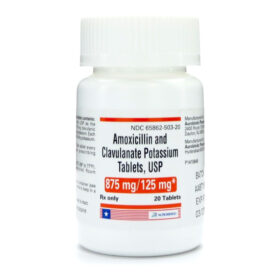
Amoxicillin 875mg/125mg
Price range: €25 through €45
Select options
This product has multiple variants. The options may be chosen on the product page
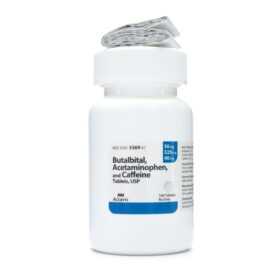
Butalbital Acetaminophen
Price range: €30 through €90
Select options
This product has multiple variants. The options may be chosen on the product page
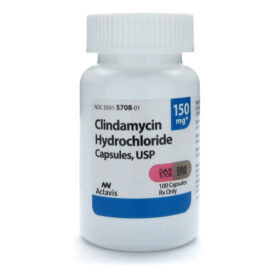
Clindamycin 150mg
Price range: €45 through €260
Select options
This product has multiple variants. The options may be chosen on the product page
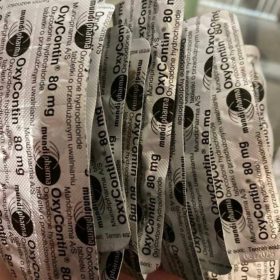
Oxycontin 80mg
Price range: €250 through €730
Select options
This product has multiple variants. The options may be chosen on the product page
Oxycontin 40mg
Price range: €200 through €580
Select options
This product has multiple variants. The options may be chosen on the product page
 English
 German
 Dutch
 Polish
 Portuguese
Reviews
There are no reviews yet.