
- Your cart is empty
- Continue Shopping
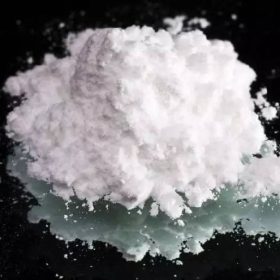

Product

Lexapro 10mg
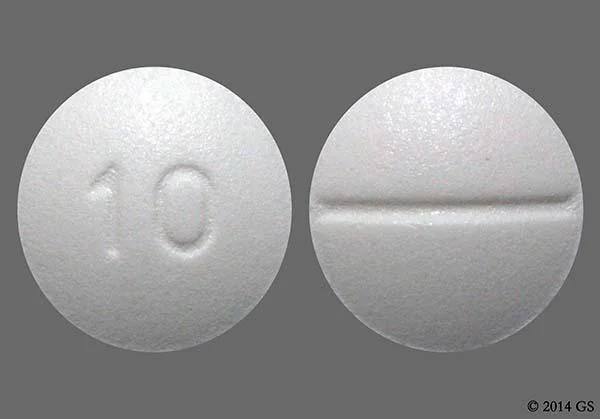
Lexapro 10mg
Price range: €320 through €490
Quantity
Choose an option
Add to cart
Buy Now
Lexapro 10mg
Lexapro 10mg is an oral, single-isomer selective serotonin reuptake inhibitor (SSRI) antidepressant containing 10mg of escitalopram (as escitalopram oxalate). Representing the therapeutically active S-enantiomer of racemic citalopram, Lexapro 10mg is widely prescribed as a first-line pharmacotherapy for major depressive disorder (MDD) and generalized anxiety disorder (GAD). By isolating the active enantiomer, this formulation achieves high serotonergic selectivity at half the milligram dose of parent citalopram.
Primary Clinical Indications
-
Major Depressive Disorder (MDD): Indicated for both acute and maintenance treatment of major depressive episodes in adults and adolescents aged 12 years and older.
-
Generalized Anxiety Disorder (GAD): Prescribed for the acute management of persistent, excessive worry and somatic anxiety symptoms in adults and pediatric patients aged 7 years and older.
-
Off-Label Affective & Obsessive Syndromes: Frequently utilized in clinical practice for panic disorder, social anxiety disorder (SAD), and obsessive-compulsive disorder (OCD).
Pharmacological Mechanism of Action
Lexapro 10mg enhances central serotonergic neurotransmission by selectively blocking presynaptic serotonin reuptake and modulating allosteric transporter sites:
$$\text{Escitalopram} + \text{SERT (Primary \& Allosteric Sites)} \longrightarrow \downarrow \text{5-HT Reuptake} \longrightarrow \uparrow [\text{Serotonin}]_{\text{Synaptic}}$$
-
High-Selectivity SERT Inhibition: Binds with high affinity to the primary orthosteric site of the presynaptic serotonin transporter ($\text{SERT}$), preventing neuronal reuptake of serotonin ($5\text{-HT}$) and increasing synaptic cleft concentrations.
-
Allosteric Site Potentiation: Uniquely interacts with a secondary allosteric binding site on $\text{SERT}$, stabilizing the drug-transporter complex and prolonging serotonin reuptake inhibition relative to R-citalopram.
-
Minimal Off-Target Receptor Affinity: Exhibits negligible affinity for muscarinic ($M_1$), histaminergic ($H_1$), $\alpha_1$-adrenergic, or dopaminergic receptors, minimizing anticholinergic and sedative side effects.
-
Pharmacokinetics: Well-absorbed following oral administration (approximately 80% bioavailability, unaffected by food), reaching peak plasma concentrations ($T_{\max}$) within 5 hours. Hepatic metabolism occurs via $CYP2C19$, $CYP3A4$, and $CYP2D6$, with a steady-state elimination half-life of 27 to 32 hours supporting once-daily dosing.
Clinical Advantages vs. Disadvantages
Advantages
-
Superior Selectivity & Tolerability: Removal of the inactive R-enantiomer reduces off-target receptor binding and lowers the incidence of antihistaminic drowsiness or metabolic enzyme interference.
-
Predictable Once-Daily Dosing: Extended elimination half-life maintains steady plasma concentrations with single daily administration, supporting high patient adherence.
-
Low Cytochrome P450 Inhibition: Demonstrates weak inhibition of major $CYP450$ isoenzymes, yielding a favorable drug-interaction profile compared to fluoxetine or paroxetine.
Disadvantages
-
Delayed Onset of Clinical Efficacy: Requires 2 to 4 weeks (and up to 6 to 8 weeks for full remission) of continuous daily therapy before neuroadaptive receptor downregulation produces noticeable symptom relief.
-
SSRI-Associated Sexual Dysfunction: Commonly induces delayed ejaculation, anorgasmia, or decreased libido throughout the duration of therapy.
-
Discontinuation Syndrome Upon Abrupt Cessation: Sudden cessation triggers dizziness, sensory disturbances (“brain zaps”), irritability, and insomnia; gradual tapering is required.
Side Effects Profile & Safety Warnings
| Severity Category | Common Clinical Manifestations |
| Common / Mild | Nausea, insomnia or somnolence, diaphoresis (increased sweating), fatigue, dry mouth, diarrhea, and sexual dysfunction. |
| Severe / Adverse | Serotonin syndrome, hyponatremia (SIADH), dose-dependent QT interval prolongation, abnormal bleeding, or angle-closure glaucoma. |
| Critical Warnings | Black Box Warning (Suicidality): Antidepressants increase the risk of suicidal thoughts and behaviors in pediatric, adolescent, and young adult patients (ages 18–24) during initial treatment or dosage adjustments; close clinical monitoring is mandatory. Strictly contraindicated within 14 days of monoamine oxidase inhibitor (MAOI) therapy or concomitant pimozide use due to life-threatening serotonin syndrome and arrhythmia risks. |
Additional Information
| Quantity | 60 Tabs, 120 Tabs, 180 Tabs |
|---|
Related products
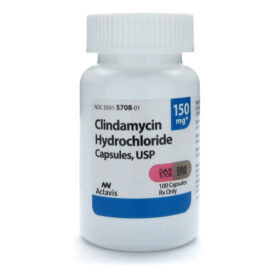
Clindamycin 150mg
Price range: €45 through €260
Select options
This product has multiple variants. The options may be chosen on the product page
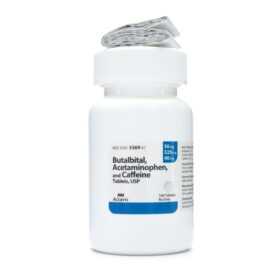
Butalbital Acetaminophen
Price range: €30 through €90
Select options
This product has multiple variants. The options may be chosen on the product page
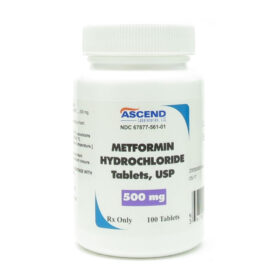
Metformin 500mg Tablets
Price range: €150 through €500
Select options
This product has multiple variants. The options may be chosen on the product page
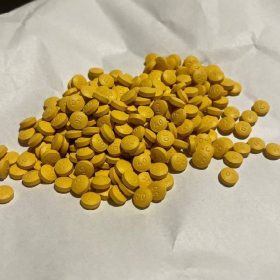
Oxycontin 40mg
Price range: €200 through €580
Select options
This product has multiple variants. The options may be chosen on the product page
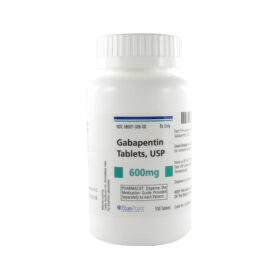
Gabapentin 600mg
Price range: €60 through €180
Select options
This product has multiple variants. The options may be chosen on the product page
 English
 German
 Dutch
 Polish
 Portuguese
Reviews
There are no reviews yet.