
- Your cart is empty
- Continue Shopping

Product

Citra 100mg
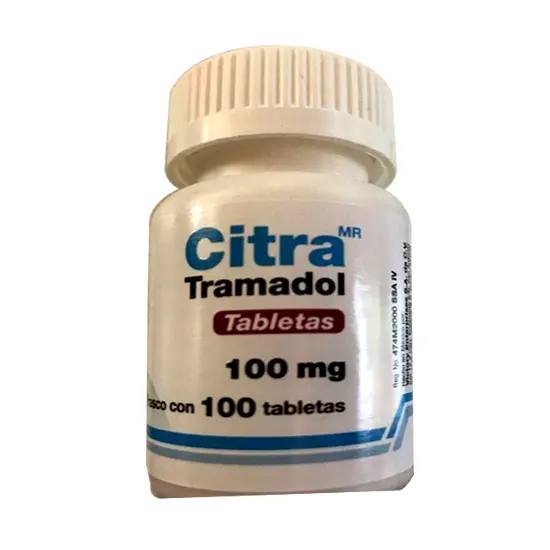
Citra 100mg
€240
Add to cart
Buy Now
Citra 100mg
Citra 100mg is a high-potency oral formulation containing tramadol hydrochloride 100mg, a centrally acting synthetic dual-mechanism analgesic. Classified as a controlled substance across most healthcare regulatory frameworks, Citra 100mg is indicated for the management of moderate-to-severe acute or chronic pain in adults when non-opioid or lower-strength immediate-release analgesics prove insufficient. Tramadol produces its therapeutic effect through a unique dual action: combining weak $\mu$-opioid receptor agonism with monoaminergic reuptake inhibition.
Primary Clinical Indications
-
Management of Moderate-to-Severe Chronic Pain: Prescribed for continuous control of severe pain conditions, such as advanced osteoarthritis, severe spinal degeneration, and cancer-related pain.
-
Post-Surgical & Post-Traumatic Pain Control: Utilized in acute clinical protocols following major surgical or orthopedic interventions when standard lower-dose pain relievers fail to achieve control.
-
Refractory Neuropathic Pain Protocols: Applied in specialized pain management settings for mixed nociceptive and neuropathic pain syndromes.
Pharmacological Mechanism of Action
Citra 100mg produces analgesia through two synergistic central pathways:
$$\text{Tramadol HCl} \longrightarrow \begin{cases} \text{Primary: } \mu\text{-Opioid Agonism (via } M1 \text{ metabolite } O\text{-desmethyltramadol}) \\ \text{Secondary: } \text{Reuptake Inhibition of Serotonin (5-HT) and Norepinephrine (NE)} \end{cases}$$
-
Central $\mu$-Opioid Binding: Tramadol and its primary liver metabolite, $O$-desmethyltramadol ($M1$), bind to central $\mu$-opioid receptors to inhibit ascending nociceptive signal transmission.
-
Monoamine Reuptake Inhibition: Simultaneously inhibits the presynaptic reuptake of serotonin ($5\text{-HT}$) and norepinephrine ($\text{NE}$) in the spinal cord, amplifying descending inhibitory pain pathways.
-
Pharmacokinetics: Rapidly absorbed after oral ingestion, reaching peak plasma concentration ($T_{\max}$) within 1.5 to 2 hours. Tramadol undergoes extensive hepatic metabolism via $CYP2D6$ (forming active $M1$) and $CYP3A4$, featuring an elimination half-life of 6 to 7.5 hours.
Clinical Advantages vs. Disadvantages
Advantages
-
Dual-Action Synergistic Analgesia: Modulates both opioid and monoaminergic pathways, rendering it particularly effective for complex, mixed pain profiles.
-
Lower Risk of Hypoventilation: Causes less respiratory depression at equivalent therapeutic doses compared to pure, high-potency $\mu$-opioid agonists like morphine or oxycodone.
-
Reduced Gastrointestinal Stasis: Demonstrates a lower incidence of severe opioid-induced bowel dysfunction and constipation relative to standard full agonists.
Disadvantages
-
Seizure Threshold Reduction: Dose-dependently lowers the seizure threshold; doses at or exceeding 100mg to 250mg elevate seizure risks, especially in susceptible individuals.
-
Serotonin Toxicity Hazard: High risk of triggering potentially life-threatening serotonin syndrome when co-administered with SSRIs, SNRIs, MAOIs, or triptans.
-
Variable Inter-Individual Efficacy: Dependent on $CYP2D6$ enzymatic activation; poor metabolizers experience inadequate analgesia, whereas ultra-rapid metabolizers face heightened toxicity risks.
Side Effects Profile & Safety Warnings
| Severity Category | Common Clinical Manifestations |
| Common / Mild | Nausea, dizziness, somnolence, headache, dry mouth, constipation, hyperhidrosis (excessive sweating), and vomiting. |
| Severe / Adverse | Seizures, serotonin syndrome, severe hypotension, hallucinations, confusion, hyponatremia, or anaphylaxis. |
| Critical Warnings | Risk of Misuse, Dependence, & Seizures: High doses carry significant risks of physical dependence, tolerance, and tonic-clonic seizures. Concomitant administration with alcohol, benzodiazepines, or other central depressants poses extreme risks of profound sedation, coma, and fatal respiratory arrest. |
Related products
Metformin 500mg Tablets
Price range: €150 through €500
Select options
This product has multiple variants. The options may be chosen on the product page
Amoxicillin 875mg/125mg
Price range: €25 through €45
Select options
This product has multiple variants. The options may be chosen on the product page
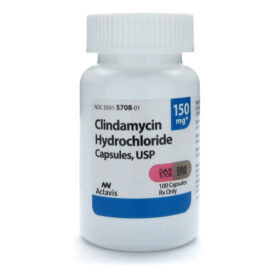
Clindamycin 150mg
Price range: €45 through €260
Select options
This product has multiple variants. The options may be chosen on the product page
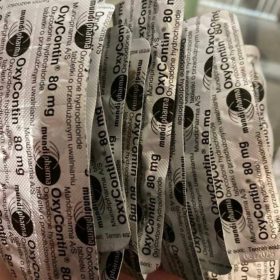
Oxycontin 80mg
Price range: €250 through €730
Select options
This product has multiple variants. The options may be chosen on the product page
 English
 German
 Dutch
 Polish
 Portuguese
Reviews
There are no reviews yet.